Short video
Free resources for the local church
Every bite, every step, for the glory of God.
1031 Ministries gives churches free, Bible-grounded sermons, small-group lessons and practical tools to start talking about health: food, fasting, exercise and rest.
Free for every church. No sign-up required.
“So, whether you eat or drink, or whatever you do, do all to the glory of God.”
1 Corinthians 10:31
Why “1031”?
Our name comes from this verse. Paul wrote it about food, but it reaches all of life. Churches talk about almost everything except the body God gave us. We want to help start that conversation, with grace and not guilt.
Why this matters
Why churches should talk about health
The Bible speaks to it
Scripture addresses food, rest, self-control and the body again and again, from Genesis to the resurrection hope of 1 Corinthians 15.
Gen 1:31 · 1 Cor 6:19–20 · 1 Tim 4:8
Pastors need it too
Duke’s Clergy Health Initiative found 40% of the North Carolina pastors it studied were obese, compared with 29% of their neighbors. Many said caring for themselves felt selfish.
Families gather at church
Churches are one of the few places whole families, from grandparents to toddlers, gather every week. That makes the church a natural place to build healthy habits together.
Body & Soul, a church nutrition program, raised fruit and vegetable intake in 20 churches · CDC
Topics
Start with a topic
Every topic will have an article, a small-group lesson, a handout, a short video and a kids’ lesson, all free to download and use.
Biblical foundation
Why health matters to Christians
Your body is God’s good creation. Caring for it is worship, not vanity.
ExploreFor church leaders
How to start in your church
A 90-day path, from the pastor’s first step to a year-round rhythm.
ExploreFor pastors
Sermon series
“All for His Glory”: four ready-to-preach sermons plus a bonus on rest.
ExploreSpiritual discipline
Fasting
Why and how Christians fast, with clear medical safety guidance.
ExplorePractical help
Eating healthy on a budget
Meal plans, a staples list and a healthy food-pantry guide.
ExploreStewardship
Exercise
Walking plans, prayer walks and routines for every ability.
ExploreEvery week
Health and wellness tips
52 tips for bulletins and social posts: one verse, one fact, one action.
ExploreFor communicators
Social media kit
Graphics, captions, video scripts and accounts worth sharing.
ExploreFor kids’ ministry
Kids’ lessons
Five lessons with Sprout, memory verse posters and coloring pages.
ExploreReady to use
Read the first resources
Articles, lessons, plans and a full sermon, free to read, print and use.
Why health matters
Article
Why Your Body Matters to God
The biblical case for caring for your body: created good, bought with a price, and headed for resurrection.
Read nowSermon series
Sermon manuscript
Week 1: Whose Body Is It?
The full manuscript for week 1 of All for His Glory. Edit it freely and add your own stories.
Read nowFasting
Guide
A Beginner’s Guide to Biblical Fasting
What fasting is, why Christians do it, how to start safely, and what to do with your hunger.
Read nowEating on a budget
Guide
Plan, Shop, Cook: Eating Well on a Budget
A practical guide to feeding a family healthy food on a tight budget, built on stewardship, not guilt.
Read nowWhy health matters
Devotional
7 Days: God Made Your Body
A seven-day devotional on the body as God’s good gift, from creation to resurrection.
Read nowStart in your church
Checklist
Launch Checklist
Every step to launch a health focus in your church, week by week.
Read nowExercise
Plan
Couch to 150: An 8-Week Walking Plan
Build up to 150 minutes of walking a week, one small step at a time.
Read nowKids’ ministry
Kids’ lesson
Week 1: God Made Me!
God made my whole body, and He says it is very good.
Read nowGuides
Healthy living guides
Recipes, restaurant tips, guidance on alcohol and honest answers to hard questions.
Recipes
Healthy recipes for real families
16 simple recipes for breakfast, lunch, snacks and dinner, with photos.
OpenEating out
Eating out the healthy way
What to order, and what to skip, at almost any restaurant.
OpenAlcohol
Why we encourage avoiding alcohol
What Scripture and current research say.
OpenQ&A
Hard questions, honest answers
Cost, legalism, weight, faith and healing, and more.
OpenSocial media
Social media kit
Graphics, captions, video scripts and accounts to share.
OpenPartner resources
Free Daniel Plan resources
40+ free recipes, workouts, devotions and church tools, organized.
OpenKids
Kids’ lessons
Five lessons with Sprout, posters and coloring pages.
OpenTestimonials
Stories of changed lives
Short videos of people who put God first in their health.
OpenSermon series · 4 weeks + bonus
All for His Glory
A ready-to-preach series on the body, food, fasting and exercise. Each week includes a full manuscript, slides, a small-group lesson, a kids’ lesson and a weekly challenge.
- Week 1Whose Body Is It?1 Cor 6:12–20
- Week 2Every Bite for His Glory1 Cor 10:23–31; Daniel 1
- Week 3Hungry for GodMatt 6:16–18; Isa 58
- Week 4Train Yourself for Godliness1 Tim 4:7–8
- BonusCome Away and RestMark 6:30–32
How to start in your church
Launch a health focus in about 90 days
- 1
Pastor and leaders commit personally
- 2
Build a health team
- 3
Survey the congregation
- 4
Review church food culture
- 5
Launch: sermons and groups
- 6
Sustain a year-round rhythm
In every topic
Everything a church needs to teach it
- Article
- Small-group lesson
- Leader guide
- Printable handout
- Short video
- Kids’ lesson
- Graphics pack
- Challenge
Get a weekly health tip for your bulletin
One verse, one fact and one small action, ready to paste into your bulletin, slides or social posts.
All topics
Topics
Seven topics, a social media kit and kids’ lessons to start, with more on the way. Each one begins with Scripture and ends with a practical next step your church can take this week.
Biblical foundation
Why health matters to Christians
Your body is God’s good creation. Caring for it is worship, not vanity.
ExploreFor church leaders
How to start in your church
A 90-day path, from the pastor’s first step to a year-round rhythm.
ExploreFor pastors
Sermon series
“All for His Glory”: four ready-to-preach sermons plus a bonus on rest.
ExploreSpiritual discipline
Fasting
Why and how Christians fast, with clear medical safety guidance.
ExplorePractical help
Eating healthy on a budget
Meal plans, a staples list and a healthy food-pantry guide.
ExploreStewardship
Exercise
Walking plans, prayer walks and routines for every ability.
ExploreEvery week
Health and wellness tips
52 tips for bulletins and social posts: one verse, one fact, one action.
ExploreFor communicators
Social media kit
Graphics, captions, video scripts and accounts worth sharing.
ExploreFor kids’ ministry
Kids’ lessons
Five lessons with Sprout, memory verse posters and coloring pages.
ExploreTopic 1 · Biblical foundation
Why health matters to Christians
Your body is God’s good creation. It belongs to Him, and caring for it is an act of worship, not vanity. This topic lays the biblical foundation for everything else on the site, and it rests on grace, not guilt.
“Or do you not know that your body is a temple of the Holy Spirit within you, whom you have from God? You are not your own, for you were bought with a price. So glorify God in your body.”
Ready to use
Start here
Free to read, print and use in your church.
Article
Why Your Body Matters to God
The biblical case for caring for your body: created good, bought with a price, and headed for resurrection.
Read nowSmall-group lesson
Stewards, Not Owners
A small-group lesson on 1 Corinthians 6:19–20 and Romans 12:1, with discussion questions and a weekly challenge.
Read nowDevotional
7 Days: God Made Your Body
A seven-day devotional on the body as God’s good gift, from creation to resurrection.
Read nowPrintable handout
Scripture Memory Cards
Eight printable verse cards about the body, food and rest.
Read nowThe teaching
Seven things the Bible says about your body
Each truth will have its own short devotional and discussion questions in the small-group lesson.
- 1God made the body, and it is goodGen 1:27, 31; Gen 2:7; Ps 139:13–14
- 2Your body belongs to God. You are a steward, not an owner1 Cor 6:19–20; Rom 12:1; Eph 5:29
- 3Eating and drinking can glorify God1 Cor 10:31; 1 Tim 4:3–5
- 4Self-control is fruit of the SpiritGal 5:22–23; Prov 23:20–21; Prov 25:16; 1 Cor 9:24–27
- 5Training the body has value, but godliness comes first1 Tim 4:7–8
- 6God built us for rest and gave us limitsEx 20:8–11; 1 Kings 19:5–8; Mark 6:31; Ps 127:2
- 7Grace, not law: health is not righteousness, and our hope is the resurrection bodyRom 14:17; Col 2:20–23; 1 Cor 15:42–44; Phil 3:20–21
Free downloads
More on the way
For teachers
Handle these passages with care
Good teaching reads each verse in its context. Two errors to avoid: that sickness means weak faith, and that the body doesn’t matter because only the spirit counts.
1 Cor 6:19–20
“Your body is a temple” is about sexual immorality. Applying it to health is a fair extension of the principle, but say so openly.
1 Cor 3:16–17
The “you” is plural and means the church as God’s temple, not the individual body. Don’t use it as a health proof-text.
1 Cor 10:31
Closes Paul’s discussion of food offered to idols and love for others. The principle: all of life, even meals, is for God’s glory.
3 John 2
“That you may be in good health” is a letter greeting, not a promise of health.
Handled with care
Common questions
Isn’t this just legalism?
No. Health is not righteousness, and no one earns God’s favor by eating well. We care for our bodies because they are a gift, and grace frees us to do it without shame (Col 2:20–23).
What about people with illness or disability?
Sickness is not a sign of weak faith. Stewardship looks different for every body, and every resource offers options for every ability.
Does the Bible prescribe a diet?
No. Scripture gives principles, such as gratitude, self-control and generosity, not a menu. For practical details we point to mainstream nutrition science, reviewed by a dietitian.
Free from The Daniel Plan
Short devotions on faith and health from The Daniel Plan.
Faith devotions
- God’s Prescription for Good Health · Rick Warren
- You Need God’s Power to Change
- Trusting God Is Good for Your Health
- Put Down the Chocolate and Pick Up Your Bible
- Be Grateful, Not Regretful
- For Good Health, Confess Your Sin
- Eliminate Negative Self-Talk
- You Need a Battle Buddy
- God-Sized Goals
- God’s Word Will Transform Your Life
These links go to danielplan.com, Saddleback Church’s free health program. See our full Daniel Plan resource list.
Keep going
For church leaders
How to start in your church
A 90-day path, from the pastor’s first step to a year-round rhythm.
ExploreFor pastors
Sermon series
“All for His Glory”: four ready-to-preach sermons plus a bonus on rest.
ExploreSpiritual discipline
Fasting
Why and how Christians fast, with clear medical safety guidance.
ExploreTopic 2 · For church leaders
How to start in your church
A church can launch a health focus in about 90 days by following six steps. The pastor’s example matters most, so the plan starts there.
“Two are better than one, because they have a good reward for their toil.”
Ready to use
Start here
Free to read, print and use in your church.
Checklist
Launch Checklist
Every step to launch a health focus in your church, week by week.
Read nowGuide
Church Food Guidelines
Simple, grace-filled guidelines for the food your church serves, without taking the joy out of the table.
Read nowCovenant
Leadership Commitment
A personal commitment for church leaders to live out healthy stewardship before asking the church to.
Read nowGuide
Health-Team Guide
How to build the small team that will carry this, who to recruit, what each person does, and exactly how to run the first meeting.
Read nowTemplate
Congregation Health Survey
A ready-to-use survey that tells you where your church actually is, and what they would show up for.
Read nowTemplate
Announcement and Bulletin Text
Every announcement you need, already written: bulletin blurbs, pulpit scripts, emails, social captions and text reminders.
Read nowPlan
12-Month Health Calendar
A year-long plan your health team can run with: one theme a month, with Scripture, an activity and the resource to use.
Read nowBefore launch
Leaders go first
Many church boards “support” a new ministry with a vote and never live it out. This one won’t work that way. Before anything launches, the pastor, elders, deacons and staff each commit to taking personal steps: walking, sleeping, eating and resting as stewards of the bodies God gave them. People follow what their leaders do, not what they vote for.
“Not domineering over those in your charge, but being examples to the flock.” 1 Peter 5:3
What leaders commit to
- Choose one or two personal health steps and start them now
- Pair up with another leader for accountability
- Share honestly (not perfectly) with the congregation
- Take part in every church challenge alongside everyone else
- Check in on each other at every leadership meeting
Step by step
The 90-day launch plan
| Weeks | Step | What happens | Tools 1031 provides |
|---|---|---|---|
| 1–2 | Pastor and leaders commit, personally | The pastor, elders and staff don’t just approve the plan. Each one commits to take personal steps and live it out first. | Leadership Commitment |
| 3–4 | Build a health team | Recruit 4–8 people, ideally including a nurse, a dietitian or other medical professional, and a fitness-minded member. | Team job descriptions; first-meeting agenda |
| 5–6 | Survey the congregation | Ask about interests, barriers, schedules and cost. Keep it anonymous. | Survey template |
| 7–8 | Review church food culture | Look at potlucks, Wednesday meals, coffee hour and kids’ snacks. | Church food guidelines; menu swap list |
| 9–12 | Launch | A four-week sermon series, small groups, and a church-wide 21- or 40-day challenge. | Sermon series; group lessons; challenge tracker |
| After 12 | Sustain | Monthly emphasis, walking group, cooking class, community partnerships. | 12-month calendar; ideas bank |
Guardrails
Build these in from day one
- No public weigh-ins or “biggest loser” contests. Track habits, not pounds.
- Include members with illness, disability or limited means, with an alternative for every challenge.
- Watch for eating-disorder risk, and keep a referral list of Christian counselors.
- Use a medical disclaimer, and recommend a doctor’s check before starting exercise.
Free from The Daniel Plan
Planning a church-wide campaign? The Daniel Plan’s free leader and campaign guides pair well with ours.
For church leaders
- Leaders Guide (PDF) · How to lead a Daniel Plan small group
- Church Campaign Success Guide (PDF) · Planning a church-wide health campaign, step by step
- Posters and Postcard Invitations (PDF) · Printable promotion for a Daniel Plan campaign
- Resources and Tools page · Logos kit, sermon PowerPoint screens and web banners (zip downloads) for churches running a Daniel Plan campaign
- Success stories · Stories from churches and individuals, including Grace Family Church
These links go to danielplan.com, Saddleback Church’s free health program. See our full Daniel Plan resource list.
Keep going
Biblical foundation
Why health matters to Christians
Your body is God’s good creation. Caring for it is worship, not vanity.
ExploreFor pastors
Sermon series
“All for His Glory”: four ready-to-preach sermons plus a bonus on rest.
ExploreEvery week
Health and wellness tips
52 tips for bulletins and social posts: one verse, one fact, one action.
ExploreTopic 3 · Sermon series · 4 weeks + bonus
All for His Glory
A ready-to-preach series built on 1 Corinthians 10:31. It covers the body, food, fasting, exercise and rest, and every week comes with everything your church needs to put the sermon into practice.
Free · Edit freely for your church · Slides for PowerPoint and ProPresenter · Kids’ lessons included
Every week includes
- Full manuscript
- One-page outline
- Slide deck
- Small-group lesson
- Kids’ lesson
- Bulletin insert
- Weekly challenge
Ready to use
Start here
Free to read, print and use in your church.
Sermon manuscript
Week 1: Whose Body Is It?
The full manuscript for week 1 of All for His Glory. Edit it freely and add your own stories.
Read nowSermon manuscript
Week 2: Every Bite for His Glory
The full manuscript for week 2: food as God’s gift, received with thanks and enjoyed with self-control.
Read nowSermon manuscript
Week 3: Hungry for God
The full manuscript for week 3: why and how Christians fast, with clear safety guidance.
Read nowSermon manuscript
Week 4: Train Yourself for Godliness
The full manuscript for week 4: physical discipline has real value, and godliness comes first.
Read nowSermon manuscript
Bonus Week: Come Away and Rest
The full manuscript for the bonus week: rest and sleep as acts of trust in God.
Read nowSeries guide
All for His Glory: Series Guide
Outlines, big ideas and small-group questions for every week of the series.
Read nowMessage and story bank
The Battle for Your Appetite
From Eden to the wilderness, food has been one of the enemy’s oldest weapons. Bible stories, a sermon outline and teaching notes on gluttony.
Read nowPrintable handout
Sermon Note Sheets
Bulletin-ready note sheets for every week of the series.
Read nowWeek 1
Whose Body Is It?
Big idea
Your body is God’s good creation, bought with a price, so honor Him with it.
Outline
- God made it: the body is good (Gen 1:31).
- Christ bought it: you are not your own (1 Cor 6:19–20).
- God will raise it: the body has a future (1 Cor 15:42–44).
Weekly challenge: Write a prayer offering your body to God (Rom 12:1).
Week 2
Every Bite for His Glory
Big idea
Food is a gift to receive with thanks and enjoy with self-control.
Outline
- Food is God’s gift, received with thanksgiving (1 Tim 4:4–5).
- Food is a good servant but a poor master (Phil 3:19; Prov 23:20–21).
- Daniel chose faithfulness over the king’s table (Dan 1:8).
Weekly challenge: Pray before every meal; add one vegetable a day.
Week 3
Hungry for God
Big idea
Fasting trades physical hunger for spiritual hunger and teaches that we live by God’s word.
Outline
- Jesus expected His followers to fast: “when you fast” (Matt 6:16).
- Fasting reminds us we live by every word from God (Matt 4:4).
- True fasting leads to justice and generosity (Isa 58:6–7).
Weekly challenge: A one-meal fast, or a fast from a favorite food, with prayer.
Week 4
Train Yourself for Godliness
Big idea
Discipline of the body serves the discipline of the soul, and godliness comes first.
Outline
- Bodily training has real value (1 Tim 4:8a).
- Godliness has greater value, for this life and the next (1 Tim 4:8b).
- Run with purpose, not aimlessly (1 Cor 9:26–27).
Weekly challenge: Walk 20 minutes, 5 days, praying as you go.
Bonus
Come Away and Rest
Big idea
God designed us with limits; rest and sleep are acts of trust.
Outline
- Jesus invited tired disciples to rest (Mark 6:31).
- God met Elijah with sleep and food before a word (1 Kings 19:5–8).
- Sabbath is a gift, not a chore (Ex 20:8–11).
Weekly challenge: Keep a screen-free Sabbath evening.
Free downloads
Sermon slides
Every week comes in two formats. Each file includes the series cover, the week’s title, key verse, three points, weekly challenge and a closing slide.
| Week | PowerPoint | ProPresenter |
|---|---|---|
| Week 1: Whose Body Is It? | PowerPoint (.pptx) | ProPresenter image pack (.zip) |
| Week 2: Every Bite for His Glory | PowerPoint (.pptx) | ProPresenter image pack (.zip) |
| Week 3: Hungry for God | PowerPoint (.pptx) | ProPresenter image pack (.zip) |
| Week 4: Train Yourself for Godliness | PowerPoint (.pptx) | ProPresenter image pack (.zip) |
| Bonus week: Come Away and Rest | PowerPoint (.pptx) | ProPresenter image pack (.zip) |
| Full series (all weeks) | PowerPoint (.pptx) | ProPresenter image pack (.zip) |
PowerPoint
Fully editable slides with speaker notes. Add your church name, dates or extra points. They also open in Keynote and Google Slides. For the exact look, install the free Bricolage Grotesque and Literata fonts.
ProPresenter
A zip of full-HD (1920×1080) slide images, numbered in order, plus two blank brand backgrounds. Unzip it, then drag the images onto a new presentation in ProPresenter; it creates one slide per image. The images work in EasyWorship, MediaShout and Proclaim too.
Preaching notes
Preach as a fellow struggler
- Open week 1 with a short, honest story of your own. It sets a humble, grace-filled tone for the whole series.
- Never mention weights or single out bodies. Talk about habits and faithfulness.
- In week 3, name who should not fast from food, and offer a non-food fast as an equal option.
- Have a referral list ready for members who struggle with eating disorders.
Keep going
Biblical foundation
Why health matters to Christians
Your body is God’s good creation. Caring for it is worship, not vanity.
ExploreFor church leaders
How to start in your church
A 90-day path, from the pastor’s first step to a year-round rhythm.
ExploreSpiritual discipline
Fasting
Why and how Christians fast, with clear medical safety guidance.
ExploreTopic 4 · Spiritual discipline
Fasting
Fasting is a spiritual discipline for seeking God, not a diet or a weight-loss plan. Here is why and how Christians fast, with clear medical safety guidance on every page.
“And when you fast, do not look gloomy like the hypocrites… But when you fast, anoint your head and wash your face, that your fasting may not be seen by others but by your Father who is in secret.”
Ready to use
Start here
Free to read, print and use in your church.
Guide
A Beginner’s Guide to Biblical Fasting
What fasting is, why Christians do it, how to start safely, and what to do with your hunger.
Read nowChallenge
21-Day Daniel Fast
A three-week partial fast modeled on Daniel 10, with a simple food guide and a reading for each day.
Read nowKit
Church-Wide Fast Planning Kit
Everything a church needs to plan and lead a church-wide fast: timeline, options for every person, safety plan, prayer focus, announcements and a commitment card.
Read nowPrintable handout
Fasting Quick Card
A pocket guide to fasting: why, how, and who should not fast from food.
Read nowWhat the Bible shows
Types of fasts in Scripture
| Type | Example | What it involves | Our guidance |
|---|---|---|---|
| Normal fast | Jesus in the wilderness (Matt 4:1–2) | No food; water only | Start with one meal or one day |
| Partial (“Daniel”) fast | Daniel 1:12; 10:2–3 | No rich food, meat or wine for a set time | The best starting point for most people |
| Absolute fast | Esther 4:16 | No food or water, three days | Described, not recommended |
| Corporate fast | Joel 2:15; Ezra 8:21; Acts 13:2–3 | A whole church fasting together | Pair it with a church prayer focus |
| Non-food fast | The principle of 1 Cor 6:12 | Giving up media, screens or another habit | An equal option for anyone who can’t fast from food |
The teaching
Why believers fast
- Jesus said when you fast, not if (Matt 6:16–18).
- To humble ourselves, repent, seek guidance, grieve and worship.
- In secret, not for show (Matt 6:16–18).
- True fasting leads to justice and generosity (Isa 58:3–7).
- Rules alone don’t produce holiness (Col 2:20–23).
Medical safety
Who should not fast from food without a doctor’s approval
- Anyone with a history of an eating disorder
- People who are pregnant, breastfeeding, or trying to conceive
- People with diabetes or blood-sugar problems
- Anyone under 18
- People taking blood pressure or heart medications
Free downloads
More on the way
Go deeper
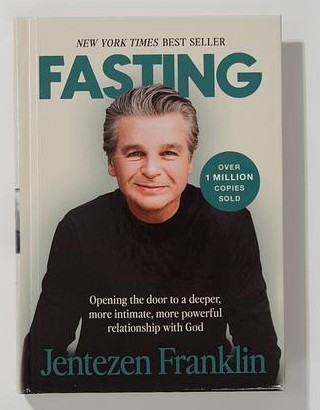
Recommended: Jentezen Franklin on fasting
Recommended book
Fasting: Opening the Door to a Deeper, More Intimate, More Powerful Relationship with God
Jentezen Franklin, senior pastor of Free Chapel, is one of today’s best-known voices on biblical fasting, and he encourages believers to begin each year by giving God their first through fasting, prayer and giving. This book walks through the kinds of fasts in the Bible, how to choose the right one, how fasting and prayer work together, and what to expect physically, mentally and spiritually.
Free fasting resources from Jentezen Franklin Ministries
| Resource | What it is |
|---|---|
| Fasting Guide (PDF) | A 21-day Daniel Fast guide with a food list, 21 recipes and a meal-plan template |
| Why Fast? | Biblical reasons to fast, alongside giving and prayer |
| Ways to Fast | Daniel fast, partial fast, full (liquids-only) fast and 3-day fast |
| Fasting Tips | Practical tips for getting started |
| Nine Reasons to Fast (PDF) | A short article |
| Good for the Body (PDF) | A short article on fasting and the body |
| Fast for Specific Needs (PDF) | Praying and fasting with a clear focus |
| Fasting as a Lifestyle (PDF) | Making fasting a regular rhythm |
These resources are from another ministry, and we don’t control their content. Before any fast from food, please read our safety guidance: people who are pregnant or nursing, have diabetes or a history of an eating disorder, take medication, or are under 18 should talk with a doctor first, or choose a non-food fast.
Keep going
Biblical foundation
Why health matters to Christians
Your body is God’s good creation. Caring for it is worship, not vanity.
ExploreFor pastors
Sermon series
“All for His Glory”: four ready-to-preach sermons plus a bonus on rest.
ExploreEvery week
Health and wellness tips
52 tips for bulletins and social posts: one verse, one fact, one action.
ExploreTopic 5 · Practical help
Eating healthy on a budget
Healthy eating has to work for a family on a tight budget, or it fails the people who need it most. These resources combine biblical stewardship with free, proven USDA and university tools, and help church food pantries serve healthier food.
“Give us this day our daily bread.”
Ready to use
Start here
Free to read, print and use in your church.
Guide
Plan, Shop, Cook: Eating Well on a Budget
A practical guide to feeding a family healthy food on a tight budget, built on stewardship, not guilt.
Read nowMeal plan
One-Week Budget Meal Plan
Seven days of simple, healthy meals built from budget staples, with one grocery list.
Read nowMeal plan
Week Two Budget Meal Plan
A second week of simple, healthy meals. Use it with week one for a two-week rotation.
Read nowRecipes
10 Budget Dinners
Ten simple, healthy dinners built from budget staples, each for about the cost of one fast-food meal.
Read nowGuide
Healthy Food Pantry Guide
How a church food pantry can offer healthier food with dignity: what to stock, what to ask for and how to run a healthy food drive.
Read nowKit
Church Kitchen Class Kit
Everything a church needs to host a four-week, hands-on healthy cooking class on a budget.
Read nowShopping list
Budget staples to keep on hand
Cheap, filling, and good for you. Buy store brands, check unit prices, and cook once to eat three times.
- Dried or canned beans
- Lentils
- Oats
- Brown rice
- Eggs
- Frozen vegetables
- Canned tuna or salmon
- Potatoes
- Cabbage
- Carrots
- Bananas
- Peanut butter
- Olive oil
Go deeper
Free tools we trust
| Tool | What it offers |
|---|---|
| USDA SNAP-Ed: meal planning and shopping | Planning worksheets, shopping lists and budgeting tips |
| MyPlate: healthy eating on a budget | Simple ways to eat well for less |
| SNAP-Ed recipes | Hundreds of low-cost, healthy recipes |
| 1031 healthy recipes | Our own recipes for breakfast, lunch, snacks and dinner |
“Gather up the leftover fragments, that nothing may be lost.”
Keep going
For church leaders
How to start in your church
A 90-day path, from the pastor’s first step to a year-round rhythm.
ExploreStewardship
Exercise
Walking plans, prayer walks and routines for every ability.
ExploreEvery week
Health and wellness tips
52 tips for bulletins and social posts: one verse, one fact, one action.
ExploreTopic 6 · Stewardship
Exercise
Movement is stewardship of the body God gave you, and every plan starts where you are. The goal is the federal guideline, but the message is simple: some activity is better than none.
“For while bodily training is of some value, godliness is of value in every way, as it holds promise for the present life and also for the life to come.”
Ready to use
Start here
Free to read, print and use in your church.
Plan
Couch to 150: An 8-Week Walking Plan
Build up to 150 minutes of walking a week, one small step at a time.
Read nowGuide
Prayer Walks: A Guide for Individuals and Groups
Turn your daily walk into time with God, with a prayer path and weekly Scripture.
Read nowPrintable handout
8-Week Walking Tracker
A printable check-off chart for the Couch to 150 walking plan.
Read nowFrom the CDC
The weekly targets
Sources: CDC guidelines for adults and older adults. Check with your doctor before starting something new.
| Who | Aerobic | Strength | Also |
|---|---|---|---|
| Adults | 150 min of moderate activity, like 30 min on 5 days, or 75 min vigorous | 2 or more days, all major muscle groups | Short bouts count |
| Adults 65+ | Same as adults | 2 or more days | Add balance work, like standing on one foot |
Free downloads
More plans on the way
Video
15-minute strength at home
Kit
Church walking club
Plan
Chair and balance exercises
Guide
Safety first
Free from The Daniel Plan
More free workouts and beginner tips from The Daniel Plan.
Fitness
- First Fitness Steps · Getting started, from fitness coach Sean Foy
- 10 Do’s and Don’ts for the Exercise Novice · For beginners
- Daniel Strong Total Body Workout · A full-body routine
- Workout Routine, Part 1 · Guided routine
- Workout Routine, Part 2 · Guided routine, continued
- 2-Minute Micro-Breaks (videos) · Six “Move of the Week” videos for moving throughout the day
- Pumping Iron to Stay Young · Strength training as we age
These links go to danielplan.com, Saddleback Church’s free health program. See our full Daniel Plan resource list.
Keep going
For pastors
Sermon series
“All for His Glory”: four ready-to-preach sermons plus a bonus on rest.
ExplorePractical help
Eating healthy on a budget
Meal plans, a staples list and a healthy food-pantry guide.
ExploreEvery week
Health and wellness tips
52 tips for bulletins and social posts: one verse, one fact, one action.
ExploreTopic 7 · Every week
Health and wellness tips
A year of weekly tips: 52 short, shareable pieces for bulletins, newsletters, slides and social media. Every tip follows the same pattern: one verse, one fact, one action.
“Whatever you do, work heartily, as for the Lord and not for men.”
Ready to use
Start here
Free to read, print and use in your church.
One verse, one fact, one action
Sample tips
Rest
“He gives to his beloved sleep.”
Psalm 127:2
Fact: Adults need 7–9 hours of sleep.
Action: Set a phone-down time 30 minutes before bed.
Movement
“Bodily training is of some value.”
1 Timothy 4:8
Fact: A 30-minute walk on 5 days meets the adult aerobic target.
Action: Walk after lunch and pray for one person.
Food
“Whether you eat or drink… do all to the glory of God.”
1 Corinthians 10:31
Fact: Gratitude slows us down at the table.
Action: Pause and give thanks before every meal this week.
Community
“Two are better than one.”
Ecclesiastes 4:9
Fact: Habits stick better with a friend.
Action: Invite someone to walk with you this week.
The calendar
A theme for every month
- JanFresh start: stewardship
- FebHeart health
- MarFasting and Lent
- AprGet moving outdoors
- MaySleep and rest
- JunMen’s health
- JulHydration and summer activity
- AugBack-to-school family meals
- SepStress and anxiety
- OctFriendship and community
- NovGratitude and holiday eating
- DecPeace in a busy season
Free from The Daniel Plan
More tips on sleep, lasting change and friendship from The Daniel Plan.
Sleep, focus and friends
- 19 Tips to Improve Sleep · Building a bedtime routine
- 15 Biggest Reasons for Sleep Deprivation
- 5 Tips to Sustain Lasting Change
- Stages of Change · Understanding where you are in the change process
- Journal Your Journey
- Authentic Relationships · Why we’re better together
- Celebrate Recovery · Saddleback’s Christ-centered recovery ministry
These links go to danielplan.com, Saddleback Church’s free health program. See our full Daniel Plan resource list.
Keep going
Biblical foundation
Why health matters to Christians
Your body is God’s good creation. Caring for it is worship, not vanity.
ExplorePractical help
Eating healthy on a budget
Meal plans, a staples list and a healthy food-pantry guide.
ExploreStewardship
Exercise
Walking plans, prayer walks and routines for every ability.
ExploreTopic 8 · For communicators
Social media kit
Ready-to-post graphics, captions, video scripts and trusted accounts to share, so your church can keep the conversation going all week long.
“Let your light shine before others, so that they may see your good works and give glory to your Father who is in heaven.”
Ready to use
Start here
Free to read, print and use in your church.
Free to use
Graphics to post
Tap “Open full size,” then press and hold (phone) or right-click (computer) to save the image. Square posts are 1080 × 1080; the story is 1080 × 1920. Edit captions to add your church’s dates and times.
Square post
Verse: 1 Corinthians 10:31
Square post
Verse: 1 Corinthians 6:19–20
Square post
Series promo: All for His Glory
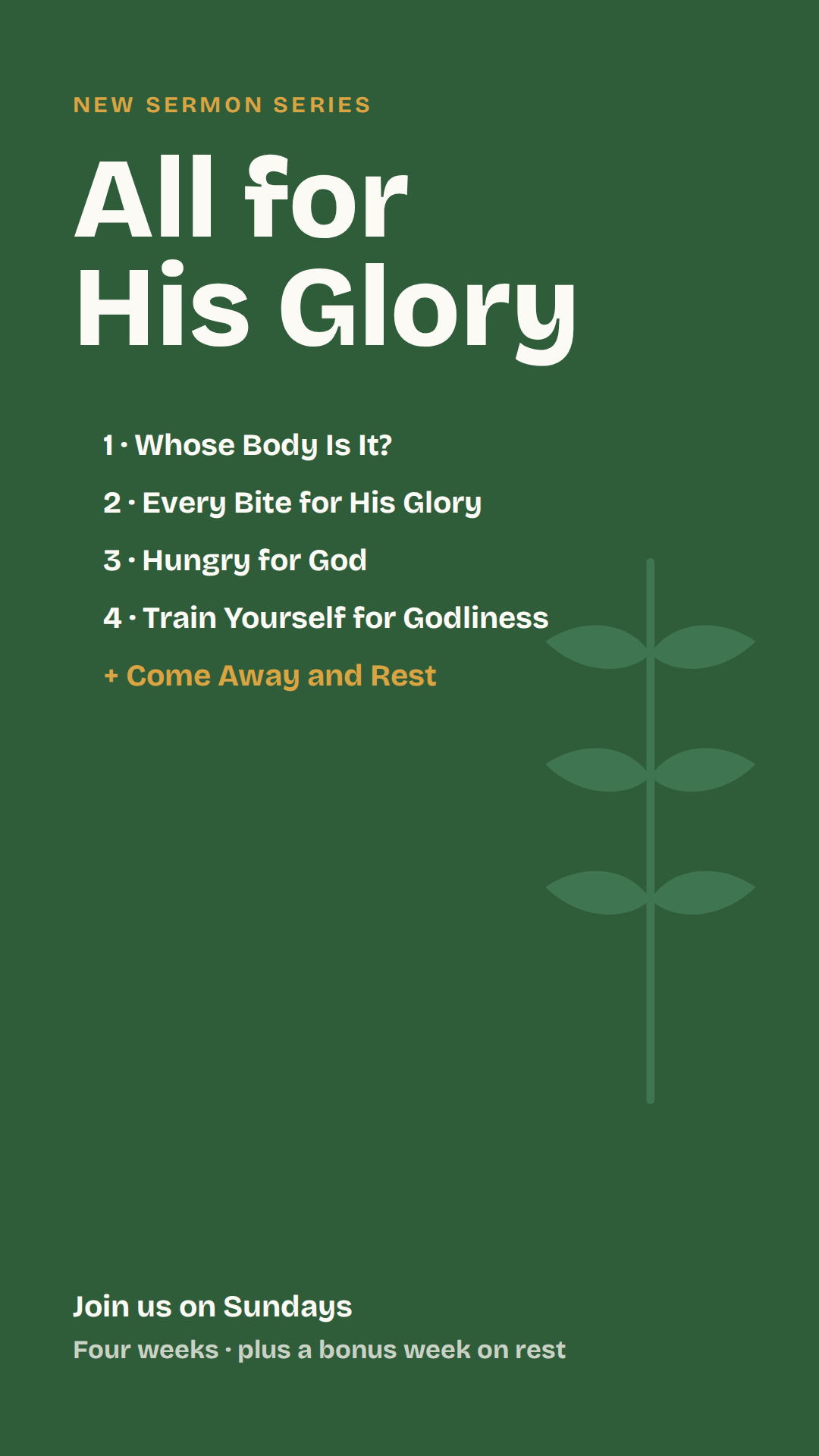
Story / Reel cover
Series promo (story size)
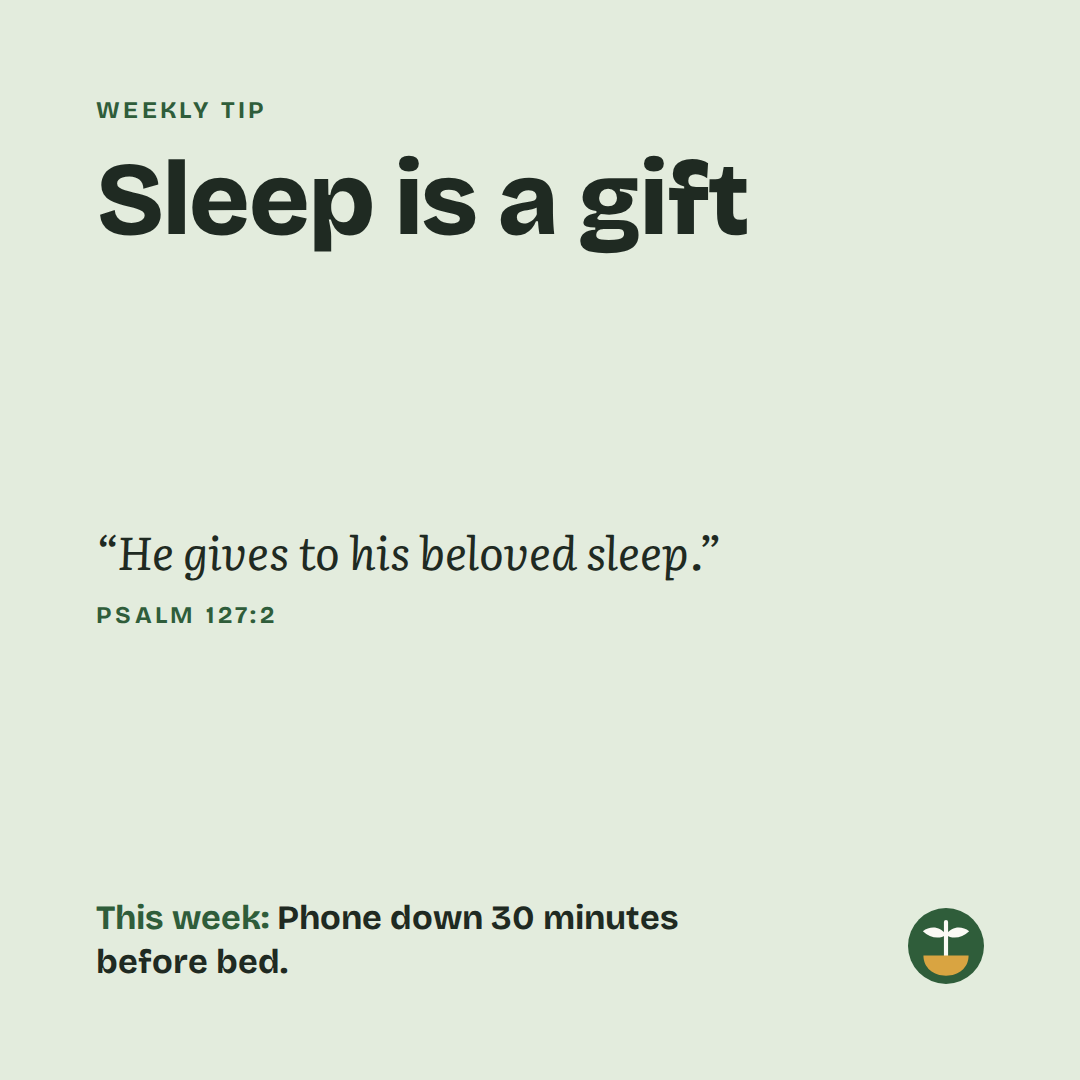
Square post
Weekly tip: Sleep is a gift
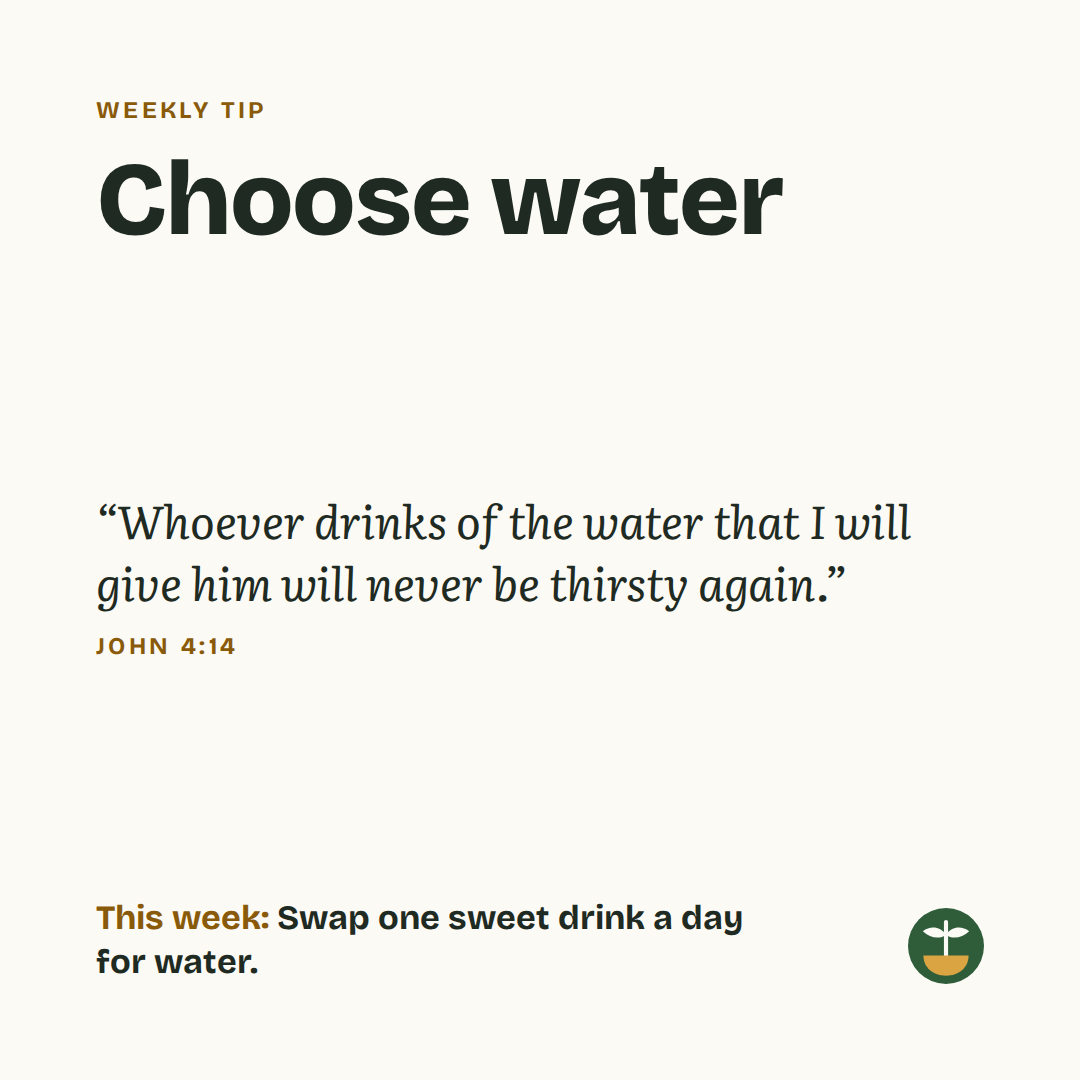
Square post
Weekly tip: Choose water
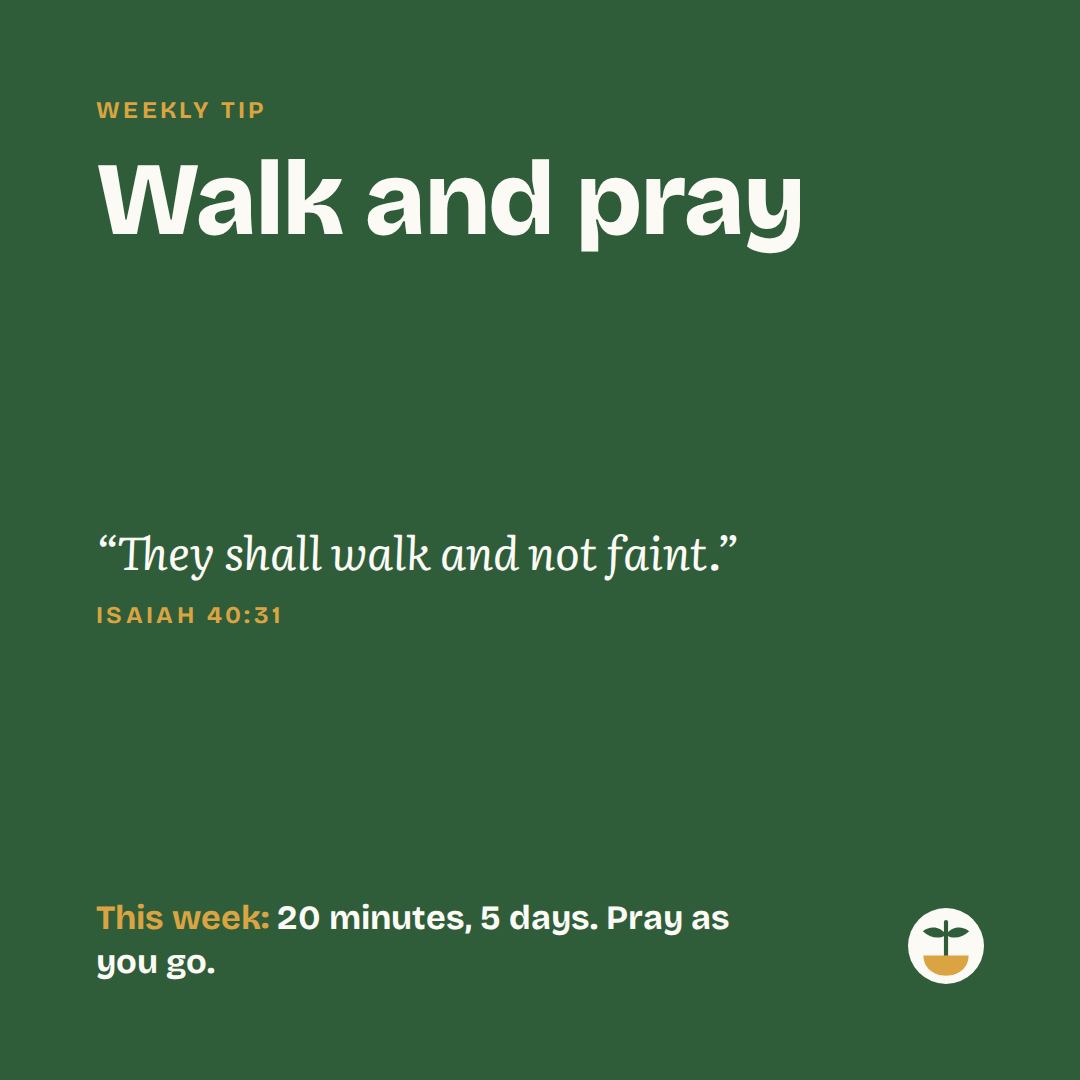
Square post
Weekly tip: Walk and pray
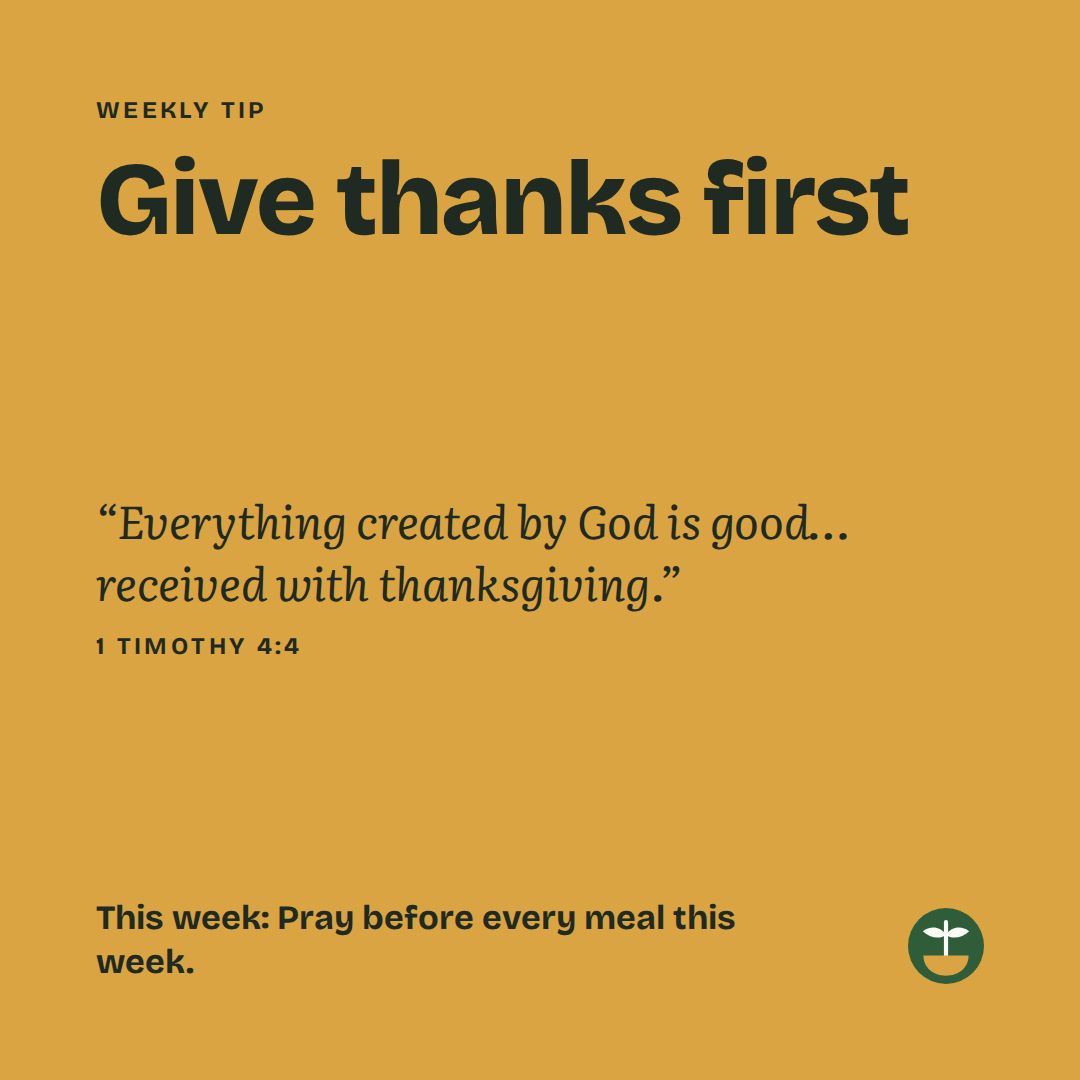
Square post
Weekly tip: Give thanks first
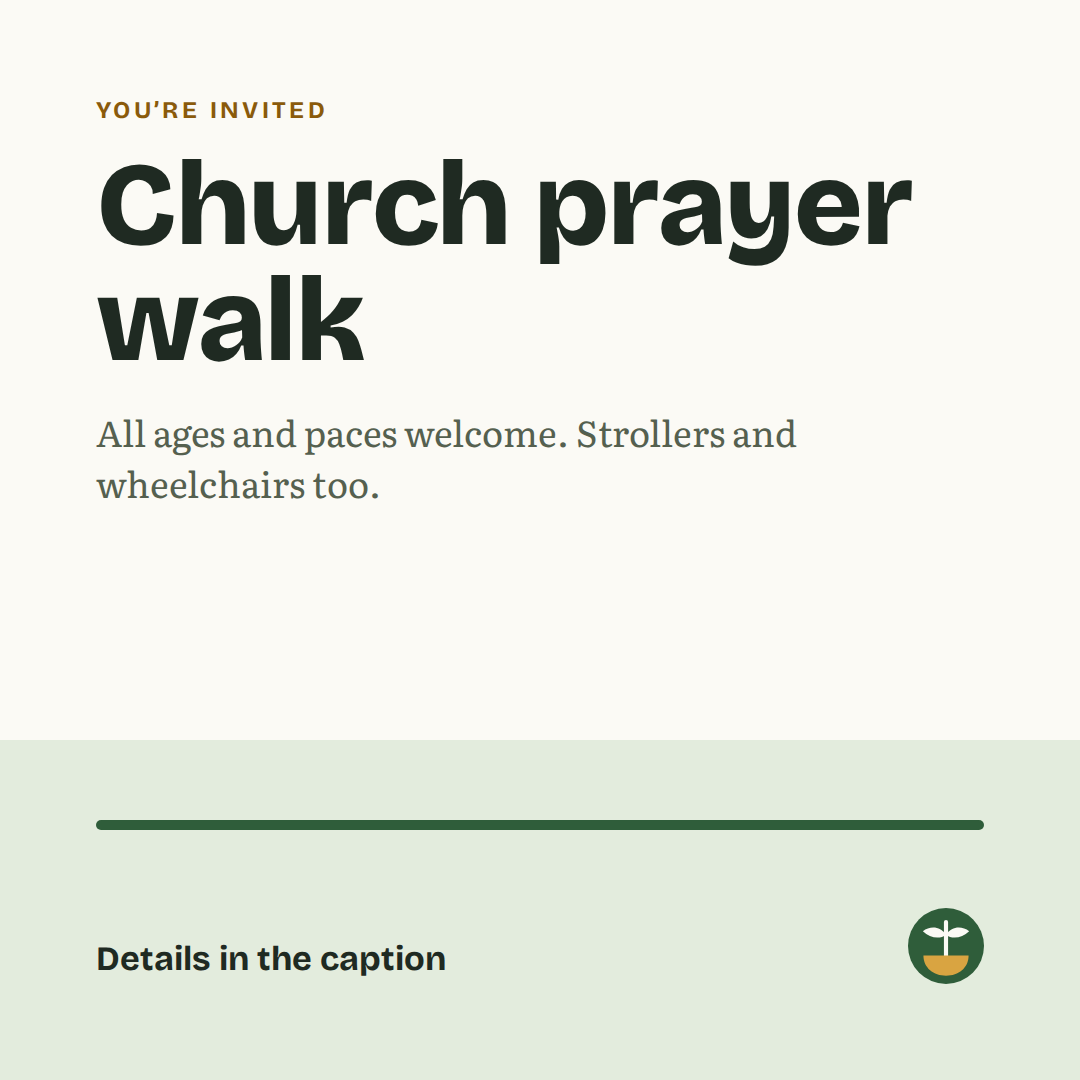
Square post
Invitation: church prayer walk
For the sermon series
A six-week posting plan
| When | Post | Tip |
|---|---|---|
| 2 weeks before | Series promo graphic + story | Announce the series; ask people to invite a friend |
| Week 1 | Verse: 1 Cor 6:19–20; trailer video | Share the sermon clip or a quote on Monday |
| Week 2 | Verse: 1 Cor 10:31; tip: Give thanks first | Ask: “What’s your family’s favorite mealtime prayer?” |
| Week 3 | Fasting video (script); tip: Choose water | Always include the fasting safety line |
| Week 4 | Tip: Walk and pray; prayer walk invitation | Post photos from the walk (with permission) |
| Bonus week | Tip: Sleep is a gift | Share stories of what God did during the series |
Curated for churches
Accounts worth following and sharing
We looked for Christian creators and organizations who teach with grace and avoid diet-culture hype. Accounts change over time, so check recent posts before sharing. TikTok creators vary widely, so search these same names there rather than trusting hashtag pages.
| Who | Where | What they post | Our note |
|---|---|---|---|
| The Daniel Plan | Instagram @thedanielplan · Facebook | Saddleback Church’s health program: recipes, fitness and faith | Evangelical; widely known in churches |
| Revelation Wellness | Instagram @revelationwellness · podcast | Christian nonprofit pairing fitness with Scripture | Faith-and-fitness classes and short workouts |
| Duke Clergy Health | Instagram @dukeclergy | Research-based well-being tips for pastors | Great to share with your staff |
| Church Health | Instagram @churchhealthmemphis | Memphis faith-based clinic; Model for Healthy Living | Ecumenical; use for practical health content |
| Brittany Braswell, MS, RDN | Faith-Filled Food Freedom podcast | Christian dietitian on food, body image and disordered eating | Non-diet approach (see note below) |
| Kristi Veltkamp | Instagram @thefaithfilleddietitian | Faith-based dietitian on emotional eating and food guilt | Non-diet approach (see note below) |
| Dr. Gregg Allison | YouTube: “A Theology of Embodiment” | Seminary theologian on the body and discipleship | Longer teaching video; good for leaders |
How to share someone else’s video
Use the app’s own Share, Remix or Collab features, or post a link and tag the creator. Don’t download and re-upload someone else’s video without their permission.
Review before you share
Several of these creators teach a non-diet or “intuitive eating” approach. Many Christians find it freeing; others emphasize self-control and discipline more. Watch a few posts first and share what fits your church’s convictions. We don’t endorse every post.
Keep it grace-filled
Guardrails for health posts
- No before-and-after photos, weights or body measurements.
- Get permission before posting anyone’s photo, and written parent permission for children.
- Pair every fasting post with the safety line: check with your doctor first if you have a health condition.
- Celebrate habits and faithfulness, not appearance.
Keep going
For church leaders
How to start in your church
A 90-day path, from the pastor’s first step to a year-round rhythm.
ExploreFor pastors
Sermon series
“All for His Glory”: four ready-to-preach sermons plus a bonus on rest.
ExploreEvery week
Health and wellness tips
52 tips for bulletins and social posts: one verse, one fact, one action.
ExploreTopic 9 · For kids’ ministry
Kids’ lessons
Five fun, Bible-centered lessons for ages 5–10 that match the All for His Glory sermon series, so kids and parents learn the same truth on the same Sunday. Each one has a game, a Bible story, a memory verse activity, a craft, a healthy snack and a take-home note.
“Let the little children come to me and do not hinder them, for to such belongs the kingdom of heaven.”
Ready to use
Start here
Free to read, print and use in your church.
Kids’ lesson
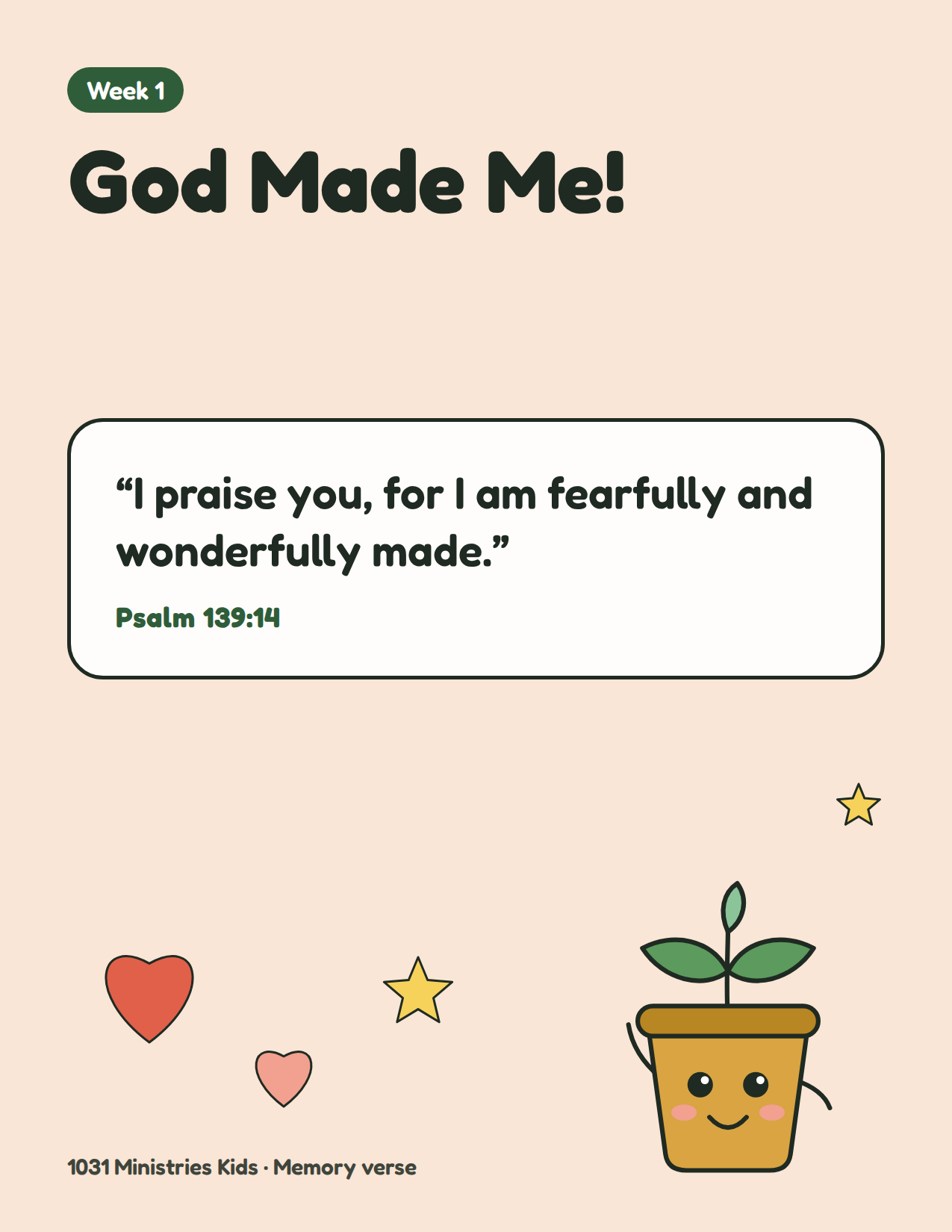
Week 1: God Made Me!
God made my whole body, and He says it is very good.
Read nowKids’ lesson
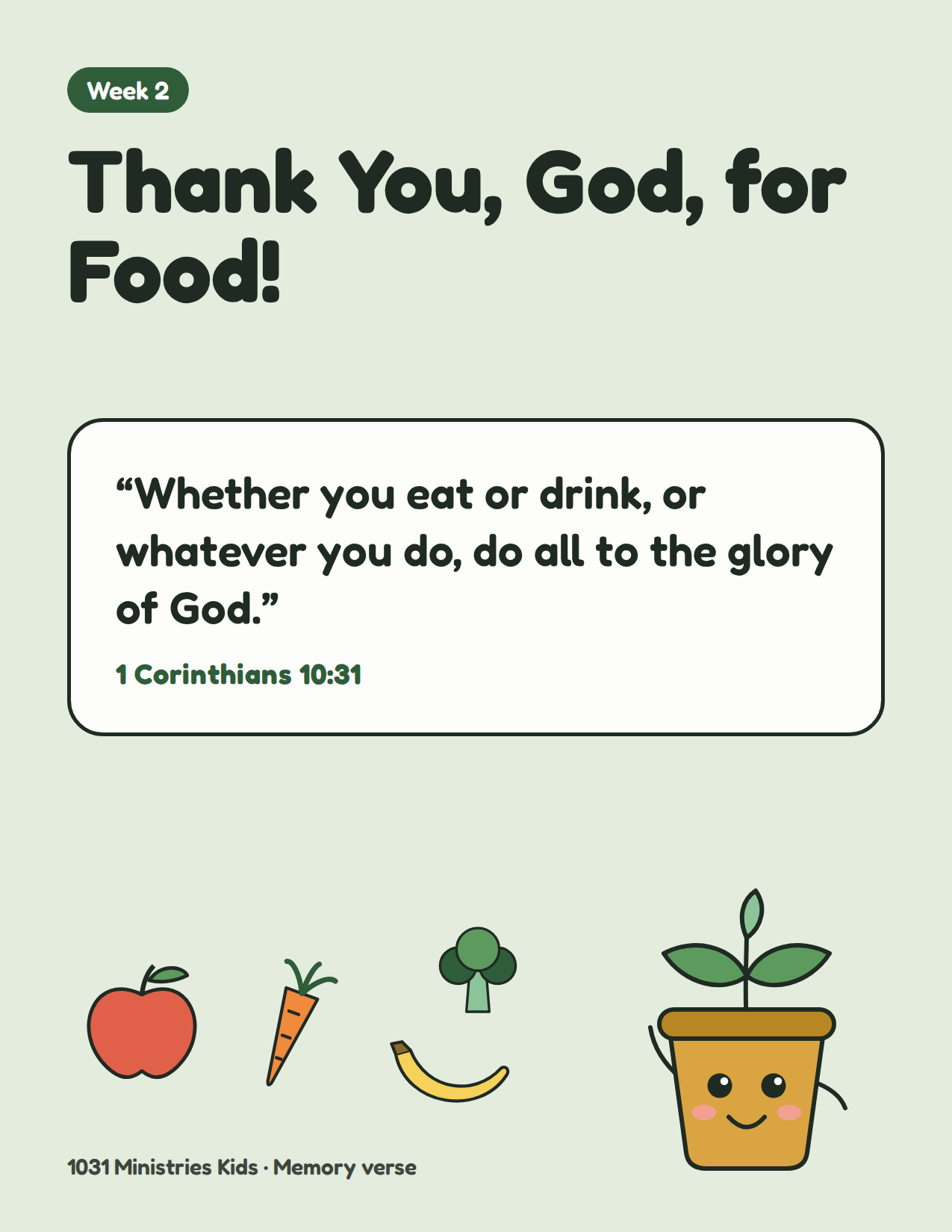
Week 2: Thank You, God, for Food!
Food is a gift from God, so we thank Him and choose foods that help us grow.
Read nowKids’ lesson
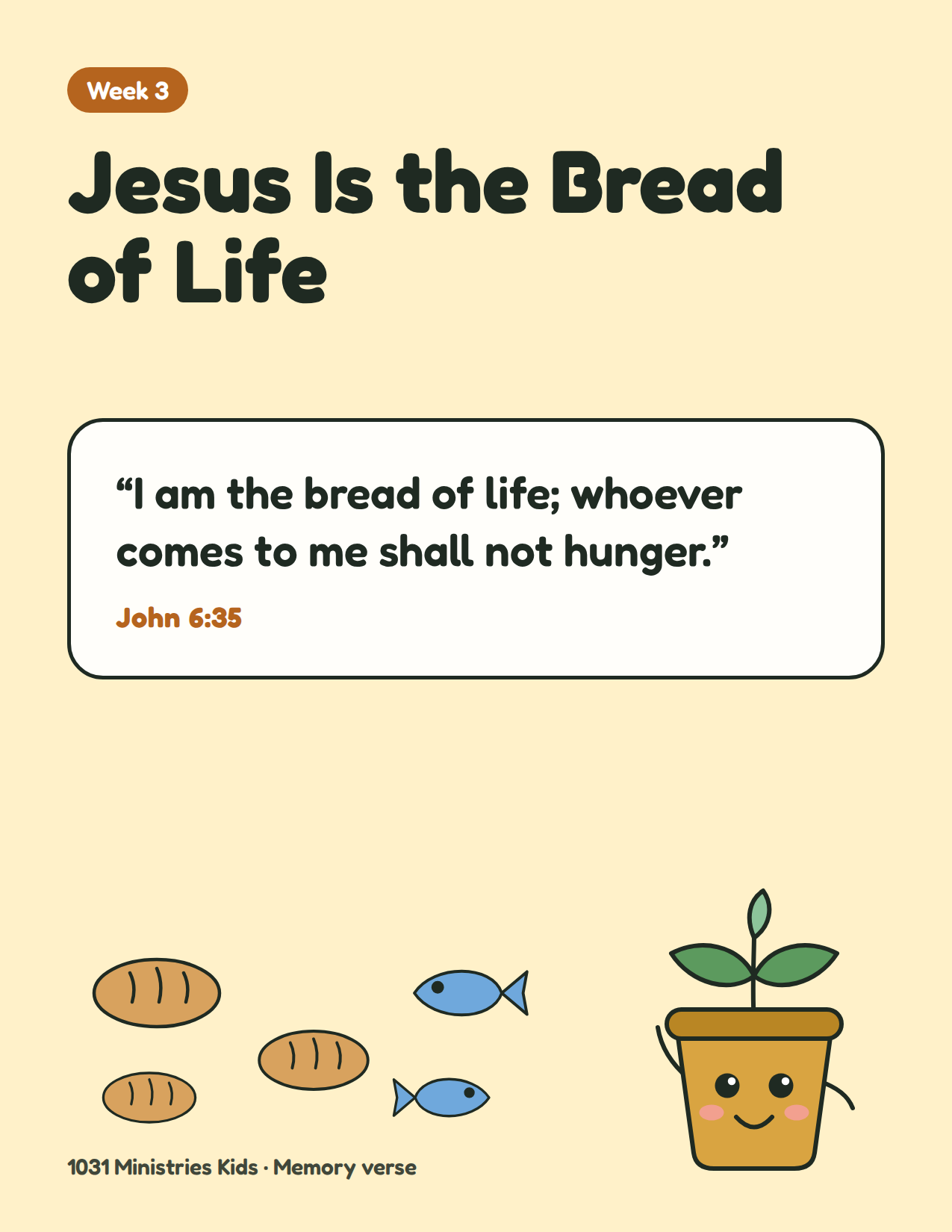
Week 3: Jesus Is the Bread of Life
Jesus fills us up in a way food never can, and He teaches us to share.
Read nowKids’ lesson
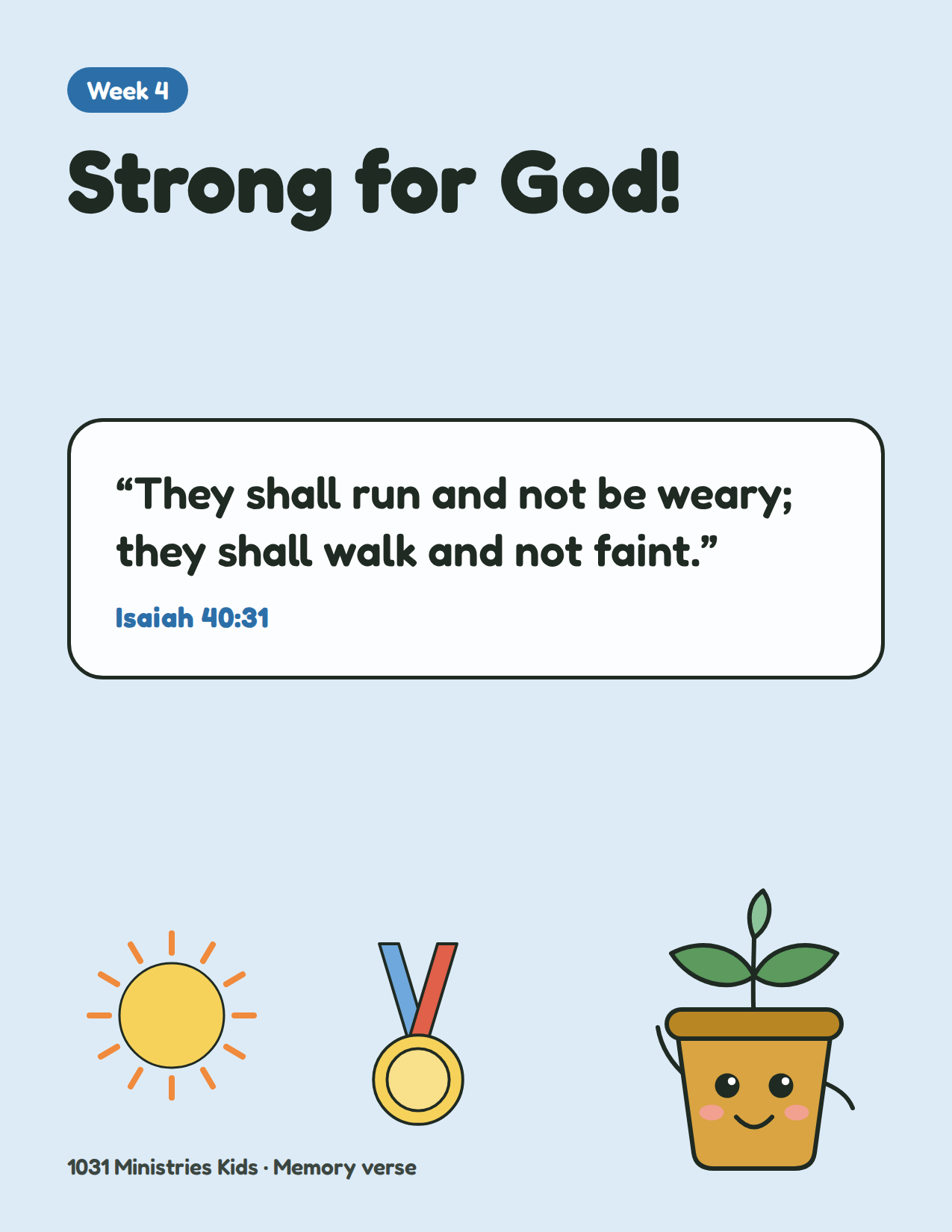
Week 4: Strong for God!
God gave us bodies that can move and play, and He helps us grow strong inside and out.
Read nowKids’ lesson
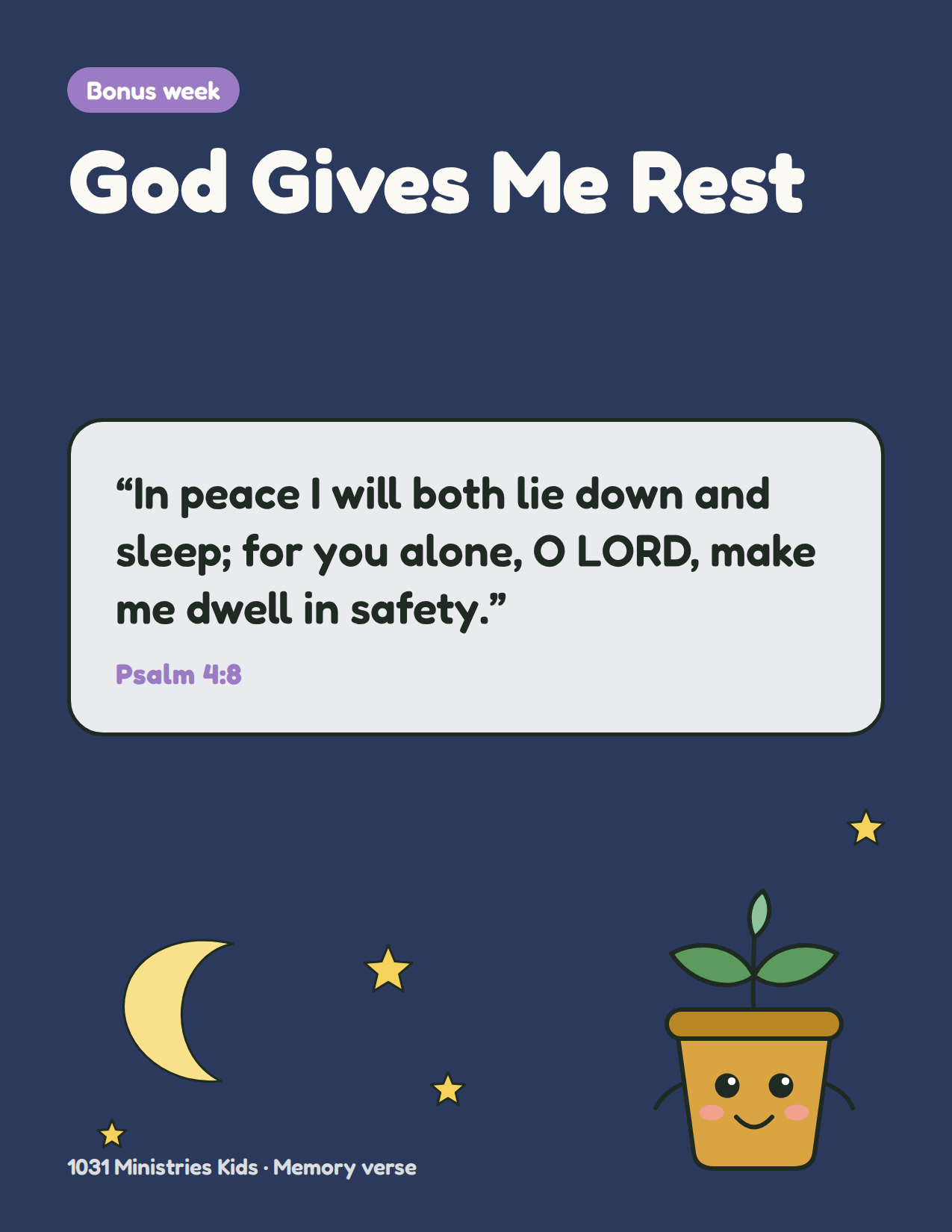
Bonus: God Gives Me Rest
God made us to need rest, and we can sleep peacefully because He takes care of us.
Read nowMascot and printables
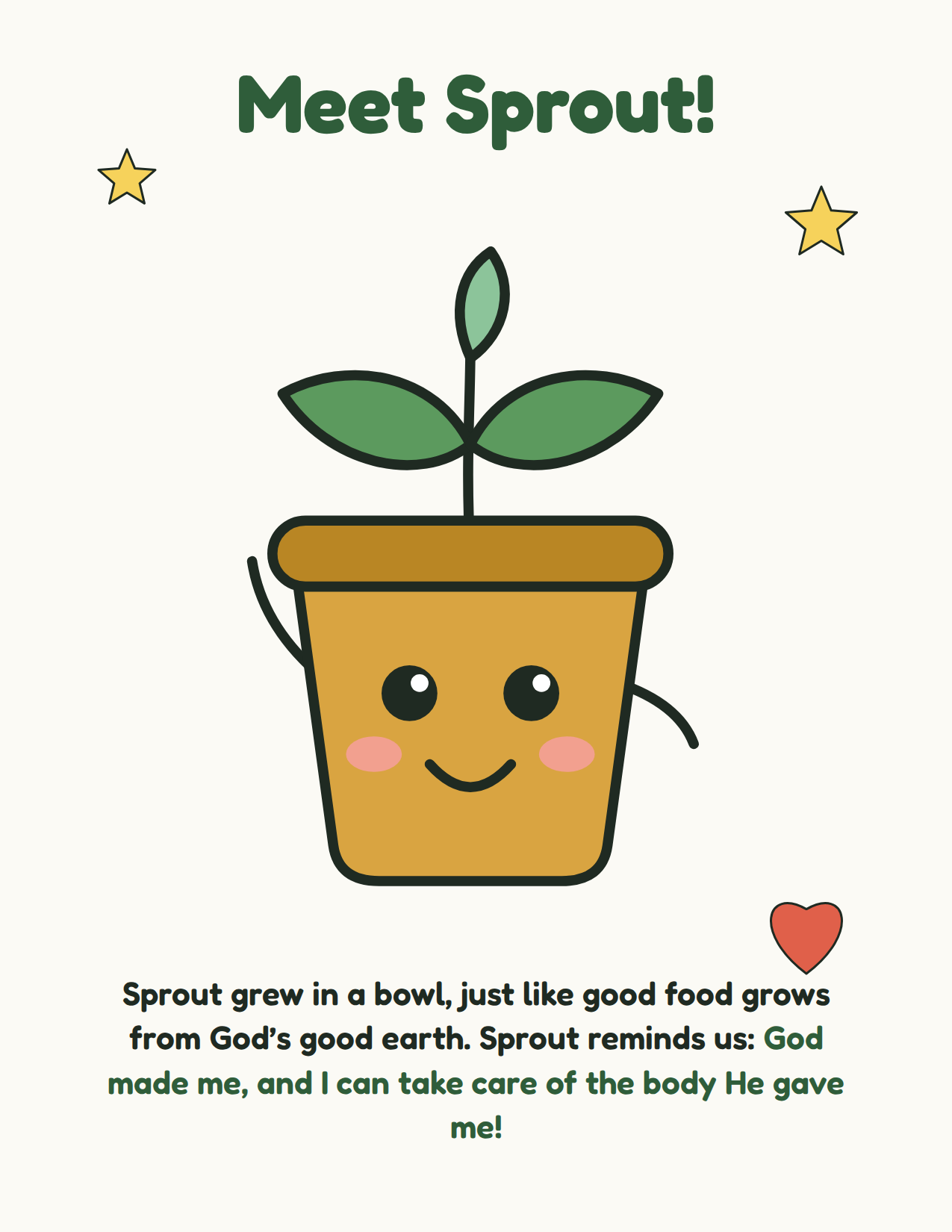
Meet Sprout
The 1031 Kids mascot, plus ideas for name tags, puppets and decorations.
Read nowPosters and coloring pages
Printables
Letter-size (8.5 × 11) posters and coloring pages. Open an image, then print or save it.

Keep going
Biblical foundation
Why health matters to Christians
Your body is God’s good creation. Caring for it is worship, not vanity.
ExploreFor pastors
Sermon series
“All for His Glory”: four ready-to-preach sermons plus a bonus on rest.
ExploreFor communicators
Social media kit
Graphics, captions, video scripts and accounts worth sharing.
ExploreResources · Q&A
Hard questions, honest answers
When a church starts talking about health, people will have questions, and some of them are hard. Here are honest, Bible-grounded answers to the ones we hear most. Use them in small groups, leadership meetings or your own study.
“Always being prepared to make a defense to anyone who asks you for a reason for the hope that is in you; yet do it with gentleness and respect.”
Questions
Cost and time
Doesn’t it cost a lot to eat healthy and live a healthy lifestyle?
Everything costs something. The real question is when you pay, and how much. You can pay a little more up front for good food, time to walk and a good night’s sleep. Or you can save a little now and pay far more later in prescriptions, doctor visits, hospital bills, missed work and years of lost health.
The up-front difference is smaller than most people think. A Harvard review of 27 studies found the healthiest diets cost about $1.50 more per person per day than the least healthy ones. The lead researcher, Dr. Dariush Mozaffarian, noted that this is “very small in comparison to the economic costs of diet-related chronic diseases” (Harvard Gazette).
Compare that with the cost of illness. The CDC reports that 90% of the nation’s $5.3 trillion in yearly health care spending goes to people with chronic and mental health conditions, and diagnosed diabetes alone cost an estimated $640 billion in medical costs and lost productivity in 2022 (CDC). Not every chronic illness can be prevented, but many of the most common and costly ones are strongly tied to how we eat, move and rest.
And many of the healthiest habits are free or cheap. Walking costs nothing. Water is nearly free. Sleep costs nothing. Beans, oats, rice, eggs, frozen vegetables and bananas are some of the least expensive foods in the store, and skipping soda, chips and fast food often saves money. Jesus said, “For which of you, desiring to build a tower, does not first sit down and count the cost?” (Luke 14:28). When we count the whole cost, health is not a luxury. It’s good stewardship.
Money really is tight for some families, and churches can help: see Eating healthy on a budget, host a cooking class, and stock the food pantry with healthy staples. But cost alone is not a good reason to ignore the body God gave us.
I don’t have time. How can I fit this in?
Start smaller than you think. A 10-minute walk counts. Three 10-minute walks count the same as one 30-minute walk (CDC). Cooking once and eating twice saves time. Going to bed 30 minutes earlier costs no time at all, only a show or some scrolling. The deeper question is priorities. We tend to make time for what we believe matters. Psalm 90:12 prays, “Teach us to number our days that we may get a heart of wisdom.”
Questions
What the Bible says
Isn’t the gospel about saving souls? Why should the church care about bodies?
God cares about the whole person. He made the body and called it “very good” (Gen 1:31). Jesus took on a real human body, healed bodies, fed hungry people and rose bodily from the grave. The Holy Spirit lives in the believer’s body (1 Cor 6:19). And our final hope is the resurrection of the body (1 Cor 15:42–44). A faith that ignores the body is not the full biblical faith.
There is also a practical side. Imagine how much more ministry could happen if our churches were healthier: more energy to serve, and more years of teaching, mentoring, giving and going.
Doesn’t 1 Timothy 4:8 say bodily training doesn’t really matter?
Paul says “bodily training is of some value.” That’s a real value, not a dismissal. He goes on: “godliness is of value in every way.” Paul is ranking them, not rejecting one. Physical care matters, and spiritual growth matters more. That’s exactly the balance 1031 Ministries aims for.
Isn’t this just legalism: more rules for Christians to follow?
It can be, if it becomes a list of rules for earning God’s approval. Paul warns that rules like “Do not handle, Do not taste, Do not touch” have “an appearance of wisdom” but “are of no value in stopping the indulgence of the flesh” (Col 2:21–23). We don’t care for our bodies to be accepted by God. In Christ we already are. We care for them because they are a gift from the God who loves us, and the Holy Spirit grows the fruit of self-control in us (Gal 5:22–23).
Is being overweight a sin? Isn’t gluttony just about eating too much?
No, body size is not a sin, and it isn’t a measure of anyone’s spiritual maturity. Weight is shaped by many things: genetics, medications, illness, stress, sleep, income and more. Gluttony is a matter of the heart: when food becomes a master instead of a gift (Phil 3:19; 1 Cor 6:12). A thin person can struggle with it, and a heavy person may not. That’s why the church should never judge people by how they look. We all bring our appetites to Jesus and ask Him for help.
Does the Bible give us a diet to follow?
No. The Old Testament food laws were for Israel. Jesus “declared all foods clean” (Mark 7:19), and Peter’s vision in Acts 10 confirmed it. Paul wrote that “everything created by God is good, and nothing is to be rejected if it is received with thanksgiving” (1 Tim 4:4). Scripture gives principles: gratitude, self-control, generosity, rest. For the practical details, we rely on sound nutrition science. Be cautious of anyone selling a “Bible diet.”
If I have enough faith, won’t God just keep me healthy or heal me?
God does heal, and we should pray for healing (James 5:14–15). But Scripture never promises that faithful people will always be healthy. Paul left Trophimus sick (2 Tim 4:20), told Timothy to take some wine for his stomach (1 Tim 5:23), and lived with his own “thorn in the flesh” (2 Cor 12:7–9). Sickness is not proof of weak faith. And God usually works through ordinary means: food, sleep, exercise, doctors and medicine. Caring for our bodies isn’t a lack of faith. It’s using the means God has given.
Can’t I just pray about it?
Yes, pray about it, and then act. Nehemiah prayed and set a guard (Neh 4:9). Prayer and action go together. Ask God for help and for self-control, and then take the next small step: the walk, the earlier bedtime, the glass of water.
Questions
In the life of the church
When is the best time of year to launch this in our church?
The best time is right after the first of the year. After the holidays, people naturally think more about their health, and many are already looking for a fresh start. A great way to begin is to kick off the new year with a church-wide time of prayer and fasting, then roll into the five-week sermon series. The Church-Wide Fast Planning Kit will help you plan it.
Fall is a great second option. School is back in session, routines reset, and people are ready to start something new before the holiday season.
Whichever you choose, give yourself a few weeks to prepare. Use the Launch checklist and the sermon series guide so your leaders are ready to go first.
Won’t talking about health make people feel judged or ashamed?
It will if we do it badly. That’s why every 1031 resource is built on grace, not guilt. We never talk about weight, never compare bodies, never hold public weigh-ins, and we always offer options for every ability and budget. The message isn’t “you’re failing.” It’s “God made you, loves you and wants to help you care for what He’s given.”
Our pastor and leaders aren’t very healthy. Can we still do this?
Yes, and that may be the best place to start. Leaders don’t need to be fit. They need to be honest and willing to go first. A pastor who says, “I’m working on this too,” will do more good than a hundred sermons from someone who seems to have it all together. A board vote to “support” this is not enough; leaders need to take personal steps. See the Leadership Commitment.
Isn’t health the doctor’s job, not the church’s?
Doctors treat illness; the church makes disciples. Discipleship includes our habits, and habits are formed in community. The church is one of the few places whole families gather every week. We don’t replace doctors. We encourage people to see them, support their advice, and walk alongside each other in daily faithfulness.
Are you trying to take the fun out of potlucks and church dinners?
Not at all. Feasting is biblical, and the early church ate together “with glad and generous hearts” (Acts 2:46). Birthday cake still belongs at church. We simply want the healthy choice to be the easy one: water on every table, vegetables and fruit alongside the favorites, and fewer sugary drinks. See the Church Food Guidelines.
What about weight-loss medications like Ozempic or Wegovy?
That decision belongs to each person and their doctor, not the church. Medicine is one of God’s good gifts, and using it is not a moral failure or “cheating.” At the same time, no medication replaces the daily stewardship of eating well, moving, resting and trusting God. The church’s job is not to judge anyone’s medical choices, but to encourage everyone in faithful habits.
What about people who struggle with eating disorders?
Eating disorders are serious illnesses, not a lack of willpower or faith. Anyone who is struggling should get help from a doctor and a counselor, ideally a Christian counselor experienced with eating disorders. Churches should never pressure people to diet or fast, and every 1031 resource includes safety notes. If this is you, please talk to someone you trust this week. God does not love you less, and there is real hope.
With so many spiritual needs, why should a church spend time on health?
Because it’s part of discipleship, and because it affects everything else. Tired, sick and stressed people have less to give. Healthier members have more energy to serve, more years to mentor and more strength to go. Caring for our bodies isn’t a distraction from ministry. It’s one of the ways we stay able to do it.
Have a question we didn’t answer?
We’re adding to this list all the time. [Contact details to be added before launch.]
Guides
Healthy living guides
Practical, Bible-grounded help for everyday choices: what to cook, what to order and what to avoid.
Recipes
Healthy recipes for real families
16 simple recipes for breakfast, lunch, snacks and dinner, with photos.
OpenEating out
Eating out the healthy way
What to order, and what to skip, at almost any restaurant.
OpenAlcohol
Why we encourage avoiding alcohol
What Scripture and current research say.
OpenQ&A
Hard questions, honest answers
Cost, legalism, weight, faith and healing, and more.
OpenSocial media
Social media kit
Graphics, captions, video scripts and accounts to share.
OpenPartner resources
Free Daniel Plan resources
40+ free recipes, workouts, devotions and church tools, organized.
OpenKids
Kids’ lessons
Five lessons with Sprout, posters and coloring pages.
OpenTestimonials
Stories of changed lives
Short videos of people who put God first in their health.
OpenGuides · Testimonials
Stories of changed lives
Short videos, each five minutes or less, of real people sharing how they began putting God first in their health, and how eating well, moving more and resting changed their lives.
“Come and hear, all you who fear God, and I will tell what he has done for my soul.”
Real people, 40 days later
Church members who went through The Daniel Plan together share what changed in their faith, food and fitness.
A pastor’s story
Pastor Tim shares why caring for body, mind and spirit became part of how his church makes disciples.
Abandoning the food crutch
Nick Cerda’s life changed through diet, exercise and a renewed sense of his identity in Christ.
Faith and fitness, together at last
Neli stopped separating her spiritual life from her body, and found freedom, peace and joy.
Staying the course
Monique talks about how she kept going, one faithful step at a time, with a Christ-centered group.
“I could hardly look in the mirror”
Through chronic illness, depression and shame, Jamie found God restoring her through Christ-centered movement.
Feeding her family well
A young mom, Keri, shares how learning healthy habits in a church group changed how she feeds her child.
Jenn’s story
Jenn Krogh shares how putting God first in her health changed her life.
Small changes, big results
Suzanne shares how starting with faith helped small, daily changes add up.
Kevin’s story
Kevin shares his journey to better health with God at the center.
These videos are shared by other ministries and are hosted on YouTube. We don’t control their content, and some stories mention weight loss. At 1031, our focus is faithfulness, not the number on the scale. Everyone’s story looks different.
Use them in your church
Play a story on Sunday
A two-minute testimony before a sermon in the All for His Glory series, or at the start of a small group, helps people see that change is possible. It also shows that change is a grace-filled journey, not a quick fix.
Share your story
Has God changed your health?
We’d love to hear how God has worked in your life or your church. Email us at support@1031ministries.org. With your permission, your story may encourage someone else.
For pastors and church leaders
The 1031 Challenge
Five weeks. One verse. A whole church learning to honor God with the bodies He gave us. Register your church, and we’ll add you to the map of congregations taking the challenge together.
“Whether you eat or drink, or whatever you do, do all to the glory of God.”
0
Churches signed up
0
States represented
5
Weeks in the challenge
The challenge
What your church commits to
Grace, not guilt. No weigh-ins, no comparisons, no diet talk. Just a church learning to steward what God gave us.
- Preach the series. Five weeks through All for His Glory, with free manuscripts, slides, kids’ lessons and small-group questions.
- Leaders go first. The pastor and leadership take their own steps, and say so honestly from the front. Use the leadership commitment.
- Look at your church’s food culture. Adopt the church food guidelines for potlucks, meals and snacks.
- Give people one next step each week. Water, a walk, a shared meal, a screen-free evening.
- Keep going after five weeks. Use the launch checklist to build a year-round rhythm.
On the map
Churches taking the challenge
Every pin is a congregation somewhere learning to honor God with their health. Churches outside the United States are listed below the map.
No pins yet. Yours could be the first.
The map is still empty
Be the first church on the map
Register below and we’ll add your church to this page. Then invite a church near you to take the challenge with you.
Register
Sign your church up
It takes a minute, it’s free, and there is nothing to buy. We’ll email you a short getting-started note and add your church to the map.
After you register
What happens next
A note from us
We’ll send you a short email with the sermon series, slides, kids’ lessons and the launch checklist, all free.
Your church on the map
If you asked to be listed, we’ll add your church so other congregations can see that they’re not doing this alone.
We pray for you
We pray for every church that registers. Tell us what you’d like prayer for in the form above.
Guides · Recipes
Healthy recipes for real families
Sixteen simple, budget-friendly recipes for breakfast, lunch, snacks and dinner. Most take 30 minutes or less and use ingredients from any grocery store.
“Oh, taste and see that the LORD is good!”
Our cooking fats
Cook with olive oil or beef tallow, and skip the seed oils
We encourage cutting out seed oils (canola, soybean, corn, cottonseed, sunflower and safflower oil) as much as possible. Cook with extra-virgin olive oil for most everyday cooking, dressings and roasting, and beef tallow (or butter) for high-heat searing and frying. The 2025–2030 Dietary Guidelines say to “prioritize oils with essential fatty acids, such as olive oil,” and note that “other options can include butter or beef tallow” (Dietary Guidelines). Seed oils also show up mostly in fried and packaged foods, so avoiding them usually means eating fewer of those too.
Where seed oils hide
- Fried foods: fries, fried chicken, onion rings, fried fish and anything from a deep fryer
- Most potato chips and other bagged snacks
- Corn tortilla chips and taco shells, and many store-bought tortillas (check the label)
- Bottled salad dressings and mayonnaise
- Crackers, cookies, granola bars and packaged baked goods
- Store-bought hummus, dips and spreads (look for ones made with olive oil)
- Microwave popcorn (pop your own in olive oil or tallow)
Read ingredient lists for canola, soybean, corn, cottonseed, sunflower, safflower, grapeseed, rice bran or “vegetable” oil.
Breakfast
Breakfast ideas
Start the day with fiber, protein and fruit, not a sugar rush.

Berry Oatmeal
See the recipe
Ingredients
- 2 cups old-fashioned oats
- 4 cups water or milk
- 1 cup frozen mixed berries
- 1 banana, sliced
- 1 tsp cinnamon
- Optional: 2 tbsp chopped walnuts or peanut butter
Steps
- Bring water or milk to a simmer. Stir in oats and cinnamon.
- Cook 5 minutes, stirring, until creamy.
- Stir in half the berries; top bowls with the rest, banana and nuts.
Tip: Skip the flavored instant packets. They can have several teaspoons of added sugar. Fruit sweetens it naturally.

Yogurt Parfait
See the recipe
Ingredients
- 4 cups plain Greek yogurt
- 2 cups berries (fresh or thawed frozen)
- 1 cup low-sugar granola or oats
- Optional: drizzle of honey
Steps
- Layer yogurt, berries and granola in glasses or jars.
- Repeat the layers and top with a few berries.
- Make them the night before for grab-and-go mornings.
Tip: Plain yogurt plus fruit has a fraction of the added sugar of fruit-flavored yogurt.

Veggie Omelet
See the recipe
Ingredients
- 4 eggs
- 1 cup spinach
- ½ bell pepper, diced
- ¼ onion, diced
- ¼ cup shredded cheese
- Salt, pepper, 1 tsp olive oil or beef tallow
Steps
- Sauté onion and pepper in oil 3 minutes; add spinach until wilted.
- Whisk eggs with salt and pepper and pour over the vegetables.
- Cook on low until set, sprinkle cheese, fold and serve.
Tip: Use whatever vegetables are left in the fridge. It’s a great way to waste nothing.

Egg on Whole-Grain Toast
See the recipe
Ingredients
- 4 slices whole-grain bread
- 2–4 eggs
- 1 avocado or a sliced tomato
- Salt, pepper, pinch of chili flakes
Steps
- Toast the bread.
- Fry or scramble the eggs in a little olive oil, butter or beef tallow.
- Mash avocado (or add tomato) on the toast, top with eggs and season.
Tip: Look for bread where “whole wheat” or “whole grain” is the first ingredient.
Lunch
Lunch ideas
Build a plate that keeps you full all afternoon.
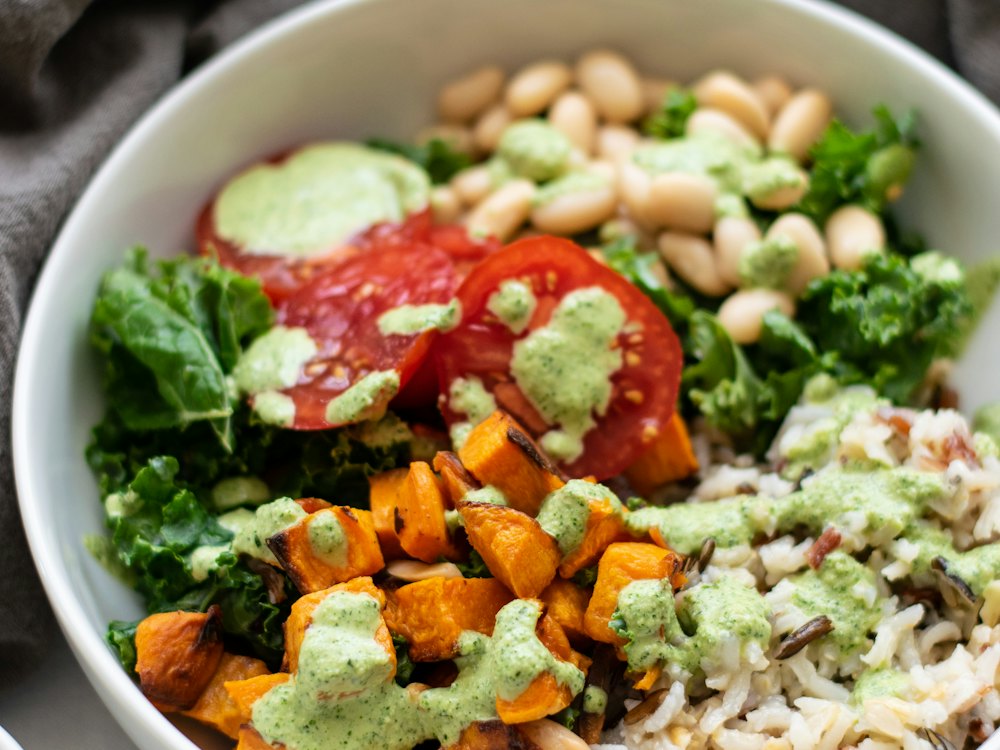
Rainbow Grain Bowl
See the recipe
Ingredients
- 3 cups cooked brown rice or quinoa
- 1 can white beans or chickpeas, rinsed
- 2 cups kale or spinach
- 1 sweet potato, cubed and roasted
- 1 cup cherry tomatoes
- Dressing: 3 tbsp olive oil, juice of 1 lemon, salt
Steps
- Roast sweet potato at 425°F for 20 minutes.
- Divide rice or quinoa into bowls.
- Top with greens, beans, sweet potato and tomatoes. Drizzle with dressing.
Tip: Cook a big batch of rice or quinoa on Sunday for the week.

Red Lentil Soup
See the recipe
Ingredients
- 1½ cups red lentils, rinsed
- 1 onion and 2 carrots, chopped
- 2 cloves garlic
- 1 can diced tomatoes
- 6 cups low-sodium broth
- 1 tsp cumin, salt, pepper, lemon juice
Steps
- Sauté onion, carrot and garlic 5 minutes.
- Add lentils, tomatoes, broth and cumin. Simmer 25 minutes.
- Blend partly for a creamy texture, season, and finish with lemon.
Tip: Lentils cost little, need no soaking, and are full of fiber and protein.

Chicken and Veggie Wrap
See the recipe
Ingredients
- 4 whole-wheat tortillas (check the label for seed oils)
- 2 cups cooked chicken, sliced (or beans)
- 2 cups shredded cabbage or lettuce
- 1 carrot, grated
- ½ cup hummus or plain Greek yogurt sauce
Steps
- Spread hummus on each tortilla.
- Add chicken and vegetables.
- Roll tightly, slice in half and wrap for lunchboxes.
Tip: Use leftover chicken from dinner. Cook once, eat twice.

Chickpea Crunch Salad
See the recipe
Ingredients
- 2 cans chickpeas, rinsed
- 1 cucumber, 1 bell pepper, ½ red onion, chopped
- 1 cup shredded carrots or cabbage
- Handful of parsley
- Dressing: olive oil, lemon or vinegar, salt, pepper
Steps
- Chop the vegetables.
- Toss everything with dressing.
- Let sit 10 minutes. It tastes even better the next day.
Tip: This salad keeps 3–4 days in the fridge, perfect for packed lunches.
Snacks
Snacks ideas
Snacks that fuel you instead of a candy-bar crash.
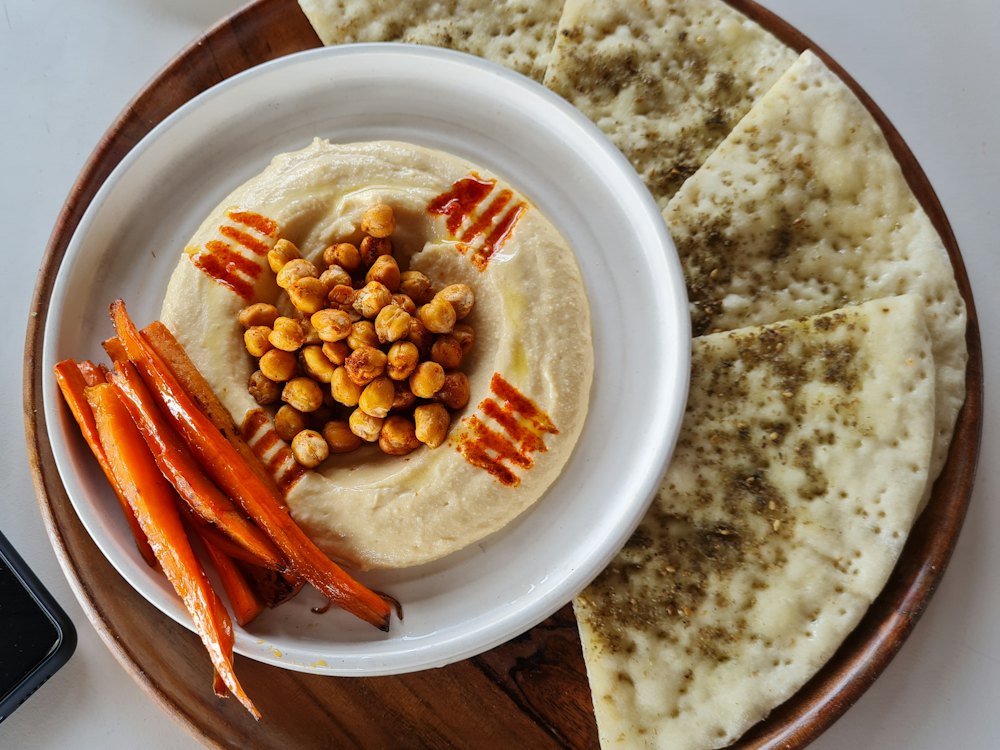
Hummus and Veggies
See the recipe
Ingredients
- 1 cup hummus (made with olive oil, or homemade)
- Carrot sticks, cucumber, bell pepper strips
- Whole-wheat pita, cut in triangles
Steps
- Arrange vegetables and pita around a bowl of hummus.
- Sprinkle hummus with paprika and a drizzle of olive oil.
Tip: Great for church events and kids’ ministry. Check for sesame allergies.
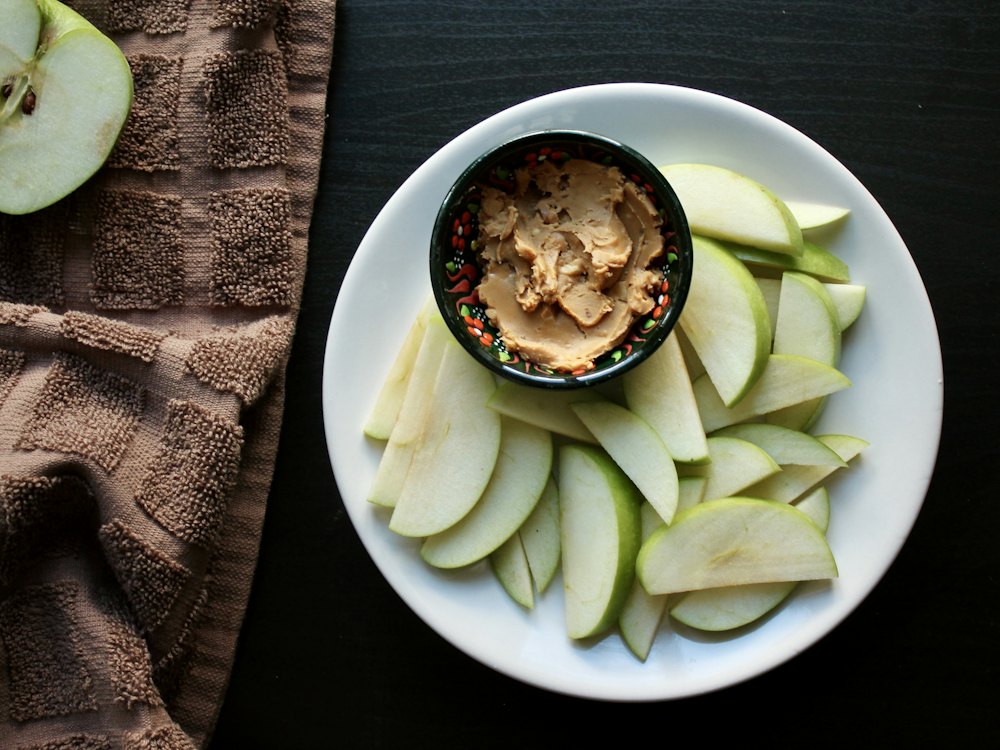
Apples and Peanut Butter
See the recipe
Ingredients
- 2 apples, sliced
- ¼ cup natural peanut butter (or sunflower butter)
- Optional: cinnamon
Steps
- Slice apples.
- Serve with peanut butter for dipping, dusted with cinnamon.
Tip: Use sunflower butter for nut-free classrooms and church events.
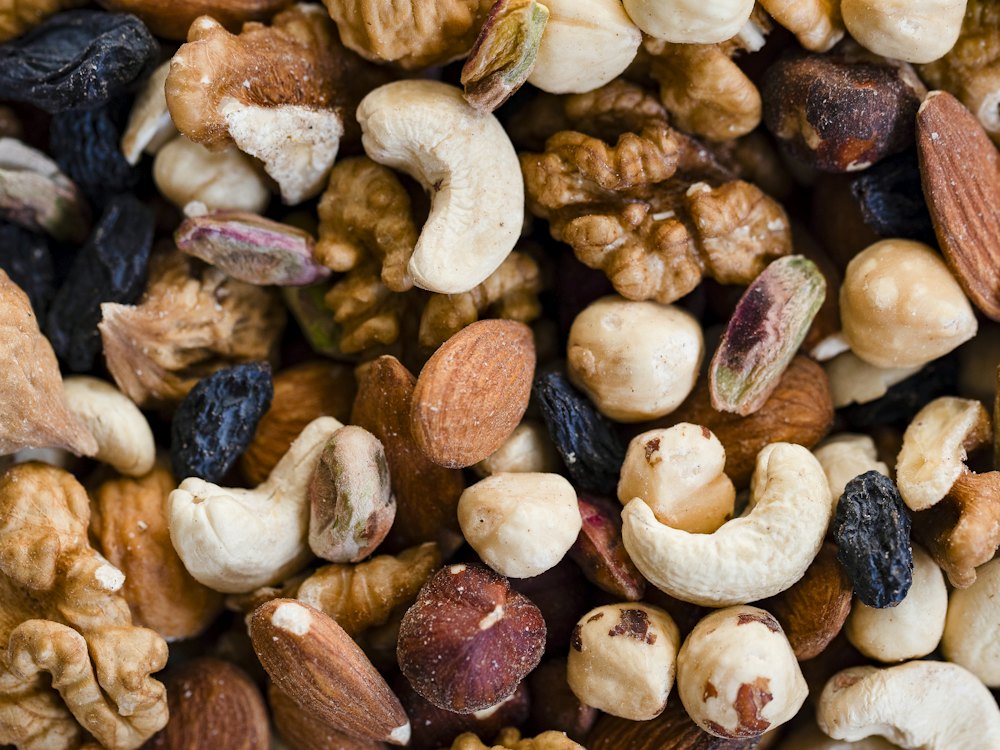
Homemade Nut and Raisin Mix
See the recipe
Ingredients
- 1 cup almonds
- 1 cup cashews or peanuts
- ½ cup walnuts
- ½ cup raisins
- Optional: ¼ cup dark chocolate chips
Steps
- Mix everything in a bowl.
- Portion into ¼-cup bags so a snack stays a snack.
Tip: Store-bought trail mix is often mostly candy. Making your own is cheaper and better for you. Not for nut-allergy settings.
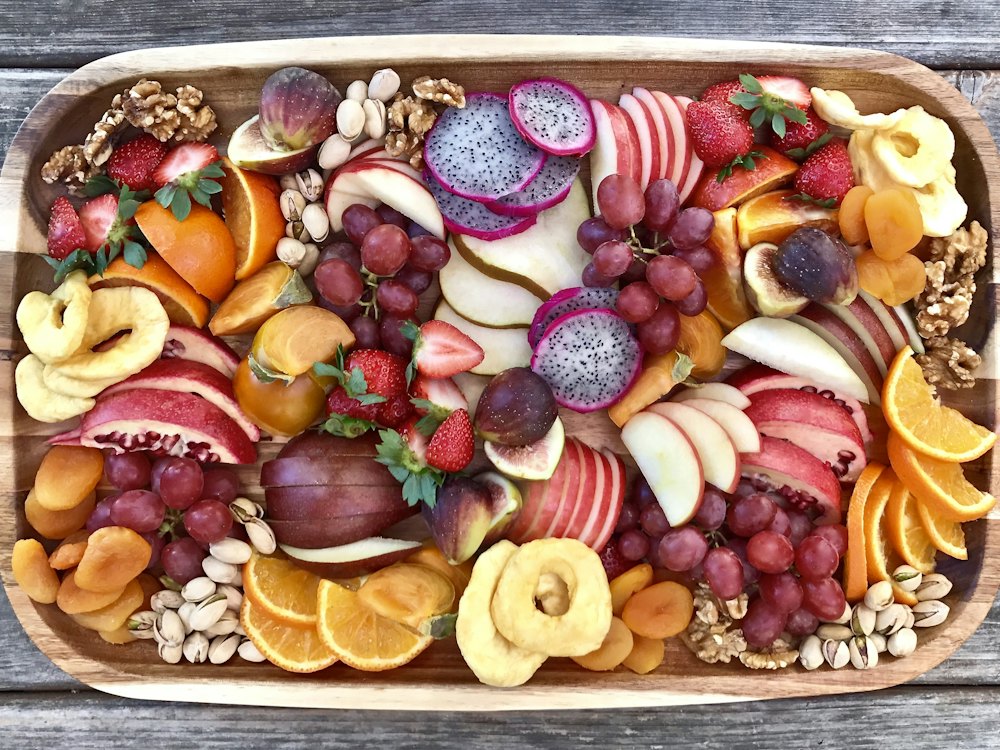
Fruit Platter
See the recipe
Ingredients
- Apples, oranges, grapes, berries, bananas
- Whatever is in season and on sale
- Optional: yogurt dip
Steps
- Wash and slice fruit.
- Arrange by color on a tray.
- Squeeze lemon on apples and bananas so they don’t brown.
Tip: Put this beside the desserts at your next church event. It disappears fast.
Dinner
Dinner ideas
Simple family dinners, most in one pan or pot.
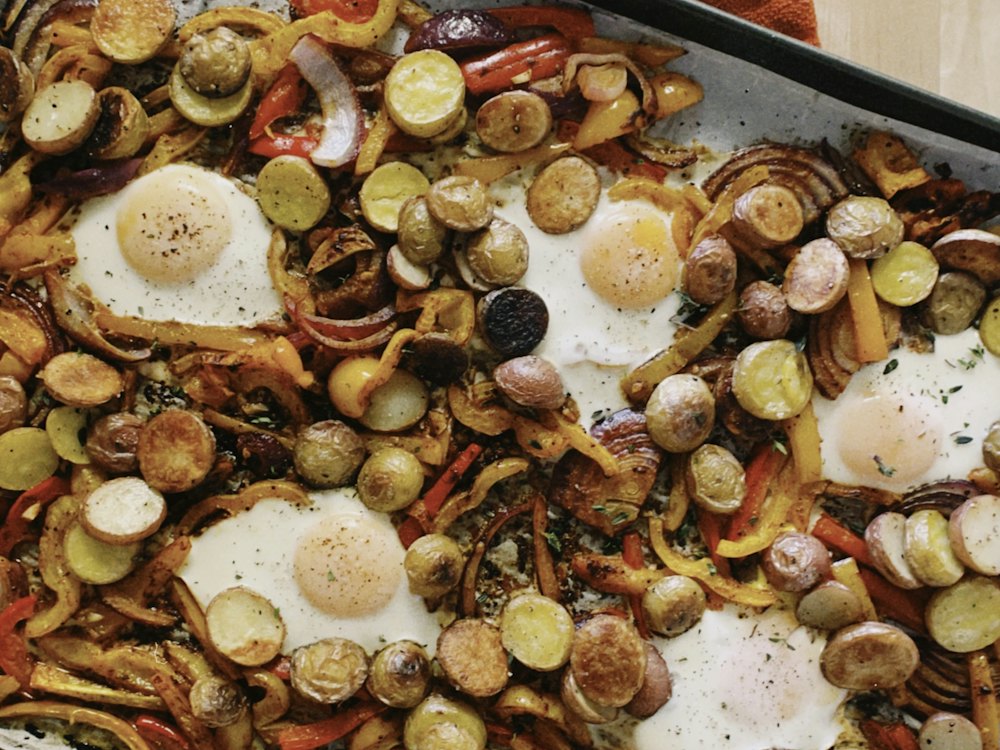
Sheet-Pan Potatoes, Veggies and Eggs
See the recipe
Ingredients
- 1½ lb potatoes, diced
- 1 onion, 1 bell pepper, 1 zucchini, chopped
- 2 tbsp olive oil or melted beef tallow, salt, pepper, paprika
- 6–8 eggs
Steps
- Toss vegetables with oil and spices. Roast at 425°F for 25 minutes.
- Make wells in the vegetables and crack in the eggs.
- Bake 6–8 more minutes until eggs are set.
Tip: Breakfast-for-dinner is cheap, fast and kids love it.
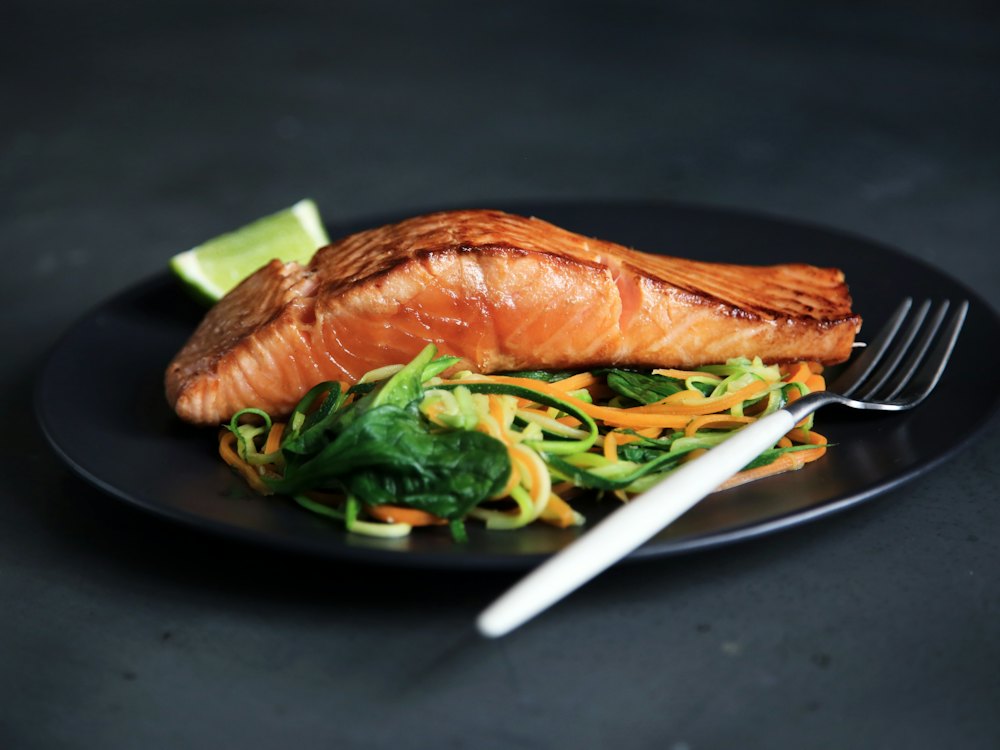
Salmon with Greens
See the recipe
Ingredients
- 4 salmon fillets (or canned salmon cakes)
- 4 cups spinach or green beans
- 1 lemon, garlic, olive oil, salt, pepper
- Brown rice or potatoes on the side
Steps
- Bake salmon at 400°F for 12–15 minutes with lemon, salt and pepper.
- Sauté greens with garlic and olive oil.
- Serve with rice or potatoes.
Tip: Frozen fish fillets are usually cheaper than fresh and just as healthy.

Chicken and Veggie Stir-Fry
See the recipe
Ingredients
- 1 lb chicken breast or thighs, sliced (or tofu)
- 4 cups mixed vegetables (fresh or a frozen stir-fry bag)
- 2 cloves garlic, 1 tbsp fresh ginger
- 3 tbsp low-sodium soy sauce
- Brown rice or whole-wheat noodles
Steps
- Cook chicken in a hot pan with a little beef tallow or olive oil until done. Set aside.
- Stir-fry vegetables with garlic and ginger 5 minutes.
- Add chicken and soy sauce, toss, and serve over rice or noodles.
Tip: Frozen stir-fry vegetable bags make this a 20-minute meal.
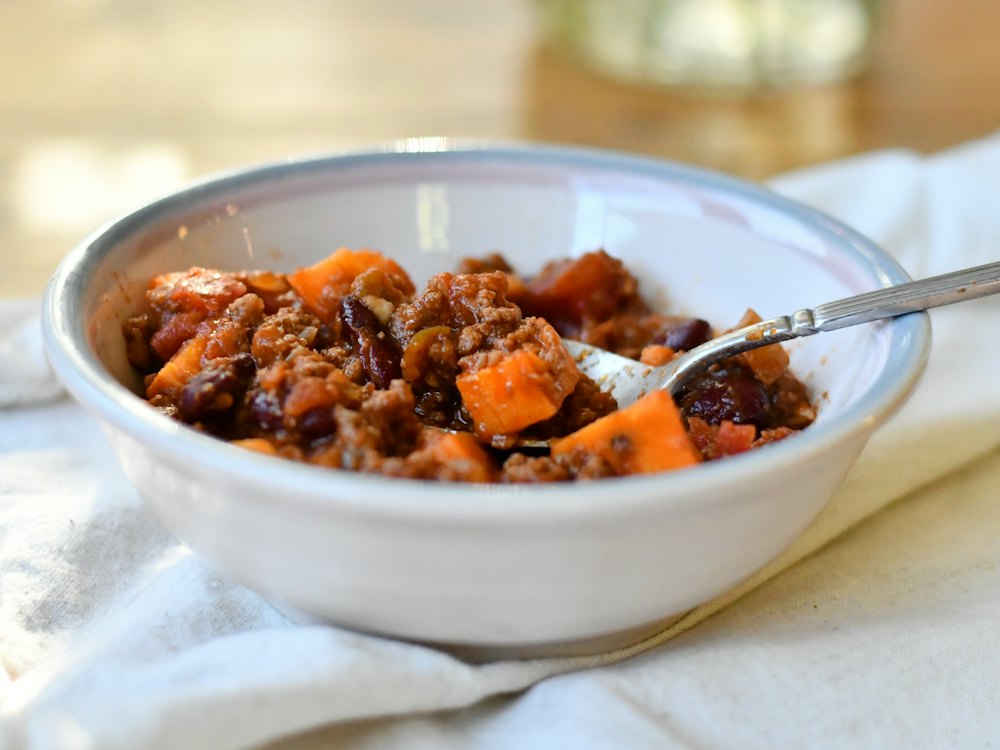
Sweet Potato and Bean Chili
See the recipe
Ingredients
- 1 lb lean ground turkey (optional)
- 2 cans beans, rinsed
- 1 large sweet potato, diced
- 1 onion, 2 cloves garlic
- 1 can diced tomatoes, 1 can tomato sauce
- 2 tbsp chili powder, 1 tsp cumin
Steps
- Brown turkey with onion and garlic (or skip the meat).
- Add everything else plus 1 cup water. Simmer 30 minutes until sweet potato is soft.
- Top with plain Greek yogurt and cilantro.
Tip: Doubles easily for church dinners and freezes well.
Free from The Daniel Plan
Want more? The Daniel Plan offers free recipes, a 3-day meal plan and short cooking videos.
Food and recipes
- The Daniel Plan Café · Free recipes: breakfast, lunch, dinner, snacks, desserts and sides
- 3-Day Meal Plan (PDF) · Three days of meals and snacks with 13 recipes
- The Daniel Plan Plate · Half non-starchy vegetables, a quarter protein, a quarter healthy starch or whole grain
- Good Foods List · A shopping list organized by the Daniel Plan Plate
- Cooking videos · Eight short videos: breakfast smoothie, taco bar, pasta, wraps, salads, chicken, and stocking your pantry and fridge
- 10 Ways to Conquer Your Cravings · Practical help with cravings
- Healthy Holiday Food Tips · Enjoying holidays without overdoing it
These links go to danielplan.com, Saddleback Church’s free health program. See our full Daniel Plan resource list.
More help
See the one-week budget meal plan and the Plan, Shop, Cook guide. Photos are from Unsplash and used under the Unsplash License; they show similar dishes and may not match each recipe exactly.
About
About 1031 Ministries
1031 Ministries is a new ministry that creates free resources to help churches teach healthy living and eating, grounded in the Bible and supported by sound science.
“So, whether you eat or drink, or whatever you do, do all to the glory of God.”
Our approach
What we believe about sources
Scripture first
Every resource starts with the Bible. Our teaching comes from a Protestant evangelical view that holds Scripture as the final authority.
Sound science
Practical health guidance comes from mainstream, peer-reviewed research and public-health guidelines, reviewed by a physician and a registered dietitian before publishing.
Grace, not guilt
We never shame bodies or food. Every resource offers options for every ability, budget and season of life.
Our commitment
Free for every church
Everything on this site will be free to download, print and adapt for your church. We serve churches of every tradition.
Get in touch
Contact us
Questions, feedback, or a story of how God is working in your church’s health? We’d love to hear from you. Email us at support@1031ministries.org.
Article
Why Your Body Matters to God
Most of us learned to think of faith as something that happens in the heart and the mind. The body was just along for the ride. But the Bible tells a different story, and it starts on the first page.
1. God made the body, and He called it good
When God finished creating the first man and woman, He did not step back and admire only their souls. Genesis says He formed the man "of dust from the ground and breathed into his nostrils the breath of life" (Gen 2:7). Body and breath, together. Then "God saw everything that he had made, and behold, it was very good" (Gen 1:31).
That word good includes your hands, your heart, your stomach and your knees. David prayed, "I praise you, for I am fearfully and wonderfully made" (Ps 139:14). Christians have never believed the body is a prison for the soul. That idea came from Greek philosophy, not from Scripture. God made you a whole person, and He cares about the whole person.
Now imagine how much more ministry could happen if your church were healthier. Picture members with more energy to serve on Sunday and all week long, and people who live longer and stay active in God’s work for more years. Think of the Sunday school teacher who can keep teaching into her eighties, the leader who still has the strength to help a family move, the grandparents who can keep up with their grandchildren and pass on their faith. A healthier, longer life isn’t just a blessing for one person. It strengthens the whole body of Christ, because every member has gifts the rest of the church needs (1 Cor 12:12–27).
2. Your body belongs to God
In 1 Corinthians 6, Paul writes to a church that had decided what they did with their bodies did not matter. His answer is one of the strongest statements about the body in the Bible:
“Or do you not know that your body is a temple of the Holy Spirit within you, whom you have from God? You are not your own, for you were bought with a price. So glorify God in your body.” 1 Corinthians 6:19–20
Paul's immediate subject is sexual immorality, and we should say that honestly. But the principle he uses reaches further. If the Holy Spirit lives in you, and if Jesus paid for you with His own blood, then your body is not yours to spend however you like. You are a steward, not an owner.
A steward manages something valuable on behalf of someone else. A good steward doesn't hoard the master's property, and he doesn't waste it either. He takes care of it so it can be used well. That is the posture this ministry invites you into: not obsession, not neglect, but faithful care.
3. Even eating and drinking can be worship
Our name comes from 1 Corinthians 10:31: "So, whether you eat or drink, or whatever you do, do all to the glory of God." Paul wrote those words at the end of a long discussion about food offered to idols. His point was that ordinary things like meals are never spiritually neutral. They can be done selfishly or for God's glory and for the good of others.
Paul also told Timothy that "everything created by God is good, and nothing is to be rejected if it is received with thanksgiving" (1 Tim 4:4). Food is a gift. Christians do not need to fear food or treat certain foods as sinful. We receive it with gratitude, we share it generously, and we enjoy it without letting it rule us.
4. Self-control is a fruit of the Spirit
The Bible warns against gluttony and drunkenness in the same breath (Prov 23:20–21), and Paul grieves over people whose "god is their belly" (Phil 3:19). These are hard words. But notice where the solution comes from. Self-control is not something we produce by willpower. It is listed as "the fruit of the Spirit" (Gal 5:22–23), something God grows in us as we walk with Him.
That changes how we approach our habits. We are not trying to earn God's love by eating better. We already have His love in Christ. We ask the Spirit to help us say yes to what is good and no to what has too much hold on us, the same way we would with any other area of life.
5. Training the body has real value, but godliness comes first
Paul used athletic language often. He wrote, "I discipline my body and keep it under control" (1 Cor 9:27). He also put exercise in its place: "For while bodily training is of some value, godliness is of value in every way, as it holds promise for the present life and also for the life to come" (1 Tim 4:8).
Both halves of that verse matter. Physical training is of some value, so we should not dismiss it. Godliness is of value in every way, so we must never let fitness become an idol. A church that ignores the body has missed the first half of the verse. A culture that worships the body has missed the second.
6. God built us for rest
When the prophet Elijah was exhausted and wanted to die, God did not start with a sermon. An angel touched him and said, "Arise and eat" (1 Kings 19:5). He slept, he ate, he slept again, and he ate again. Only then did God speak to him on the mountain.
God built rhythm into creation with the Sabbath (Ex 20:8–11). Jesus told His tired disciples, "Come away by yourselves to a desolate place and rest a while" (Mark 6:31). And Psalm 127:2 reminds us that God "gives to his beloved sleep." Rest is not laziness. It is an act of trust that God runs the world, and we do not.
7. Grace, not guilt, and a resurrection hope
Here is where the Christian view of the body is different from every diet book on the shelf. Health is not righteousness. Thin people are not holier than heavy people. People with chronic illness or disability are not less faithful. Paul warned that rules like "Do not handle, Do not taste, Do not touch" have "an appearance of wisdom" but "are of no value in stopping the indulgence of the flesh" (Col 2:21–23). Real change comes from the gospel, not from a list of rules.
And our bodies have a future. Christians do not hope to escape the body. We hope for its resurrection. Jesus "will transform our lowly body to be like his glorious body" (Phil 3:21). What is sown perishable will be raised imperishable (1 Cor 15:42). If God plans to raise your body, it matters what you do with it now.
So what do I do this week?
- Give thanks. Pause before every meal and thank God for the food and for the body He gave you.
- Pick one small step. Take a 20-minute walk, add a vegetable to dinner, or go to bed 30 minutes earlier. Don't try to change everything at once.
- Tell someone. Share your step with a friend or your small group. "Two are better than one" (Eccl 4:9).
- Offer your body to God. Pray through Romans 12:1 and present your body as "a living sacrifice."
If you have a health condition, talk with your doctor before making big changes to how you eat or exercise. If you struggle with food in a way that feels out of control, or with an eating disorder, please reach out to your pastor, a Christian counselor or your doctor. You are not alone.
More from this topic
Small-group lesson
Stewards, Not Owners
A small-group lesson on 1 Corinthians 6:19–20 and Romans 12:1, with discussion questions and a weekly challenge.
Read nowDevotional
7 Days: God Made Your Body
A seven-day devotional on the body as God’s good gift, from creation to resurrection.
Read nowPrintable handout
Scripture Memory Cards
Eight printable verse cards about the body, food and rest.
Read nowSmall-group lesson
Stewards, Not Owners
Leader notes
- Keep the tone warm and honest. Everyone in your group has a complicated relationship with their body in some way.
- Never ask people to share their weight, measurements or medical details. Talk about habits and heart, not numbers.
- If someone mentions an eating disorder or a serious health struggle, thank them for sharing, don't try to fix it in the group, and follow up privately. Have a Christian counselor's name ready.
- Go first when sharing. Your honesty gives everyone else permission.
Open (10 minutes)
Ask one or two of these to get people talking:
- What did you learn growing up about food, exercise or your body? Where did those ideas come from?
- Have you ever heard a sermon or lesson about taking care of your body? What do you remember?
Read (5 minutes)
Have someone read 1 Corinthians 6:19–20 and Romans 12:1 aloud.
“You are not your own, for you were bought with a price. So glorify God in your body.” 1 Corinthians 6:19b–20
“I appeal to you therefore, brothers, by the mercies of God, to present your bodies as a living sacrifice, holy and acceptable to God, which is your spiritual worship.” Romans 12:1
Discuss (25–30 minutes)
- Paul says "you are not your own." Does that feel freeing, uncomfortable or both? Why?
- What is the difference between an owner and a steward? What would it look like to treat your body as a steward?
- In 1 Corinthians 6, Paul is talking about sexual sin. Why do you think the same principle applies to how we eat, rest and move?
- Romans 12:1 calls presenting our bodies "spiritual worship." How can something as physical as a walk or a meal be worship?
- Read Psalm 139:13–14. How does knowing God made you "fearfully and wonderfully" change how you talk about your own body?
- Our culture tends to either ignore the body or worship it. Which way do you lean? What does a biblical middle look like?
- Read Colossians 2:20–23. Why don't rules alone change us? Where does lasting change come from?
Leader note on question 7
Help the group see that self-control is the fruit of the Spirit (Gal 5:22–23), not the product of willpower. We care for our bodies because we are loved and forgiven, not to become loved.
Apply (10 minutes)
Invite each person to choose one small step for the week. Write it down and share it with one other person in the group.
- Pray before every meal and thank God for your body.
- Take a 20-minute walk three times this week, and pray while you walk.
- Go to bed 30 minutes earlier on three nights.
- Replace one sugary drink a day with water.
- Memorize 1 Corinthians 6:19–20.
Pray (5 minutes)
Close by praying Romans 12:1 together. Ask God to help each person see their body as His gift and to give them the Spirit's strength for the step they chose.
More from this topic
Article
Why Your Body Matters to God
The biblical case for caring for your body: created good, bought with a price, and headed for resurrection.
Read nowDevotional
7 Days: God Made Your Body
A seven-day devotional on the body as God’s good gift, from creation to resurrection.
Read nowPrintable handout
Scripture Memory Cards
Eight printable verse cards about the body, food and rest.
Read nowChecklist
Launch Checklist
Use this checklist with your health team. Most churches can move from "we should do something" to a church-wide launch in about 90 days.
Weeks 1–2: The pastor and leaders commit, personally
This step is the foundation for everything else. A board vote to “support” a health ministry is not enough. Congregations follow what their leaders do. Before anything is announced, every leader commits to living it out.
- Pastor reads Why Your Body Matters to God and prays about leading this.
- Pastor chooses one or two personal health steps (sleep, walking, meals, rest) and starts them now.
- Share the vision with elders, deacons and staff, and invite each one to take personal steps, not just to approve the plan.
- Every leader signs the Leadership Commitment and names their own first steps.
- Pair leaders into accountability partners.
- Add a five-minute health check-in to every leadership meeting: “How are your steps going? How can we pray?”
- Agree on the “why”: this is about stewardship and discipleship, not weight loss.
- Pick a launch month. January, Lent and September work well.
Why leaders go first
Peter told church leaders to be “examples to the flock” (1 Pet 5:3), and Paul wrote, “Be imitators of me, as I am of Christ” (1 Cor 11:1). Leaders don’t need to be fit or have it all together. They need to be honest, humble and willing to take the first step in front of everyone.
Weeks 3–4: Build a health team
- Recruit 4–8 people. Look for a nurse, doctor, dietitian, counselor, coach or fitness-minded member, and someone who loves to cook.
- Include people of different ages, sizes and fitness levels, so the team reflects the whole church.
- Name a team leader who isn't the senior pastor.
- Hold a first meeting: pray, read 1 Cor 10:31 together, and review this checklist.
- Ask any medical professionals on the team to review materials before they go out.
Weeks 5–6: Listen to the congregation
- Run a short, anonymous survey (5–8 questions, 5 minutes).
- Ask what people want help with: cooking, budget, exercise, sleep, stress, fasting.
- Ask about barriers: time, cost, childcare, mobility, transportation.
- Ask when people could meet: Sunday, a weeknight, online.
- Share a summary of the results with the congregation. It shows you listened.
Weeks 7–8: Look at your church's food culture
- List every time your church serves food: coffee hour, Wednesday meals, potlucks, kids' snacks, youth events, funerals.
- Adopt the Church Food Guidelines, or write your own.
- Make water the easy default drink at every event.
- Talk with whoever cooks or caters. Ask for help, and don't criticize what they've done so far.
Weeks 9–12: Launch
- Preach the All for His Glory sermon series (4 weeks, plus a bonus on rest).
- Start small groups using the matching group lessons.
- Offer a church-wide 21- or 40-day challenge: habits, not pounds.
- Host one shared event: a prayer walk, a healthy potluck, or a cooking class.
- Collect short stories of what God is doing, with permission to share them.
After week 12: Keep it going
- Choose a monthly health theme (see Health and wellness tips).
- Put a weekly tip in the bulletin or on the screens.
- Start an ongoing walking group or cooking class.
- Partner with a local clinic, food pantry, or farmers' market.
- Plan a yearly emphasis, like a Lent fast or a fall challenge.
Guardrails from day one
- No public weigh-ins, before-and-after photos or "biggest loser" contests.
- Every challenge has an option for people with illness, disability or limited budgets.
- Keep a referral list of Christian counselors, including someone who understands eating disorders.
- Include a simple disclaimer on handouts: "This is not medical advice. Talk with your doctor before making major changes."
More from this topic
Guide
Church Food Guidelines
Simple, grace-filled guidelines for the food your church serves, without taking the joy out of the table.
Read nowCovenant
Leadership Commitment
A personal commitment for church leaders to live out healthy stewardship before asking the church to.
Read nowGuide
Health-Team Guide
How to build the small team that will carry this, who to recruit, what each person does, and exactly how to run the first meeting.
Read nowTemplate
Congregation Health Survey
A ready-to-use survey that tells you where your church actually is, and what they would show up for.
Read nowTemplate
Announcement and Bulletin Text
Every announcement you need, already written: bulletin blurbs, pulpit scripts, emails, social captions and text reminders.
Read nowPlan
12-Month Health Calendar
A year-long plan your health team can run with: one theme a month, with Scripture, an activity and the resource to use.
Read nowGuide
Church Food Guidelines
Churches love to eat together, and they should. The early church broke bread "with glad and generous hearts" (Acts 2:46). These guidelines keep the joy of the table while making the healthy choice the easy one.
Our heart behind this
We serve food to welcome people, to celebrate and to care for one another. We want what we serve to show that same care. These are guidelines, not rules. Birthday cake and Christmas cookies still belong at church.
Seven simple guidelines
- Water first, and skip the soda. Put water out at every event, cold and easy to reach, along with unsweetened tea and coffee. Avoid serving soft drinks and other sugary drinks whenever possible (see below).
- Half the table is plants. Aim for vegetables, fruit, salads, beans and whole grains to fill about half of every spread.
- A healthy option at every event. Even at a dessert social, include fruit or a lighter choice.
- Smaller portions, same generosity. Use smaller plates and cut desserts into smaller pieces. People can always come back.
- Cook with olive oil or beef tallow. Skip seed oils (canola, soybean, corn) in the church kitchen, and bake or roast instead of deep-frying.
- Label the food. A simple card listing common allergens (nuts, dairy, gluten, eggs) serves guests with food allergies and dietary needs.
- Celebrate without guilt. Never comment on what or how much someone eats. Grace at the table matters more than any menu.
Why we avoid soft drinks
Of everything we serve, soda and other sugar-sweetened drinks are the easiest thing to change, and the change matters.
- They’re the top source of added sugar. Sugary drinks are the leading source of added sugars in the American diet (CDC).
- One can is a lot of sugar. A 12-ounce regular soda has about 10 teaspoons (roughly 40 grams) of added sugar and about 150 calories, with no real nourishment. The 2025–2030 Dietary Guidelines suggest no more than 10 grams of added sugar in a whole meal, so a single can is about four times that (Dietary Guidelines).
- They’re linked to real harm. The CDC notes that adults who often drink sugary drinks are more likely to have weight gain, obesity, type 2 diabetes, heart disease, cavities and gout.
- The guidelines say to avoid them. The Dietary Guidelines recommend water and unsweetened drinks, and avoiding “sugar-sweetened beverages, such as sodas, fruit drinks, and energy drinks.”
- Kids learn from what we serve. When church events always offer soda and fruit punch, children learn that sweet drinks are normal with every meal.
What to serve instead: cold water (add lemon, cucumber, orange slices or berries), sparkling water, unsweetened iced tea, coffee, and plain milk for kids. If you serve juice, choose 100% juice in small cups.
This isn’t about shaming anyone who enjoys a soda. It’s about making the healthy choice the easy one when God’s people gather. If you phase soft drinks out, do it gently: start with water on every table, then drop soda from one event at a time.
Easy swaps
| Instead of… | Try… |
|---|---|
| Donuts at coffee hour | Fruit, whole-grain muffins, yogurt cups, or a mix of both |
| Soda at every table | Water pitchers with lemon or cucumber, sparkling water, unsweetened iced tea |
| Fruit punch or sweet tea for kids | Water with fruit slices, plain milk, or 100% juice in small cups |
| Chips and candy for kids | Apple slices, cheese sticks, carrots and hummus (made with olive oil), homemade popcorn |
| Potato chips and tortilla chips (fried in seed oils) | Veggie trays, fruit, nuts, or homemade popcorn in olive oil |
| Fried chicken every Wednesday | Baked chicken, chili, soup and salad, or taco bar with beans |
| Casseroles with cream soups | Roasted vegetables, rice and bean dishes, sheet-pan meals |
| Dessert as the main event | A fruit platter beside the desserts, cut into smaller pieces |
For potlucks
Use a simple sign-up with categories so the table stays balanced: main dish, vegetable or salad, fruit, whole-grain side, dessert. Ask families with last names A–H to bring a vegetable dish, and rotate each time.
For the kitchen team
Thank them first. Many of these volunteers have fed your church for years. Invite them to help shape the new menu instead of handing them a list, and consider a cooking class where they can share favorite recipes with a lighter twist.
More from this topic
Checklist
Launch Checklist
Every step to launch a health focus in your church, week by week.
Read nowCovenant
Leadership Commitment
A personal commitment for church leaders to live out healthy stewardship before asking the church to.
Read nowGuide
Health-Team Guide
How to build the small team that will carry this, who to recruit, what each person does, and exactly how to run the first meeting.
Read nowTemplate
Congregation Health Survey
A ready-to-use survey that tells you where your church actually is, and what they would show up for.
Read nowTemplate
Announcement and Bulletin Text
Every announcement you need, already written: bulletin blurbs, pulpit scripts, emails, social captions and text reminders.
Read nowPlan
12-Month Health Calendar
A year-long plan your health team can run with: one theme a month, with Scripture, an activity and the resource to use.
Read nowCovenant
Leadership Commitment
Many boards approve a new ministry with a vote and never live it out. This commitment is different. It isn’t a vote to support a program. It’s a personal promise, made before God and each other, to go first.
“Shepherd the flock of God that is among you… not domineering over those in your charge, but being examples to the flock.” 1 Peter 5:2–3
How to use it
- The pastor presents this at a leadership meeting, after sharing Why Your Body Matters to God.
- Give each leader a week to pray about it. No one should sign under pressure.
- At the next meeting, each leader shares their first steps and signs.
- Pair leaders as accountability partners.
- Revisit it every quarter. Celebrate progress and restart without shame when someone slips.
1031 Ministries · Leadership Commitment
I will go first
As a leader in [Church name], I believe my body belongs to God. It was made by Him, bought by Christ and is a temple of the Holy Spirit (1 Cor 6:19–20). Before I ask our church to care for the bodies God has given them, I commit to do it myself, by His grace.
I commit to:
- Take personal steps. I will choose one or two specific habits and start them now, not after the launch.
- Be honest, not perfect. I will share my progress and struggles openly with my accountability partner and, when appropriate, with our church.
- Participate, not just approve. I will join every church-wide challenge, walk and event alongside our members.
- Model grace. I will never shame anyone about their body, weight or food, including myself.
- Keep it spiritual. I will pair my physical steps with prayer and Scripture, remembering that godliness is of value in every way (1 Tim 4:8).
- Check in. I will answer honestly when we check in at each leadership meeting.
My first steps
Step 1
Step 2
My accountability partner
By God’s grace, I will go first.
Signed · Date
Ideas for first steps
- Walk 20–30 minutes, 5 days a week (see the Couch to 150 plan)
- Get 7 or more hours of sleep most nights
- Take a weekly Sabbath, a full day or at least an evening
- Replace soda and sweet drinks with water
- Pray before every meal and stop eating when satisfied
- Schedule an annual checkup and know your blood-pressure numbers
- Try a one-meal fast with prayer (if it’s safe for you; see the fasting guide)
For pastors: Duke’s Clergy Health Initiative found that many pastors see caring for themselves as selfish. It isn’t. You can’t lead your church somewhere you aren’t willing to go.
More from this topic
Checklist
Launch Checklist
Every step to launch a health focus in your church, week by week.
Read nowGuide
Church Food Guidelines
Simple, grace-filled guidelines for the food your church serves, without taking the joy out of the table.
Read nowGuide
Health-Team Guide
How to build the small team that will carry this, who to recruit, what each person does, and exactly how to run the first meeting.
Read nowTemplate
Congregation Health Survey
A ready-to-use survey that tells you where your church actually is, and what they would show up for.
Read nowTemplate
Announcement and Bulletin Text
Every announcement you need, already written: bulletin blurbs, pulpit scripts, emails, social captions and text reminders.
Read nowPlan
12-Month Health Calendar
A year-long plan your health team can run with: one theme a month, with Scripture, an activity and the resource to use.
Read nowSermon manuscript
Week 1: Whose Body Is It?
Introduction
This morning we're starting a four-week series called All for His Glory. It comes from one verse, 1 Corinthians 10:31: "So, whether you eat or drink, or whatever you do, do all to the glory of God."
For the next few weeks we're going to talk about something churches almost never talk about: our bodies. What we eat, how we rest, whether we move. Some of you just got a little nervous. Let me say up front what this series is not. It is not a diet program. Nobody is going to get weighed. Nobody is going to be shamed. This is not about looking a certain way.
This series is about discipleship. It's about whether Jesus is Lord of all of us, including the parts that get hungry and tired and sore.
[Personal story: Share a moment when you realized you weren't caring for your own body well: a doctor's visit, exhaustion, a habit you couldn't shake. Keep it short and honest.]
So let's start with the most basic question. Whose body is it?
Read the text
Turn with me to 1 Corinthians 6, starting in verse 12.
[Read 1 Corinthians 6:12–20 aloud.]
Corinth was a wealthy port city with a reputation. The Christians there had picked up some slogans. You can hear them in verse 12 and 13: "All things are lawful for me." "Food is meant for the stomach and the stomach for food." In other words: it's just my body. What I do with it doesn't touch my soul.
Paul's main concern in this passage is sexual immorality, and we need to be honest about that. But the way he answers them, the principle he reaches for, applies to the whole body. He answers with three truths. Your body is God's, because God made it. Your body is God's, because Christ bought it. And your body is God's, because God will raise it.
1. God made it: your body is good
Paul says in verse 13, "The body is not meant for sexual immorality, but for the Lord, and the Lord for the body." The Lord for the body. God is for your body.
That goes all the way back to the beginning. When God made the first man, Genesis says He "formed the man of dust from the ground and breathed into his nostrils the breath of life." Dust and breath. Body and soul. And when God looked at everything He had made, He said it was "very good."
David prays in Psalm 139, "For you formed my inward parts; you knitted me together in my mother's womb. I praise you, for I am fearfully and wonderfully made."
Some of us don't feel fearfully and wonderfully made. We look in the mirror and we feel disappointed, or ashamed, or just tired. Maybe you live with chronic pain or illness, and your body feels more like an enemy than a gift. Hear this: your body is not a mistake. Your body is not less valuable because it's sick or aging or bigger or smaller than you'd like. God made it, and God calls it good.
And that means the body matters. Christianity has never taught that the body is a cage for the soul. That idea came from Greek philosophy, and the Corinthians had soaked it up. Paul says no. The body is for the Lord.
2. Christ bought it: you are not your own
Now look at verses 19 and 20. "Or do you not know that your body is a temple of the Holy Spirit within you, whom you have from God? You are not your own, for you were bought with a price. So glorify God in your body."
Two images are packed in here. The first is a temple. For a Jewish reader, the temple was the place where God's presence lived. Paul says: if you belong to Jesus, the Holy Spirit lives in you. God's presence isn't in a building in Jerusalem anymore. It's in you.
The second image is a purchase. "You were bought with a price." In Corinth, slaves were bought and sold in the marketplace. Paul says you have been purchased, and the price was the blood of Jesus. You belong to someone else now.
That is the heart of this whole series. You are not an owner. You are a steward.
An owner can do whatever he wants. If I own a car, I can wash it every day, or I can run it into the ground. It's mine. But a steward is different. A steward manages something valuable on behalf of someone else. Jesus told parables about stewards. The master goes away, the servants manage his property, and when the master returns he asks, "What did you do with what I gave you?"
One day each of us will stand before the Lord. He isn't going to ask how much we weighed or how fast we ran a mile. But He may ask: "I gave you a body, and I lived in it by my Spirit. What did you do with it?"
[Illustration: Something you've been entrusted with that belongs to someone else: a borrowed truck, a friend's house while they were away, a grandparent's heirloom. How did you treat it differently because it wasn't yours?]
Being a steward cuts two ways. It rules out neglect. We don't get to say, "It's just my body, it doesn't matter," while we run ourselves into the ground with no sleep, constant stress and whatever food is fastest. But it also rules out obsession. A steward doesn't worship the property. Our culture spends billions of dollars worshiping the body, and Christians can fall into that too. Paul tells Timothy, "While bodily training is of some value, godliness is of value in every way." The body is a gift to steward, not a god to serve.
3. God will raise it: your body has a future
Go back to verse 14. "And God raised the Lord and will also raise us up by his power."
This is the part we forget. Christians don't just believe in souls going to heaven. We believe in the resurrection of the body. Later in this same letter, Paul writes, "What is sown is perishable; what is raised is imperishable." Philippians says Jesus "will transform our lowly body to be like his glorious body."
Think about what that means. God cares so much about your body that He plans to raise it from the dead and make it new. The body you have now is a seed of the body you'll have forever.
That gives us enormous hope, especially for those who are suffering. If your body is failing you right now, this isn't the end of the story. And it also gives us enormous motivation. If God is going to raise this body, then what I do with it now isn't meaningless.
So what do we do?
Paul ends with a command: "So glorify God in your body." Not "fix your body." Not "perfect your body." Glorify God in it.
Let me give you three simple ways to start this week.
- Offer it. Romans 12:1 says, "Present your bodies as a living sacrifice, holy and acceptable to God, which is your spiritual worship." This week, write a short prayer offering your body to God. Pray it every morning.
- Thank God for it. Before every meal, stop and thank God for the food and for the body He gave you. Gratitude changes how we eat.
- Take one small step. Not ten. One. A walk, an earlier bedtime, a glass of water instead of a soda. Tell someone what it is.
And if you're sitting there thinking, "I've tried all this before and failed," hear the good news. You are not your own. You were bought with a price. That means your worth was settled at the cross, not on the scale. Jesus didn't die for your body because it was in great shape. He died for you because He loves you. We don't take care of our bodies to earn God's love. We do it because we already have it.
Closing prayer
Father, thank You for making us, body and soul, and calling us good. Thank You, Jesus, for buying us with Your own blood. Holy Spirit, thank You for living in us. Forgive us for the ways we've neglected or idolized the bodies You gave us. Help us to be faithful stewards. Grow self-control in us, and give us joy in the small steps. Whether we eat or drink, or whatever we do, may we do it all for Your glory. In Jesus' name, amen.
More from this topic
Sermon manuscript
Week 2: Every Bite for His Glory
The full manuscript for week 2: food as God’s gift, received with thanks and enjoyed with self-control.
Read nowSermon manuscript
Week 3: Hungry for God
The full manuscript for week 3: why and how Christians fast, with clear safety guidance.
Read nowSermon manuscript
Week 4: Train Yourself for Godliness
The full manuscript for week 4: physical discipline has real value, and godliness comes first.
Read nowSermon manuscript
Bonus Week: Come Away and Rest
The full manuscript for the bonus week: rest and sleep as acts of trust in God.
Read nowSeries guide
All for His Glory: Series Guide
Outlines, big ideas and small-group questions for every week of the series.
Read nowMessage and story bank
The Battle for Your Appetite
From Eden to the wilderness, food has been one of the enemy’s oldest weapons. Bible stories, a sermon outline and teaching notes on gluttony.
Read nowPrintable handout
Sermon Note Sheets
Bulletin-ready note sheets for every week of the series.
Read nowSermon manuscript
Week 2: Every Bite for His Glory
Introduction
Last week we asked, “Whose body is it?” And we saw that your body is God’s. He made it, Christ bought it, and He will raise it. We are stewards, not owners.
This week we come to the verse this whole series is named for. It’s about the thing most of us do three times a day, often without a single thought about God: we eat.
[Personal story: A meal that meant something to you, like a family table growing up, a holiday, a meal after a funeral. Or be honest about a time food became comfort or escape for you.]
Food is never just food. It’s memory. It’s comfort. It’s celebration. It’s culture. For some of us it’s a source of stress, or guilt, or even a battle. So what does God say about the fork in your hand?
Read the text
[Read 1 Corinthians 10:23–31 aloud.]
Here’s the setting. In Corinth, most meat sold in the market had first been offered to an idol at a pagan temple. Christians were arguing. Some said, “An idol is nothing, so I can eat whatever I want.” Others said, “Eating that meat is joining in idol worship.”
Paul’s answer lands in verse 31: “So, whether you eat or drink, or whatever you do, do all to the glory of God.” Out of this passage and the rest of Scripture, I see three truths about food.
1. Food is a gift: receive it with thanks
Look at verse 26. Paul quotes Psalm 24: “For ‘the earth is the Lord’s, and the fullness thereof.’” Everything on your plate came from God’s earth.
Paul told Timothy the same thing: “For everything created by God is good, and nothing is to be rejected if it is received with thanksgiving, for it is made holy by the word of God and prayer” (1 Tim 4:4–5).
That’s important, because our culture has turned food into a moral scoreboard. Foods are “good” or “bad.” You were “good” today, or you “cheated.” We feel guilty about eating dessert and proud about eating kale. But the Bible doesn’t talk that way. Food isn’t righteous or sinful. It’s a gift.
God could have made food a bland pellet that keeps us alive. Instead He made strawberries and fresh bread and grilled fish and coffee. He gave us taste buds. Ecclesiastes says, “Go, eat your bread with joy, and drink your wine with a merry heart, for God has already approved what you do” (Eccl 9:7). And Jesus, the Son of God, loved a good meal so much that His critics called Him a glutton (Luke 7:34). He wasn’t, but He clearly enjoyed the table.
So the first way to eat for God’s glory is simple: say thank you. The prayer before a meal isn’t a ritual to rush through. It’s an act of worship. It reminds us who fed us.
2. Food is a good servant but a poor master
But here’s the other side. Earlier in this same letter, Paul quotes the Corinthians’ slogan, “All things are lawful for me,” and answers, “but I will not be dominated by anything” (1 Cor 6:12). In our passage he says, “‘All things are lawful,’ but not all things are helpful” (10:23).
Food is a wonderful servant. It gives us strength and joy and brings people together. But it makes a terrible master. Paul warns about people whose “god is their belly” (Phil 3:19). Proverbs warns against being “among gluttonous eaters of meat” (Prov 23:20).
Now, gluttony isn’t about body size. Thin people can be gluttons, and plenty of heavy people are not. Gluttony is when food rules us, when we reach for it to fill a place only God can fill. Boredom, stress, loneliness, grief: many of us eat to cope with those feelings. I know I have.
[Illustration: The pantry at 10 p.m. after a hard day. What were you really hungry for?]
Jesus said, “I am the bread of life; whoever comes to me shall not hunger” (John 6:35). Food can fill your stomach. Only Jesus can fill your soul. When food becomes the master, the answer isn’t more rules and more guilt. It’s coming to Jesus with our hunger, and asking the Holy Spirit to grow the fruit of self-control in us.
A tender word here. Some of you are fighting a harder battle with food: an eating disorder, or years of dieting and shame. Hear me: God does not love you less. And this is not a battle to fight alone. Please talk to me, or to someone you trust, this week. There is help and there is hope.
3. Faithfulness at the table: the example of Daniel
Let’s look at one more story. Turn to Daniel 1. Daniel and his friends were young men taken from Jerusalem to Babylon. They were being trained to serve the king, and they were given food and wine from the king’s own table.
Verse 8: “But Daniel resolved that he would not defile himself with the king’s food, or with the wine that he drank.” Scholars suggest several reasons. The king’s food may have been offered to idols or unclean under God’s law, and eating from the king’s table meant depending on the king. Whatever the exact reason, Daniel decided in advance that his faithfulness to God would reach his plate.
He asked for a ten-day test: “Let us be given vegetables to eat and water to drink” (Dan 1:12). At the end, they looked healthier than the others. But notice: this isn’t a diet plan. The point isn’t that vegetables are holy. The point is that Daniel’s loyalty to God shaped even his meals, and God honored it.
Daniel resolved. He decided ahead of time. That’s a helpful practice for us. Most of our food choices aren’t made at the table. They’re made at the store, in the drive-through line, in the plan (or lack of plan) for the week. What if we made some decisions ahead of time, prayerfully, the way Daniel did?
Eat for God’s glory and your neighbor’s good
Go back to 1 Corinthians 10:24: “Let no one seek his own good, but the good of his neighbor.” Paul’s whole point is that our eating should serve others. Food at its best is shared. The early church “broke bread in their homes” and “received their food with glad and generous hearts” (Acts 2:46).
So eating for God’s glory also means: Who can you invite to your table? Who in our church or neighborhood is hungry? How does what we serve at church show care?
This week’s challenge
- Pray before every meal. Every one, even the snack in the car. Thank God specifically.
- Add one vegetable a day. Not as a rule, as an act of care for the body God gave you.
- Share one meal. Invite someone to eat with you this week.
Whether you eat or drink, or whatever you do, do all to the glory of God. Every bite can be worship.
Closing prayer
Lord, the earth is Yours and everything in it. Thank You for every meal You have ever provided. Forgive us for the times we’ve been ungrateful, and for the times food has become our master instead of You. Jesus, You are the bread of life. Fill the hungry places in us that food can never fill. Grow self-control in us by Your Spirit, and make our tables places of joy, gratitude and welcome. In Jesus’ name, amen.
More from this topic
Sermon manuscript
Week 1: Whose Body Is It?
The full manuscript for week 1 of All for His Glory. Edit it freely and add your own stories.
Read nowSermon manuscript
Week 3: Hungry for God
The full manuscript for week 3: why and how Christians fast, with clear safety guidance.
Read nowSermon manuscript
Week 4: Train Yourself for Godliness
The full manuscript for week 4: physical discipline has real value, and godliness comes first.
Read nowSermon manuscript
Bonus Week: Come Away and Rest
The full manuscript for the bonus week: rest and sleep as acts of trust in God.
Read nowSeries guide
All for His Glory: Series Guide
Outlines, big ideas and small-group questions for every week of the series.
Read nowMessage and story bank
The Battle for Your Appetite
From Eden to the wilderness, food has been one of the enemy’s oldest weapons. Bible stories, a sermon outline and teaching notes on gluttony.
Read nowPrintable handout
Sermon Note Sheets
Bulletin-ready note sheets for every week of the series.
Read nowSermon manuscript
Week 3: Hungry for God
Pastor, please include this
When you invite people to fast, say clearly that some people should not fast from food without a doctor’s approval: anyone with a history of an eating disorder; people who are pregnant, breastfeeding or trying to conceive; people with diabetes; anyone under 18; and people on blood-pressure or heart medication. Present a non-food fast as a full and equal option. See A Beginner’s Guide to Biblical Fasting.
Introduction
For two weeks we’ve talked about our bodies and our food. Today we’re going to talk about something many Christians have never done: going without food on purpose to seek God. It’s called fasting.
[Ask for a show of hands, or just ask the room to consider: Who has ever fasted? Who grew up in a church that practiced it? Share your own experience, or your hesitation.]
For most of church history, fasting was normal. Early Christians fasted twice a week. Today it has almost disappeared in many churches. Maybe it sounds extreme, or legalistic, or like something only super-Christians do. I want to show you from Scripture that Jesus meant it for ordinary followers like us.
1. Jesus expected His followers to fast
[Read Matthew 6:16–18.]
In the Sermon on the Mount, Jesus talks about three practices: giving, praying and fasting. And with each one He says “when,” not “if.” “When you give.” “When you pray.” “And when you fast, do not look gloomy like the hypocrites.”
Later, when people asked why His disciples didn’t fast, Jesus said, “The days will come when the bridegroom is taken away from them, and then they will fast” (Matt 9:15). We are living in those days. Jesus has ascended to the Father, and we wait for Him to return. Fasting is part of that longing.
And the early church did it. In Acts 13, the leaders in Antioch were “worshiping the Lord and fasting” when the Holy Spirit set apart Paul and Barnabas for missionary work. Some of the biggest moves of God in the book of Acts started with fasting and prayer.
Notice what Jesus warns against, though. Don’t fast to be seen. The religious leaders of His day made sure everyone knew they were fasting. They looked miserable on purpose. Jesus says they have their reward: people noticed. That’s all they get.
Instead, “anoint your head and wash your face.” Look normal. Keep it between you and your Father, “and your Father who sees in secret will reward you.” Fasting is not a performance. It is a private conversation with God.
2. Fasting teaches us we live by God’s word
[Read Matthew 4:1–4.]
Before Jesus began His public ministry, He fasted for forty days in the wilderness. Matthew says, with some understatement, “he was hungry.” And that’s exactly when the devil showed up: “If you are the Son of God, command these stones to become loaves of bread.”
Jesus answered by quoting Deuteronomy 8: “Man shall not live by bread alone, but by every word that comes from the mouth of God.”
That’s what fasting teaches us. We think we live by bread. We think we need that snack, that coffee, that meal on time. Fasting shows us how much we lean on food for comfort and control. And when we feel that hunger, we turn it into prayer: “God, I need You more than I need this.”
Fasting doesn’t earn anything from God. It doesn’t twist His arm. It changes us. It clears space. It makes us hungrier for Him. As the psalmist says, “As a deer pants for flowing streams, so pants my soul for you, O God” (Ps 42:1).
[Illustration: What happens to your mood when you’re hungry? What does it reveal about how much you depend on food?]
3. True fasting leads to justice and generosity
[Read Isaiah 58:3–7.]
In Isaiah 58, God’s people are frustrated. They say, “Why have we fasted, and you see it not?” And God answers bluntly: on the day you fast, you still exploit your workers and fight with each other.
Then God describes the fast He wants: “to loose the bonds of wickedness… to let the oppressed go free… Is it not to share your bread with the hungry and bring the homeless poor into your house; when you see the naked, to cover him?”
True fasting doesn’t just make us more spiritual. It makes us more generous. When I skip a meal, I feel for a few hours what many people feel every day. That should move me to act. One simple practice: take the money you would have spent on the meals you skip, and give it to a food pantry or someone in need.
How to start
If you’ve never fasted, start small.
- Choose one meal. Skip lunch one day this week. Drink water.
- Replace the meal with prayer. Use that time to read Scripture and pray. Without prayer, it’s just skipping a meal.
- Use your hunger as a reminder. Every hunger pang is a nudge to pray.
- Give. Put what you would have spent toward someone who is hungry.
And again, if you have a health condition, if you’re pregnant, if you have diabetes, if you’ve struggled with an eating disorder, or if you’re a young person, please don’t fast from food without talking to your doctor. You can fast from something else: social media, TV, shopping, your phone after dinner. That is a real fast. God sees the heart, not the menu.
This week’s challenge
Choose one fast: a one-meal fast with prayer, or a fast from something other than food. Tell God why you’re fasting, and keep it between you and Him.
Closing prayer
Father, we confess that we often live as if we live by bread alone. We reach for comfort in so many places besides You. Teach us to hunger for You. Let our fasting be honest, humble and hidden. And let it make us generous, quick to share our bread with the hungry. Jesus, You are the bread of life. Make us hungry for You. Amen.
More from this topic
Sermon manuscript
Week 1: Whose Body Is It?
The full manuscript for week 1 of All for His Glory. Edit it freely and add your own stories.
Read nowSermon manuscript
Week 2: Every Bite for His Glory
The full manuscript for week 2: food as God’s gift, received with thanks and enjoyed with self-control.
Read nowSermon manuscript
Week 4: Train Yourself for Godliness
The full manuscript for week 4: physical discipline has real value, and godliness comes first.
Read nowSermon manuscript
Bonus Week: Come Away and Rest
The full manuscript for the bonus week: rest and sleep as acts of trust in God.
Read nowSeries guide
All for His Glory: Series Guide
Outlines, big ideas and small-group questions for every week of the series.
Read nowMessage and story bank
The Battle for Your Appetite
From Eden to the wilderness, food has been one of the enemy’s oldest weapons. Bible stories, a sermon outline and teaching notes on gluttony.
Read nowPrintable handout
Sermon Note Sheets
Bulletin-ready note sheets for every week of the series.
Read nowSermon manuscript
Week 4: Train Yourself for Godliness
Introduction
We’ve talked about our bodies, our food and fasting. Today we talk about the word that makes some of you want to leave early: exercise.
[Lighthearted opener: your own history with exercise, like a failed New Year’s resolution, a gym membership you paid for and never used, or the sport you loved as a kid.]
Our culture has two very different relationships with exercise. Some people ignore their bodies completely. Others are consumed by fitness: the perfect physique, the next race, the right numbers on the watch. Christians fall into both ditches. Paul shows us the road between them.
Read the text
[Read 1 Timothy 4:7–8.]
“Rather train yourself for godliness; for while bodily training is of some value, godliness is of value in every way, as it holds promise for the present life and also for the life to come.”
The word Paul uses for “train” is the Greek word our English “gymnasium” comes from. Paul is borrowing the language of the gym. He wrote to Timothy, a young pastor in Ephesus, a city that loved athletics.
1. Bodily training has real value
Notice first what Paul does not say. He doesn’t say, “Bodily training is worthless.” He says it “is of some value.” That’s not a put-down. It’s an honest ranking.
And the value is real. Regular movement strengthens your heart, helps you sleep, lifts your mood, and helps prevent diseases like type 2 diabetes. The CDC recommends that adults get about 150 minutes of moderate activity a week. That sounds like a lot, but it’s just 30 minutes, five days a week. A brisk walk counts.
Why does this matter to a Christian? Because of everything we’ve said in this series. Your body is God’s. He made it good, Christ bought it, and the Spirit lives in it. Caring for it is stewardship. And a body that is cared for can serve longer: it can carry groceries for a neighbor, play on the floor with grandchildren, go on a mission trip, stand through a whole worship service.
[Illustration: Someone in your church who stays active in order to serve: an older member who still volunteers, a nurse who works long shifts, a grandparent who keeps up with the kids.]
2. Godliness has greater value
But then Paul turns: “Godliness is of value in every way, as it holds promise for the present life and also for the life to come.”
Physical training helps you in this life. Godliness helps you in this life and the next. Your six-pack won’t follow you into eternity. Your character will. Your love for God and your neighbor will.
That keeps exercise in its place. If fitness becomes where you get your identity, your worth, your sense of control, it has become an idol. If you skip church to fit in a long run every week, or feel superior to people who are out of shape, something is off. The goal isn’t to look good. The goal is to be faithful.
And here’s the connection: Paul says, “Train yourself for godliness.” The same things that make physical training work also make spiritual training work. Consistency. Small steps. Showing up when you don’t feel like it. Doing it with others. The discipline of the body and the discipline of the soul go together.
3. Run with purpose
[Read 1 Corinthians 9:24–27.]
Paul uses more athletic pictures. “Every athlete exercises self-control in all things. They do it to receive a perishable wreath, but we an imperishable.” Winners of the ancient games got a wreath of leaves that wilted in days. Paul says, we’re running for a prize that lasts forever.
Then: “So I do not run aimlessly; I do not box as one beating the air. But I discipline my body and keep it under control, lest after preaching to others I myself should be disqualified.”
Paul disciplined his body. Why? So that he could finish his race and fulfill his calling. His body was not an obstacle to his ministry. It was the instrument of it.
Hebrews 12 takes it further: “Let us run with endurance the race that is set before us, looking to Jesus, the founder and perfecter of our faith.” We don’t run to earn anything. We run looking to Jesus, who already ran the race and finished it for us.
For every body
Some of you are thinking, “I can’t run. I have bad knees, chronic pain, a disability.” Hear this clearly: stewardship looks different for every body. For some of you, faithful movement is a walk around the block. For some, it’s chair exercises or stretching or physical therapy. For some, it’s simply resting well because your body is fighting a battle. God doesn’t measure you against anyone else. He asks you to be faithful with what you’ve been given.
And if you haven’t been active in a long time, or you have a health condition, talk to your doctor before you start something new.
This week’s challenge
- Walk and pray. Take a 20-minute walk on five days this week, and pray as you go.
- Invite someone. Ask a friend, a spouse or a neighbor to walk with you.
- Pair it with Scripture. Memorize 1 Timothy 4:8 on your walks.
Our church has a Couch to 150 walking plan and a prayer walk guide to help you.
Closing prayer
Lord, thank You for bodies that can move, walk, lift and serve. Forgive us for neglecting them, and forgive us for worshiping them. Train us in godliness. Give us endurance for the race You’ve set before us, and help us keep our eyes on Jesus. May our strength be used for Your glory and for the good of others. Amen.
More from this topic
Sermon manuscript
Week 1: Whose Body Is It?
The full manuscript for week 1 of All for His Glory. Edit it freely and add your own stories.
Read nowSermon manuscript
Week 2: Every Bite for His Glory
The full manuscript for week 2: food as God’s gift, received with thanks and enjoyed with self-control.
Read nowSermon manuscript
Week 3: Hungry for God
The full manuscript for week 3: why and how Christians fast, with clear safety guidance.
Read nowSermon manuscript
Bonus Week: Come Away and Rest
The full manuscript for the bonus week: rest and sleep as acts of trust in God.
Read nowSeries guide
All for His Glory: Series Guide
Outlines, big ideas and small-group questions for every week of the series.
Read nowMessage and story bank
The Battle for Your Appetite
From Eden to the wilderness, food has been one of the enemy’s oldest weapons. Bible stories, a sermon outline and teaching notes on gluttony.
Read nowPrintable handout
Sermon Note Sheets
Bulletin-ready note sheets for every week of the series.
Read nowSermon manuscript
Bonus Week: Come Away and Rest
Introduction
We’ve spent four weeks on our bodies, our food, fasting and exercise. Today we finish with the one thing almost everyone in this room needs more of: rest.
[Ask: How many of you would say you’re tired right now? Share an honest story about a season when you ran on empty.]
We live in a culture that brags about being busy. “How are you?” “Busy!” We wear exhaustion like a badge. The CDC says adults need at least seven hours of sleep a night, and a large share of Americans regularly get less. Church people are no exception. Sometimes we’re the worst, because we fill every night with good things.
But God built limits into us on purpose. And He cares about how we rest.
1. Jesus invites tired people to rest
[Read Mark 6:30–32.]
The disciples had just come back from their first mission trip. They were excited, full of stories, and worn out. Mark says, “many were coming and going, and they had no leisure even to eat.”
And Jesus says, “Come away by yourselves to a desolate place and rest a while.”
Notice: the work wasn’t finished. There were still crowds. There were still needs. Jesus didn’t say, “Push through, the kingdom depends on you.” He said, “Come away and rest.”
Jesus Himself rested. He slept in a boat in the middle of a storm (Mark 4:38). He withdrew to pray. He went to dinners. He wasn’t lazy, and He wasn’t frantic either. He lived at the pace of trust.
And He says the same thing to us: “Come to me, all who labor and are heavy laden, and I will give you rest” (Matt 11:28).
2. God cares for the body before He speaks to the soul
[Read 1 Kings 19:1–8.]
Elijah had just seen one of the greatest victories in the Old Testament. Fire fell from heaven on Mount Carmel. And then one threat from Queen Jezebel, and he ran for his life. He collapsed under a broom tree and said, “It is enough; now, O Lord, take away my life.”
Look at what God did. He didn’t lecture Elijah. He didn’t tell him to have more faith. Verse 5: “And he lay down and slept under a broom tree. And behold, an angel touched him and said to him, ‘Arise and eat.’” There was bread baked on hot stones and a jar of water. Elijah ate and went back to sleep. Then the angel came again: “Arise and eat, for the journey is too great for you.”
Sleep. Food. Sleep. Food. Only after that did God speak to Elijah on the mountain, in a low whisper.
Sometimes the most spiritual thing you can do is take a nap. Sometimes what looks like a spiritual crisis is partly a physical one. When you are exhausted, everything looks darker. God knows that. He made you. And He cares for your body as well as your soul.
[Tender note: If you’re dealing with deep discouragement or depression, rest and food matter, and so does help. Please talk to a pastor, a counselor or your doctor. That is not a lack of faith.]
3. Rest is an act of trust
God built rest into the rhythm of creation. “Six days you shall labor, and do all your work, but the seventh day is a Sabbath to the Lord your God” (Ex 20:9–10). God Himself rested on the seventh day, not because He was tired, but to set a pattern for us.
Sabbath is a gift, not a chore. Jesus said, “The Sabbath was made for man, not man for the Sabbath” (Mark 2:27). It’s one day a week to stop, worship, enjoy God and the people we love, and remember that the world doesn’t depend on us.
Psalm 127:2 puts it this way: “It is in vain that you rise up early and go late to rest, eating the bread of anxious toil; for he gives to his beloved sleep.”
When you go to sleep, you are admitting you’re not God. You can’t keep everything running. You hand it over for eight hours and trust Him to hold it. Every night, sleep is a little act of faith. “In peace I will both lie down and sleep; for you alone, O Lord, make me dwell in safety” (Ps 4:8).
Practical steps toward rest
- Protect your sleep. Aim for seven or more hours. Go to bed and get up at the same time most days.
- Put the screens down. The CDC recommends avoiding screens for at least 30 minutes before bed.
- Take a weekly Sabbath. Pick a day, or even an evening, to stop working, rest and worship.
- Say no to something. Look at your calendar. What can you cut, even if it’s good?
Looking back on the series
Over these weeks, we’ve seen that your body belongs to God. Every bite can be worship. Hunger can draw us to God. Training has value, and godliness has more. And rest is an act of trust.
[Share one or two stories from the congregation about what God has done during the series, with permission.]
None of this is about earning God’s love. We already have it in Christ. It’s about living as whole people, body and soul, for His glory. Whether you eat or drink, whether you run or rest, do it all to the glory of God.
This week’s challenge
Keep a screen-free Sabbath evening. Put the phones away, share a meal, rest, and thank God for the week.
Closing prayer
Lord Jesus, You invite the weary to come to You. We come tired. Forgive us for acting as if everything depends on us. Teach us to rest the way You rested, and to trust You enough to lie down and sleep. Care for our bodies and our souls, as You cared for Elijah. And may everything we do, whether we eat or drink or rest, be for Your glory. Amen.
More from this topic
Sermon manuscript
Week 1: Whose Body Is It?
The full manuscript for week 1 of All for His Glory. Edit it freely and add your own stories.
Read nowSermon manuscript
Week 2: Every Bite for His Glory
The full manuscript for week 2: food as God’s gift, received with thanks and enjoyed with self-control.
Read nowSermon manuscript
Week 3: Hungry for God
The full manuscript for week 3: why and how Christians fast, with clear safety guidance.
Read nowSermon manuscript
Week 4: Train Yourself for Godliness
The full manuscript for week 4: physical discipline has real value, and godliness comes first.
Read nowSeries guide
All for His Glory: Series Guide
Outlines, big ideas and small-group questions for every week of the series.
Read nowMessage and story bank
The Battle for Your Appetite
From Eden to the wilderness, food has been one of the enemy’s oldest weapons. Bible stories, a sermon outline and teaching notes on gluttony.
Read nowPrintable handout
Sermon Note Sheets
Bulletin-ready note sheets for every week of the series.
Read nowSeries guide
All for His Glory: Series Guide
Everything a pastor and small-group leaders need to plan the series: each week’s text, big idea, three-point outline, weekly challenge and discussion questions.
| Week | Title | Text |
|---|---|---|
| Week 1 | Whose Body Is It? | 1 Cor 6:12–20; Ps 139:13–16 |
| Week 2 | Every Bite for His Glory | 1 Cor 10:23–31; Daniel 1:8–16 |
| Week 3 | Hungry for God | Matt 6:16–18; Matt 4:1–4; Isa 58:6–7 |
| Week 4 | Train Yourself for Godliness | 1 Tim 4:7–8; 1 Cor 9:24–27 |
| Bonus | Come Away and Rest | Mark 6:30–32; 1 Kings 19:1–8; Ex 20:8–11 |
Week 1: Whose Body Is It?
Text: 1 Cor 6:12–20; Ps 139:13–16
Big idea: Your body is God’s good creation, bought with a price, so honor Him with it.
Outline
- God made it: the body is good (Gen 1:31; Ps 139:14).
- Christ bought it: you are not your own (1 Cor 6:19–20).
- God will raise it: the body has a future (1 Cor 15:42–44; Phil 3:21).
Small-group questions
- What did you grow up believing about your body? Where did it come from?
- What is the difference between an owner and a steward of your body?
- Why does the resurrection of the body matter for how we live now?
- What one small step will you take this week?
Week 2: Every Bite for His Glory
Text: 1 Cor 10:23–31; Daniel 1:8–16
Big idea: Food is a gift to receive with thanks and enjoy with self-control.
Outline
- Food is God’s gift, received with thanksgiving (1 Tim 4:4–5; Acts 2:46).
- Food is a good servant but a poor master (Phil 3:19; Prov 23:20–21; 1 Cor 6:12).
- Faithfulness at the table: Daniel’s example (Dan 1:8–16).
Small-group questions
- How does gratitude change the way you eat?
- Where has food become more of a master than a servant in your life?
- What stands out to you about Daniel’s choice? What did it cost him?
- Paul says to eat for God’s glory and others’ good. How could your meals serve others this week?
Week 3: Hungry for God
Text: Matt 6:16–18; Matt 4:1–4; Isa 58:6–7
Big idea: Fasting trades physical hunger for spiritual hunger and teaches that we live by God’s word.
Outline
- Jesus expected His followers to fast (“when you fast,” Matt 6:16).
- Fasting reminds us we live by every word from God (Matt 4:4).
- True fasting leads to justice and generosity (Isa 58:6–7).
Small-group questions
- Have you ever fasted? What was it like?
- Why do you think fasting has faded from many churches?
- Isaiah 58 connects fasting to caring for the poor. How could our fasting bless others?
- If you can’t fast from food, what could you fast from instead?
Week 4: Train Yourself for Godliness
Text: 1 Tim 4:7–8; 1 Cor 9:24–27
Big idea: Discipline of the body serves the discipline of the soul, and godliness comes first.
Outline
- Bodily training has real value (1 Tim 4:8a).
- Godliness has greater value, for this life and the next (1 Tim 4:8b).
- Run with purpose, not aimlessly (1 Cor 9:26–27; Heb 12:1–2).
Small-group questions
- Which do you tend toward: neglecting your body or making fitness too important?
- How are physical and spiritual discipline alike?
- What does it mean to run “with purpose” in your walk with God?
- What kind of movement do you actually enjoy? How could you do more of it?
Bonus: Come Away and Rest
Text: Mark 6:30–32; 1 Kings 19:1–8; Ex 20:8–11
Big idea: God designed us with limits; rest and sleep are acts of trust.
Outline
- Jesus invited tired disciples to rest (Mark 6:31; Matt 11:28).
- God cared for Elijah’s body before his soul: sleep and food (1 Kings 19:5–8).
- Sabbath is a gift of trust, not a chore (Ex 20:8–11; Ps 127:2).
Small-group questions
- What keeps you from resting well?
- Why do you think God gave Elijah sleep and food before He spoke to him?
- How is rest an act of trust in God?
- What would a screen-free Sabbath evening look like in your home?
Planning tips
- Announce the series two weeks early and invite people to bring a friend.
- Launch small groups the same week as sermon 1, so the conversation continues.
- In week 3, say plainly who should not fast from food (see A Beginner’s Guide to Biblical Fasting), and present a non-food fast as an equal option.
- Collect short stories during the series and share one in the final week.
More from this topic
Sermon manuscript
Week 1: Whose Body Is It?
The full manuscript for week 1 of All for His Glory. Edit it freely and add your own stories.
Read nowSermon manuscript
Week 2: Every Bite for His Glory
The full manuscript for week 2: food as God’s gift, received with thanks and enjoyed with self-control.
Read nowSermon manuscript
Week 3: Hungry for God
The full manuscript for week 3: why and how Christians fast, with clear safety guidance.
Read nowSermon manuscript
Week 4: Train Yourself for Godliness
The full manuscript for week 4: physical discipline has real value, and godliness comes first.
Read nowSermon manuscript
Bonus Week: Come Away and Rest
The full manuscript for the bonus week: rest and sleep as acts of trust in God.
Read nowMessage and story bank
The Battle for Your Appetite
From Eden to the wilderness, food has been one of the enemy’s oldest weapons. Bible stories, a sermon outline and teaching notes on gluttony.
Read nowPrintable handout
Sermon Note Sheets
Bulletin-ready note sheets for every week of the series.
Read nowMessage and story bank
The Battle for Your Appetite
From the first pages of the Bible, food has been at the center of the story. It began as God’s good gift. It became the setting of the first sin. And again and again, the enemy has used appetite to pull God’s people away from Him. It’s one of his oldest weapons, and one of the least talked about in the church.
The stories
1. The garden: food as God’s good gift
Before there was sin, there was a garden and there was food. God planted a garden in Eden, filled it with trees “good for food,” and gave the man a job: “The LORD God took the man and put him in the garden of Eden to work it and keep it” (Gen 2:15). Adam and Eve grew food, tended the garden and ate freely: “You may surely eat of every tree of the garden” (Gen 2:16). God’s first picture of human life includes good work, good food and daily dependence on Him.
Teaching point: Food is not the enemy. It is a gift from a generous God. Every lie about food begins by twisting something God made good.
2. The first sin was about food
God gave one boundary: don’t eat from the tree of the knowledge of good and evil. The serpent’s first move was to question God’s word about food: “Did God actually say, ‘You shall not eat of any tree in the garden’?” Then Eve looked: “When the woman saw that the tree was good for food, and that it was a delight to the eyes, and that the tree was to be desired to make one wise, she took of its fruit and ate” (Gen 3:6). The first act of human disobedience was an act of eating.
(The Bible says “fruit,” not “apple.” The apple comes from later art and tradition, so it’s worth saying so from the pulpit.)
Teaching point: The pattern of Genesis 3:6 is the same one John names in 1 John 2:16: “the desires of the flesh and the desires of the eyes and pride of life.” The enemy still uses appetite, appearance and pride.
3. Esau traded his future for a bowl of stew
Esau came in from the field exhausted and hungry. Jacob was cooking red lentil stew. “Let me eat some of that red stew, for I am exhausted!” Jacob asked for his birthright in exchange, and Esau said, “I am about to die; of what use is a birthright to me?” He traded his inheritance for one meal. “Thus Esau despised his birthright.” Hebrews calls him “unholy like Esau, who sold his birthright for a single meal.”
Teaching point: Appetite shouts “I need it now,” and it makes us willing to trade what matters most for what satisfies for a moment. What are we trading our health, our energy and our years of service for?
4. Israel in the wilderness: the graves of craving
God fed Israel with manna every single morning. But “the rabble that was among them had a strong craving,” and the people wept, “Oh that we had meat to eat!” They even missed the food of Egypt, the land of their slavery. God sent quail, and a plague followed. The place was named Kibroth-hattaavah, “because there they buried the people who had the craving” (Num 11:34). The psalmist sums it up: “They tested God in their heart by demanding the food they craved” (Ps 78:18).
Paul points to this very story in the chapter our ministry is named from: “Now these things took place as examples for us, that we might not desire evil as they did” (1 Cor 10:6).
Teaching point: Craving can make us ungrateful for God’s daily provision and nostalgic for the very things that enslaved us.
5. Eli’s sons: taking the best for themselves
Eli’s sons were priests who took the best portions of the sacrifices for themselves, even before the offering was made to God. God asked Eli why he honored his sons above Him “by fattening yourselves on the choicest parts of every offering of my people Israel” (1 Sam 2:29).
Teaching point: This is a warning especially for leaders. Appetite left unchecked can corrupt even people who serve at the altar.
6. Daniel: faithful at the king’s table
Far from home, Daniel “resolved that he would not defile himself with the king’s food.” He asked for vegetables and water, and after ten days he and his friends looked healthier than everyone else.
Teaching point: Faithfulness to God can reach all the way to our plates, and it starts with a decision made ahead of time.
7. Jesus’ first temptation was food
Right after His baptism, the Spirit led Jesus into the wilderness. After forty days of fasting, “he was hungry.” The devil’s very first temptation was about food: “If you are the Son of God, command these stones to become loaves of bread.” Jesus answered with Scripture: “Man shall not live by bread alone, but by every word that comes from the mouth of God.”
See the contrast. Adam and Eve were surrounded by plenty and fell over food. Israel spent forty years in the wilderness and grumbled for food. Jesus, alone and hungry after forty days, said no. He won the very battle we keep losing.
Teaching point: We don’t fight our appetites alone. Jesus “in every respect has been tempted as we are, yet without sin” (Heb 4:15). His victory becomes our strength, and His weapon, the word of God, becomes ours.
8. “My food is to do the will of Him who sent me”
When the disciples urged Jesus to eat, He said, “I have food to eat that you do not know about… My food is to do the will of him who sent me and to accomplish his work.”
Teaching point: Our deepest hunger is for God and His purpose. When we’re satisfied in Him, food can go back to being a gift instead of a master.
9. The story ends at a table
The Bible begins with food in a garden and ends with a feast: “Blessed are those who are invited to the marriage supper of the Lamb” (Rev 19:9). In between, Jesus gave His church a meal, the Lord’s Supper, to remember His body and blood. What the enemy twisted, God redeems.
Teaching point: Our goal isn’t to fear food. It’s to put it back in its rightful place: received with thanks, enjoyed with self-control, and shared for God’s glory.
Why the church must talk about gluttony
Gluttony is one of the least talked-about sins in the church. We preach against drunkenness, greed and sexual sin, and we should. But Scripture names gluttony too: “Be not among drunkards or among gluttonous eaters of meat, for the drunkard and the glutton will come to poverty” (Prov 23:20–21). Paul weeps over those whose “god is their belly” (Phil 3:19). Often it’s the one sin we celebrate at church dinners.
Say this clearly and graciously:
- Gluttony is about the heart, not body size. It means letting food rule us, reaching for it to fill what only God can fill. Thin people can struggle with it; heavy people may not. Never judge anyone by how they look.
- We all bring our appetites to Jesus. This is a sermon for everyone, starting with the preacher.
- There is a way out. In the same chapter as our ministry’s verse, Paul promises: “No temptation has overtaken you that is not common to man. God is faithful, and he will not let you be tempted beyond your ability, but with the temptation he will also provide the way of escape” (1 Cor 10:13).
Sermon outline: The Battle for Your Appetite
- The enemy targets our appetite (Genesis 3; Genesis 25; Numbers 11). If he can control your appetite, he can control your life: your choices, your health and your years of service.
- Jesus won where we lost (Matthew 4:1–4; Hebrews 4:15). The first temptation He faced was food, and He answered with the word of God.
- God gives us a way out (1 Corinthians 10:6–13, 31). Remember the examples, trust God’s faithfulness, take the way of escape, and do all to His glory.
Weekly challenge: Memorize Matthew 4:4. When a craving hits this week, say it out loud, pray, and drink a glass of water before you decide.
Preaching with care
- Speak as a fellow struggler. The preacher’s honesty sets the tone.
- Never comment on body size or single anyone out. Appetite and weight are not the same thing.
- Mention that eating disorders are real illnesses, and point people to help.
- End with grace. The point is freedom in Christ, not guilt.
More from this topic
Sermon manuscript
Week 1: Whose Body Is It?
The full manuscript for week 1 of All for His Glory. Edit it freely and add your own stories.
Read nowSermon manuscript
Week 2: Every Bite for His Glory
The full manuscript for week 2: food as God’s gift, received with thanks and enjoyed with self-control.
Read nowSermon manuscript
Week 3: Hungry for God
The full manuscript for week 3: why and how Christians fast, with clear safety guidance.
Read nowSermon manuscript
Week 4: Train Yourself for Godliness
The full manuscript for week 4: physical discipline has real value, and godliness comes first.
Read nowSermon manuscript
Bonus Week: Come Away and Rest
The full manuscript for the bonus week: rest and sleep as acts of trust in God.
Read nowSeries guide
All for His Glory: Series Guide
Outlines, big ideas and small-group questions for every week of the series.
Read nowPrintable handout
Sermon Note Sheets
Bulletin-ready note sheets for every week of the series.
Read nowGuide
A Beginner’s Guide to Biblical Fasting
Fasting is going without food, or something else, for a time in order to seek God. It is not a diet, and it is not a way to earn God’s favor. It is a way of saying with your whole body, “God, I need You more than I need this.”
Jesus assumed His followers would fast
In the Sermon on the Mount, Jesus teaches about giving, prayer and fasting in the same breath. Notice His words: “And when you fast…” (Matt 6:16). Not if. He expected it. He also said that after He returned to the Father, His disciples would fast (Matt 9:15).
The early church did. In Acts 13, the church at Antioch was “worshiping the Lord and fasting” when the Holy Spirit sent out Paul and Barnabas. Then they fasted and prayed again before sending them (Acts 13:2–3).
Why believers fast
- To seek God’s guidance before a big decision (Acts 13:2–3; 14:23).
- To humble ourselves and repent: “Return to me with all your heart, with fasting” (Joel 2:12).
- To ask God for help in a crisis, like Esther before she went to the king (Esther 4:16) or Ezra before a dangerous journey (Ezra 8:21–23).
- To grieve a loss (2 Sam 1:12).
- To remember we live by God’s word: “Man shall not live by bread alone” (Matt 4:4).
- To make room to serve others. Isaiah 58 says the fast God chooses includes sharing “your bread with the hungry.”
How to fast the right way
- Keep it between you and God. Jesus warned against fasting to impress people (Matt 6:16–18). You don’t need to announce it.
- Replace eating with prayer. When you would normally eat, spend that time with God instead. Otherwise it’s just skipping a meal.
- Remember it earns nothing. God already loves you in Christ. Fasting doesn’t make Him love you more. It helps you want Him more.
- Let it make you generous. Give the money you would have spent on food to someone in need (Isa 58:6–7).
Types of fasts
| Type | What it means | Good for |
|---|---|---|
| One-meal fast | Skip one meal and pray instead | Your first fast |
| Partial or “Daniel” fast | Eat simply: vegetables, fruit, whole grains, beans and water, with no sweets, meat or rich food (Dan 1:12; 10:3) | Longer seasons like 10 or 21 days |
| Normal fast | No food for a day or more; drink water | Experienced, healthy adults who have checked with their doctor |
| Non-food fast | Give up social media, TV, shopping or another habit | Anyone, especially those who can’t fast from food |
The Bible also records absolute fasts (no food or water), like Esther’s three days. These are extreme and can be dangerous. We do not recommend them.
Safety first: who should not fast from food
Talk with your doctor before fasting from food if any of these apply to you. For many people, the answer will be to choose a non-food fast, and that is a full, faithful fast.
- You have ever had an eating disorder
- You are pregnant, breastfeeding or trying to conceive
- You have diabetes or any blood-sugar problem
- You are under 18
- You take blood pressure or heart medication, or any medication that must be taken with food
Source: Bastyr University. Also stop fasting and eat if you feel faint, dizzy, confused or unwell.
Your first fast, step by step
- Pick a purpose. Write one sentence: “I’m fasting because…”
- Start small. Choose one meal, like lunch on a weekday.
- Plan the time. Decide what you’ll do instead: read a Psalm, pray through your list, take a prayer walk.
- Drink water. Stay hydrated throughout.
- Use your hunger. Every time you feel hungry, let it remind you to pray. “As a deer pants for flowing streams, so pants my soul for you, O God” (Ps 42:1).
- Break the fast gently. Eat a normal, modest meal. Give thanks.
- Reflect. What did you notice about God, and about yourself?
What if I get grumpy, or it’s hard?
That’s normal, and it’s part of the point. Fasting shows us how much we lean on food for comfort. When you feel irritable, confess it, ask for grace, and keep going, or stop and eat if you need to. There is no failure in fasting, only practice.
More from this topic
Challenge
21-Day Daniel Fast
A three-week partial fast modeled on Daniel 10, with a simple food guide and a reading for each day.
Read nowKit
Church-Wide Fast Planning Kit
Everything a church needs to plan and lead a church-wide fast: timeline, options for every person, safety plan, prayer focus, announcements and a commitment card.
Read nowPrintable handout
Fasting Quick Card
A pocket guide to fasting: why, how, and who should not fast from food.
Read nowChallenge
21-Day Daniel Fast
In Daniel 10, Daniel spent three weeks seeking God: “I ate no delicacies, no meat or wine entered my mouth” (Dan 10:3). This guide helps you or your church do the same, with simple food and a daily reading.
A partial fast is gentler than a full fast, but please read the safety guidance first. If you have diabetes, are pregnant or have any health condition, check with your doctor.
What to eat
Yes
- All vegetables, fresh or frozen
- All fruit
- Whole grains: oats, brown rice, whole-wheat pasta, quinoa
- Beans, lentils and peas
- Nuts, seeds and natural nut butters
- Olive oil and herbs
- Water, and unsweetened tea if you choose
Set aside
- Meat
- Sweets and added sugar
- Fried food
- White bread and highly processed snacks
- Soda and sweet drinks
- Alcohol
Some churches also set aside dairy, eggs and caffeine. Decide as a church or family what your fast will include, and keep grace at the center. The goal is seeking God, not keeping a perfect list.
Simple meal ideas
- Breakfast: oatmeal with banana and peanut butter; fruit and a handful of nuts
- Lunch: black bean and rice bowl with salsa and vegetables; lentil soup
- Dinner: vegetable stir-fry over brown rice; bean chili; whole-wheat pasta with tomatoes, spinach and olive oil
- Snacks: apples, carrots and hummus, popcorn, trail mix
Daily readings
Read the passage each morning, and use your hunger or cravings through the day as a reminder to pray.
- Day 1. Genesis 1:26–31 · God made you and called it good
- Day 2. Psalm 139:13–18 · Fearfully and wonderfully made
- Day 3. Daniel 1:8–16 · Faithful at the king’s table
- Day 4. Matthew 4:1–4 · Not by bread alone
- Day 5. Matthew 6:16–18 · Fasting in secret
- Day 6. Isaiah 58:6–12 · The fast God chooses
- Day 7. Psalm 42:1–5 · Thirsting for God
- Day 8. Joel 2:12–13 · Return with all your heart
- Day 9. Ezra 8:21–23 · Humbling ourselves for help
- Day 10. Esther 4:12–17 · For such a time as this
- Day 11. 1 Kings 19:1–8 · Arise and eat
- Day 12. Psalm 34:1–10 · Taste and see
- Day 13. John 6:25–35 · The bread of life
- Day 14. 1 Corinthians 10:23–31 · All to the glory of God
- Day 15. Galatians 5:16–25 · The fruit of self-control
- Day 16. Romans 12:1–2 · A living sacrifice
- Day 17. Philippians 4:10–13 · The secret of contentment
- Day 18. Acts 13:1–3 · Worshiping and fasting
- Day 19. Daniel 10:1–12 · Three weeks of seeking
- Day 20. Matthew 11:25–30 · Rest for your souls
- Day 21. Revelation 19:6–9 · The marriage supper of the Lamb
At the end
Break the fast with a shared meal and thanksgiving. Ask each person: What did God teach you? What will you carry forward?
More from this topic
Guide
A Beginner’s Guide to Biblical Fasting
What fasting is, why Christians do it, how to start safely, and what to do with your hunger.
Read nowKit
Church-Wide Fast Planning Kit
Everything a church needs to plan and lead a church-wide fast: timeline, options for every person, safety plan, prayer focus, announcements and a commitment card.
Read nowPrintable handout
Fasting Quick Card
A pocket guide to fasting: why, how, and who should not fast from food.
Read nowKit
Church-Wide Fast Planning Kit
Throughout Scripture, God’s people fasted together when they needed Him most. A church-wide fast can unite your congregation in prayer, renew hunger for God and mark a new season. This kit walks you through planning one, from six weeks out to the celebration at the end.
“Blow the trumpet in Zion; consecrate a fast; call a solemn assembly; gather the people.” Joel 2:15–16
Biblical examples of fasting together
- Jehoshaphat faced an overwhelming army and “proclaimed a fast throughout all Judah” (2 Chr 20:3).
- Ezra proclaimed a fast “that we might humble ourselves before our God, to seek from him a safe journey for ourselves, our children, and all our goods” (Ezra 8:21).
- Esther asked all the Jews in Susa to fast with her before she went to the king (Esther 4:16).
- Nineveh “called for a fast” and turned from evil (Jonah 3:5).
- The church at Antioch was “worshiping the Lord and fasting” when the Holy Spirit sent out Barnabas and Saul (Acts 13:2–3).
Step 1: Decide the why, when and how long
| Decision | Recommendation |
|---|---|
| Purpose | Write one sentence: “We are fasting together to…” (seek God’s direction for a new year, pray for revival, a building decision, our city). Keep it about seeking God, never about weight loss. |
| When | January (a fresh start), the weeks before Easter (Lent), or ahead of a major decision or launch. Avoid major holidays. |
| Length | 21 days is common and modeled on Daniel 10. First-time churches may choose 7 or 10 days. |
| Main fast | A Daniel fast (vegetables, fruit, whole grains, beans, water) works for most healthy adults, with other options for everyone else (Step 3). |
Step 2: Leaders go first
Before announcing anything, the pastor, elders and staff commit to the fast themselves and agree to pray daily for the church. A church won’t follow leaders who announce a fast they aren’t keeping. Ask each leader to choose their fast and pair up with a prayer partner. (See the Leadership Commitment.)
Step 3: Offer a fast for everyone
Every person can take part in a way that is safe for them. Make the options equal. No one is “less spiritual” for choosing a non-food fast.
| Option | What it looks like | Good for |
|---|---|---|
| Daniel fast | Vegetables, fruit, whole grains, beans, nuts and water; no meat, sweets or rich food | Most healthy adults |
| Partial fast | No food from waking until 3 p.m. or sundown, with a normal evening meal | Experienced adults cleared by their doctor |
| One-meal fast | Skip one meal a day (often lunch) and pray instead | Beginners |
| “Give up one thing” | Give up one food or drink: sweets, soda, coffee, fast food | Anyone |
| Non-food fast | Social media, TV, streaming, video games, shopping or phone use after dinner | Anyone who shouldn’t fast from food, and a great addition for all |
| Kids and teens | Never a food fast. Give up a toy, screen time or a treat, and join family prayer | Everyone under 18 |
Step 4: A clear safety plan
Say this from the platform and print it on every handout: talk with your doctor before fasting from food if you are pregnant, nursing or trying to conceive, have diabetes or blood-sugar problems, take medication (especially for blood pressure or the heart, or any medication that must be taken with food), have a history of an eating disorder, or have any chronic health condition. Anyone under 18 should not fast from food.
- Drink plenty of water throughout the fast.
- Stop and eat if you feel faint, dizzy, confused or unwell.
- Break a fast gently with small, simple meals.
- Have pastors or group leaders ready to follow up privately with anyone who shares a struggle with food.
Print the Fasting Quick Card for every attendee.
Step 5: The six-week plan
| When | What to do |
|---|---|
| 6 weeks before | Leaders pray and decide purpose, dates, length and options. Pick a kickoff Sunday and a closing celebration date. |
| 5 weeks before | Leaders commit personally. Recruit a prayer team and a communications helper. Book the room for weekly prayer nights. |
| 4 weeks before | Prepare materials: commitment cards, the 21-Day Daniel Fast guide, the Fasting Quick Card, the prayer guide below, social graphics. |
| 3 weeks before | First announcement from the pulpit. Share the purpose and the options. Post on social media and in the bulletin. |
| 2 weeks before | Hand out guides and commitment cards. Offer a short “how to fast” class after church. Small-group leaders plan how their groups will join. |
| 1 week before | Preach on fasting (use Hungry for God). Collect commitment cards. Remind people to plan meals and shopping. |
| During the fast | Kickoff prayer service. Weekly prayer nights. Daily Scripture and encouragement by text, email or app. Mid-fast check-in and testimony time. |
| Final Sunday | Closing celebration: testimonies, the Lord’s Supper, and a shared meal to break the fast together. |
| After | Share what God did. Deliver the generosity offering. Ask what worked for next year. |
Step 6: A shared prayer focus
Give the whole church the same prayer focus each week so everyone is praying together.
| Week | Focus | Scripture |
|---|---|---|
| 1 | Personal renewal: confession, surrender, a fresh hunger for God | Psalm 51:10–12; Psalm 42:1–2 |
| 2 | Families and our church: marriages, children, leaders, unity | Ephesians 3:14–21; John 17:20–23 |
| 3 | Our city and the world: the lost, the poor, missionaries, our nation’s leaders | Isaiah 58:6–12; 1 Timothy 2:1–4 |
For a 7- or 10-day fast, use one focus for every two or three days.
Step 7: Make it generous
God’s chosen fast includes sharing “your bread with the hungry” (Isa 58:7). Invite everyone to give what they save on food, coffee or eating out to a food pantry, missions partner or benevolence fund. Announce the total at the closing celebration.
Sample announcement
“On [DATE], our church will begin [21] days of prayer and fasting together. We’re seeking God for [PURPOSE]. There’s a way for everyone to take part, from a Daniel fast to a fast from social media, and kids can join too by giving up a toy or screen time. If you have a health condition, are pregnant or take medication, please talk with your doctor and choose a non-food fast. Pick up a guide and commitment card in the lobby, and join us for prayer every [DAY] at [TIME].”
Commitment card
[Church name] · [21] Days of Prayer and Fasting
I will seek God with my church
My fast: ☐ Daniel fast ☐ Partial fast ☐ One meal a day ☐ Give up one thing: ________ ☐ Non-food fast: ________
I’m praying for:
My prayer partner:
If I have a health condition, am pregnant or nursing, or take medication, I will talk with my doctor before fasting from food.
Name (optional):
More resources
- A Beginner’s Guide to Biblical Fasting
- 21-Day Daniel Fast with food guide and daily readings
- Fasting Quick Card (print for everyone)
- Hungry for God sermon and kids’ lesson
- Jentezen Franklin’s free Fasting Guide with Daniel Fast recipes
More from this topic
Guide
A Beginner’s Guide to Biblical Fasting
What fasting is, why Christians do it, how to start safely, and what to do with your hunger.
Read nowChallenge
21-Day Daniel Fast
A three-week partial fast modeled on Daniel 10, with a simple food guide and a reading for each day.
Read nowPrintable handout
Fasting Quick Card
A pocket guide to fasting: why, how, and who should not fast from food.
Read nowGuide
Plan, Shop, Cook: Eating Well on a Budget
You do not need expensive superfoods or a specialty store to eat well. The healthiest foods in the grocery store are often some of the cheapest. It just takes a plan.
A word about stewardship
Jesus taught us to pray, “Give us this day our daily bread” (Matt 6:11). Every meal is God’s provision. After He fed the five thousand, Jesus told His disciples, “Gather up the leftover fragments, that nothing may be lost” (John 6:12). Planning, shopping wisely and wasting less are not just money tips. They are ways of honoring what God provides.
What “healthy” actually means
The 2025–2030 Dietary Guidelines for Americans boil it down to “eat real food”: vegetables, fruit, protein foods, dairy, healthy fats and whole grains, with fewer highly processed foods and added sugars (USDA and HHS). In practice:
- Fill half your plate with vegetables and fruit. Frozen and canned count.
- Choose whole grains like oats, brown rice and whole-wheat bread.
- Include a protein food at each meal: beans, eggs, chicken, fish, peanut butter or dairy.
- Drink water instead of soda and sweet drinks.
- Cut back on packaged snacks, sweets and fast food. They cost a lot for how little they feed you.
- Cook with olive oil or beef tallow instead of seed oils (canola, soybean, corn, cottonseed). Tallow is often inexpensive from a local butcher. The biggest sources of seed oils are fried foods, most potato chips, and corn tortilla chips and taco shells, so skipping those saves money too.
Step 1: Plan
- Check what you have. Look in the fridge, freezer and pantry before you plan anything.
- Plan 5 dinners, not 7. Leave room for leftovers and a simple “clean out the fridge” night.
- Cook once, eat twice. A pot of chili becomes lunch tomorrow. A roast chicken becomes soup.
- Build around cheap staples. Beans, rice, oats, eggs, potatoes and frozen vegetables stretch any meal.
- Make a list and stick to it. Impulse buys are where budgets break.
Step 2: Shop
- Compare unit prices (the price per ounce on the shelf tag), not package prices.
- Buy store brands. They are usually the same quality for less.
- Frozen is fine. Frozen vegetables and fruit are picked ripe, last for months and cut waste.
- Buy in season. Produce in season is cheaper and tastes better.
- Shop the edges, then the aisles for staples. Fresh food lines the walls; beans, oats and rice are in the middle.
- Don’t shop hungry. Eat something first.
- Use your benefits well. SNAP and WIC can be used for all of the staples on this page. Many farmers’ markets also accept SNAP.
The budget staples list
| Category | Best buys |
|---|---|
| Protein | Dried or canned beans, lentils, eggs, peanut butter, canned tuna or salmon, whole chickens, chicken thighs |
| Grains | Oats, brown rice, whole-wheat pasta, whole-wheat bread and tortillas (check the label for seed oils), popcorn kernels to pop in olive oil |
| Vegetables | Frozen mixed vegetables, carrots, cabbage, potatoes, sweet potatoes, onions, canned tomatoes |
| Fruit | Bananas, apples, oranges, frozen berries, raisins |
| Dairy | Milk, plain yogurt (add your own fruit), block cheese |
| Cooking fats | Extra-virgin olive oil; beef tallow or butter for high-heat cooking (skip seed oils) |
| Flavor | Garlic, chili powder, cumin, Italian seasoning, salsa, lemon juice |
Step 3: Cook
- Keep it simple. Five ingredients and one pan is plenty.
- Batch cook on the weekend. Cook a pot of beans and a pot of rice for the week.
- Freeze extras in single portions for busy nights.
- Eat together. Families who share meals tend to eat better, and the table is where faith is passed on.
Free tools we trust: USDA SNAP-Ed meal planning and shopping, MyPlate healthy eating on a budget, and SNAP-Ed recipes. Next: try the one-week meal plan.
More from this topic
Meal plan
One-Week Budget Meal Plan
Seven days of simple, healthy meals built from budget staples, with one grocery list.
Read nowMeal plan
Week Two Budget Meal Plan
A second week of simple, healthy meals. Use it with week one for a two-week rotation.
Read nowRecipes
10 Budget Dinners
Ten simple, healthy dinners built from budget staples, each for about the cost of one fast-food meal.
Read nowGuide
Healthy Food Pantry Guide
How a church food pantry can offer healthier food with dignity: what to stock, what to ask for and how to run a healthy food drive.
Read nowKit
Church Kitchen Class Kit
Everything a church needs to host a four-week, hands-on healthy cooking class on a budget.
Read nowMeal plan
One-Week Budget Meal Plan
A week of family meals built on the budget staples list. Dinners are cooked to make leftovers, so lunches take care of themselves.
| Day | Breakfast | Lunch | Dinner |
|---|---|---|---|
| Mon | Oatmeal with banana and cinnamon | peanut butter sandwich on whole-wheat, carrots, apple | Bean and cheese burritos with salsa and frozen corn |
| Tue | Scrambled eggs, toast, orange | Leftover burritos | Big pot of turkey or bean chili with a side of cabbage slaw |
| Wed | Oatmeal with peanut butter and raisins | Leftover chili | Sheet-pan chicken thighs, potatoes and carrots |
| Thu | Yogurt with frozen berries and oats | Chicken and vegetable wrap from leftovers | Whole-wheat spaghetti with tomato sauce, lentils and spinach |
| Fri | Eggs, toast, banana | Leftover spaghetti | Homemade pizza night on whole-wheat tortillas with vegetables |
| Sat | Pancakes (whole-wheat mix) with fruit | Tuna salad sandwiches, apple slices | Clean-out-the-fridge fried rice with eggs and frozen vegetables |
| Sun | Oatmeal bar with toppings | Church potluck or simple soup and sandwiches | Chicken and vegetable soup from the week’s leftovers |
Every day: water with meals, and fruit or carrots for snacks. Add a vegetable to any meal that doesn’t have one.
Grocery list
| Section | Buy |
|---|---|
| Produce | Bananas (2 bunches), apples (3 lb), oranges (3 lb), carrots (2 lb), 1 head cabbage, potatoes (5 lb), onions (3), garlic, spinach (1 bag) |
| Frozen | Mixed vegetables (2 bags), corn (1 bag), berries (1 bag) |
| Protein | Eggs (2 dozen), dried or canned black beans (2 lb or 4 cans), lentils (1 lb), chicken thighs (3 lb), ground turkey (1 lb, optional), canned tuna (2 cans), peanut butter |
| Grains | Old-fashioned oats (large canister), brown rice (2 lb), whole-wheat bread, whole-wheat tortillas (2 packs), whole-wheat spaghetti, whole-wheat pancake mix |
| Dairy | Milk (1 gallon), plain yogurt (32 oz), block cheese (1 lb) |
| Pantry | Canned tomatoes and sauce (4 cans), salsa, chili powder, cumin, cinnamon, raisins, extra-virgin olive oil and beef tallow (skip seed oils like canola and soybean) |
Prices vary by region and store. Check store brands, unit prices and weekly sales. Many of these items last beyond one week.
Weekend prep (about 1 hour)
- Cook a pot of brown rice and a pot of beans (or open cans).
- Shred the cabbage and chop carrots and onions.
- Portion yogurt with berries into cups for quick breakfasts.
- Pray over the week’s meals as a family.
Next: the week two meal plan gives you a two-week rotation, and 10 Budget Dinners adds more ideas.
More from this topic
Guide
Plan, Shop, Cook: Eating Well on a Budget
A practical guide to feeding a family healthy food on a tight budget, built on stewardship, not guilt.
Read nowMeal plan
Week Two Budget Meal Plan
A second week of simple, healthy meals. Use it with week one for a two-week rotation.
Read nowRecipes
10 Budget Dinners
Ten simple, healthy dinners built from budget staples, each for about the cost of one fast-food meal.
Read nowGuide
Healthy Food Pantry Guide
How a church food pantry can offer healthier food with dignity: what to stock, what to ask for and how to run a healthy food drive.
Read nowKit
Church Kitchen Class Kit
Everything a church needs to host a four-week, hands-on healthy cooking class on a budget.
Read nowMeal plan
Week Two Budget Meal Plan
Pair this with the one-week meal plan and you have a two-week rotation. Most pantry staples carry over from week one, so this grocery trip is usually smaller.
| Day | Breakfast | Lunch | Dinner |
|---|---|---|---|
| Mon | Oatmeal with apple and cinnamon | Egg salad sandwiches on whole-wheat, carrot sticks | Red beans and brown rice with sautéed cabbage |
| Tue | Yogurt with banana and oats | Leftover red beans and rice | Baked potato bar: potatoes, black beans, cheese, salsa, broccoli |
| Wed | Scrambled eggs with spinach, toast | Potato bar leftovers | Lentil and vegetable soup with whole-wheat toast |
| Thu | Peanut butter toast and an orange | Leftover lentil soup | Whole roasted chicken (in olive oil) with carrots and onions |
| Fri | Oatmeal with frozen berries | Chicken salad wraps from leftover chicken | Chicken, vegetable and brown rice skillet |
| Sat | Veggie omelet and fruit | Bean and cheese quesadillas on whole-wheat tortillas | Homemade tuna or salmon patties, sweet potatoes, green beans |
| Sun | Banana-oat pancakes (oats, eggs, banana) | Church potluck or leftovers | Chicken-bone broth soup with the week’s vegetables |
Every day: water with meals, and fruit, carrots or a boiled egg for snacks.
Grocery list
| Section | Buy |
|---|---|
| Produce | Apples (3 lb), bananas (2 bunches), oranges (3 lb), carrots (2 lb), 1 head cabbage, potatoes (5 lb), sweet potatoes (3 lb), onions (4), garlic, spinach (1 bag), celery |
| Frozen | Broccoli (2 bags), green beans (1 bag), mixed vegetables (1 bag), berries (1 bag) |
| Protein | Eggs (2 dozen), dried red and black beans (1 lb each, or 4 cans), lentils (1 lb), 1 whole chicken (4–5 lb), canned tuna or salmon (3 cans), peanut butter |
| Grains | Old-fashioned oats, brown rice (2 lb), whole-wheat bread, whole-wheat tortillas |
| Dairy | Milk (1 gallon), plain yogurt (32 oz), block cheese (1 lb) |
| Pantry | Salsa, canned tomatoes (2 cans), cumin, paprika, Italian seasoning, bay leaves, lemon juice, extra-virgin olive oil and beef tallow (skip seed oils) |
Check your pantry first. Oats, rice, spices, oil and peanut butter from week one will likely last. Prices vary by region and store.
Money-saving moves this week
- Buy the whole chicken. It usually costs less per pound than parts. Roast it Thursday, use the meat Friday, and simmer the bones with onion, carrot and celery for Sunday’s soup.
- Cook dried beans. A pound of dried beans makes about as much as three cans, often for less than the price of one or two. Soak overnight and simmer 1–2 hours, or use a slow cooker.
- Make your own “instant” breakfast. Banana-oat pancakes are just oats, eggs and a ripe banana blended together.
- Stretch meat with beans and vegetables. Half the chicken and twice the vegetables in Friday’s skillet feeds the same family.
Weekend prep (about 1 hour)
- Soak and cook the dried beans. Cook a big pot of brown rice.
- Hard-boil a dozen eggs for breakfasts, snacks and egg salad.
- Wash and chop carrots, celery, onions and cabbage.
- Pray together over the week ahead and thank God for His provision.
More from this topic
Guide
Plan, Shop, Cook: Eating Well on a Budget
A practical guide to feeding a family healthy food on a tight budget, built on stewardship, not guilt.
Read nowMeal plan
One-Week Budget Meal Plan
Seven days of simple, healthy meals built from budget staples, with one grocery list.
Read nowRecipes
10 Budget Dinners
Ten simple, healthy dinners built from budget staples, each for about the cost of one fast-food meal.
Read nowGuide
Healthy Food Pantry Guide
How a church food pantry can offer healthier food with dignity: what to stock, what to ask for and how to run a healthy food drive.
Read nowKit
Church Kitchen Class Kit
Everything a church needs to host a four-week, hands-on healthy cooking class on a budget.
Read nowRecipes
10 Budget Dinners
Each of these dinners feeds a family of four from cheap staples: beans, rice, oats, eggs, potatoes, cabbage and frozen vegetables. Most cost about what one person’s fast-food meal would, and many make leftovers for lunch.
| Dinner | Main ingredients | How to make it |
|---|---|---|
| Red Beans and Rice | Dried red beans, brown rice, onion, celery, garlic, spices | Simmer soaked beans with sautéed onion, celery and garlic; serve over rice. |
| Lentil Vegetable Soup | Lentils, carrots, onion, celery, canned tomatoes, spinach | Sauté vegetables in olive oil, add lentils, tomatoes and water; simmer 30 minutes. |
| Baked Potato Bar | Potatoes, black beans, broccoli, cheese, salsa | Bake potatoes; top with warm beans, steamed broccoli, a little cheese and salsa. |
| Egg Fried Rice | Leftover rice, eggs, frozen vegetables, garlic, soy sauce | Fry vegetables in tallow, add rice, push aside and scramble eggs; toss together. |
| Black Bean Burritos | Black beans, brown rice, whole-wheat tortillas, cheese, salsa | Mash beans with cumin, fill tortillas with beans, rice, cheese and salsa; warm in a pan. |
| Sheet-Pan Chicken Thighs | Chicken thighs, potatoes, carrots, onion, olive oil | Toss everything in olive oil and seasoning; roast at 425°F for 35–40 minutes. |
| Cabbage and Sausage Skillet | Cabbage, onion, a small amount of smoked sausage, potatoes | Brown sausage, add sliced cabbage, onion and diced potatoes; cook until tender. |
| Tuna or Salmon Patties | Canned fish, egg, oats, onion, lemon | Mix, form patties and pan-fry in olive oil or tallow, 3–4 minutes per side. |
| Turkey and Bean Chili | Ground turkey (or extra beans), beans, canned tomatoes, onion, chili powder | Brown turkey and onion, add the rest; simmer 30 minutes. Freezes well. |
| Whole-Wheat Pasta with Lentil Sauce | Whole-wheat pasta, lentils, canned tomatoes, garlic, spinach | Simmer lentils in tomato sauce with garlic; stir in spinach; serve over pasta. |
Costs vary by region, store and season, so we don’t list exact prices. The rule of thumb: the more a meal leans on beans, eggs, rice, oats, potatoes and frozen vegetables, the less it costs.
Cook it the 1031 way
- Use olive oil or beef tallow instead of seed oils like canola, soybean or corn oil. Tallow is often inexpensive from a local butcher.
- Add a vegetable to every dinner, even if it’s a bag of frozen green beans.
- Serve water at the table instead of soda or sweet tea.
- Double it and freeze half for a busy night.
Want step-by-step recipes with photos? See our healthy recipes for breakfast, lunch, snacks and dinner, and the free SNAP-Ed recipe library.
More from this topic
Guide
Plan, Shop, Cook: Eating Well on a Budget
A practical guide to feeding a family healthy food on a tight budget, built on stewardship, not guilt.
Read nowMeal plan
One-Week Budget Meal Plan
Seven days of simple, healthy meals built from budget staples, with one grocery list.
Read nowMeal plan
Week Two Budget Meal Plan
A second week of simple, healthy meals. Use it with week one for a two-week rotation.
Read nowGuide
Healthy Food Pantry Guide
How a church food pantry can offer healthier food with dignity: what to stock, what to ask for and how to run a healthy food drive.
Read nowKit
Church Kitchen Class Kit
Everything a church needs to host a four-week, hands-on healthy cooking class on a budget.
Read nowGuide
Healthy Food Pantry Guide
A church food pantry is one of the most practical ways a congregation loves its neighbors. With a little planning, it can also help families eat well.
Why it matters
“I was hungry and you gave me food” (Matt 25:35). The families who rely on a food pantry often have the fewest choices and the most stress. Many pantry shelves fill with what is easiest to donate: sugary cereal, snack cakes, chips and soda. We can do better for our neighbors without spending more.
Stock the shelves
| Category | Best choices | Limit or skip |
|---|---|---|
| Protein | Canned beans, dried beans and lentils, canned tuna, salmon and chicken in water, peanut butter (ingredients: peanuts and salt) | Processed meats high in sodium; peanut butter made with added oils |
| Grains | Oats, brown rice, whole-wheat pasta, low-sugar whole-grain cereal | Sugary cereals, snack cakes, pastries |
| Vegetables | Canned vegetables (low-sodium), canned tomatoes, potatoes, sweet potatoes, onions | Boxed potato and rice mixes loaded with sodium |
| Fruit | Canned fruit in juice or water, applesauce with no sugar added, raisins, fresh apples and oranges | Fruit in heavy syrup, fruit snacks |
| Dairy | Shelf-stable milk, powdered milk | Sweetened milk drinks |
| Cooking fats | Extra-virgin olive oil | Canola, soybean, corn and vegetable oil (seed oils) |
| Drinks | Water, unsweetened tea | Soda, sweet tea, energy drinks, fruit “drinks” |
Serve with dignity
- Let people choose. A “client choice” pantry, set up like a small store, lets families pick what they will actually eat and cuts waste.
- Put healthy food first. Place the best choices at eye level and at the start of the line.
- Add simple recipe cards. A can of beans is more useful with a three-step recipe beside it. Print cards from our 10 Budget Dinners.
- Never lecture. We offer good food and warm welcome, not judgment about anyone’s cart.
- Pray, if they want. Offer to pray with guests, and never make it a condition of receiving food.
Run a healthy food drive
- Pick a theme. “Protein Sunday” (beans, tuna, peanut butter) or “Breakfast Week” (oats and low-sugar cereal) gives people a clear target.
- Publish a short list. Put 8–10 specific items in the bulletin and on social media. Specific lists bring in healthier food than “anything helps.”
- Include olive oil. Families rarely receive it, and it makes everything else easier to cook.
- Collect cash too. Many pantries can buy fresh produce and bulk staples for less than retail. Ask your pantry partner.
- Thank people. Share the total and a story (with permission) so the church sees the fruit.
Sample bulletin announcement
This month our food pantry is collecting healthy staples for families in our community: canned beans, canned tuna or chicken, peanut butter, oats, brown rice, canned vegetables, canned fruit in juice, and olive oil. Drop donations in the bins by the welcome center. “Whoever is generous to the poor lends to the Lord” (Prov 19:17).
Keep it safe
- Accept only unopened, undamaged, properly labeled food.
- Check dates and rotate stock so the oldest goes out first.
- Keep ingredient labels visible so families managing food allergies can choose safely.
- If you handle fresh or refrigerated food, follow your local health department’s and food bank partner’s guidelines.
More from this topic
Guide
Plan, Shop, Cook: Eating Well on a Budget
A practical guide to feeding a family healthy food on a tight budget, built on stewardship, not guilt.
Read nowMeal plan
One-Week Budget Meal Plan
Seven days of simple, healthy meals built from budget staples, with one grocery list.
Read nowMeal plan
Week Two Budget Meal Plan
A second week of simple, healthy meals. Use it with week one for a two-week rotation.
Read nowRecipes
10 Budget Dinners
Ten simple, healthy dinners built from budget staples, each for about the cost of one fast-food meal.
Read nowKit
Church Kitchen Class Kit
Everything a church needs to host a four-week, hands-on healthy cooking class on a budget.
Read nowKit
Church Kitchen Class Kit
A four-week, hands-on cooking class any church can host in its kitchen or fellowship hall. Each session includes a short devotion, one practical skill and a meal everyone cooks and eats together.
The four sessions
| Session | Theme | Skill | Cook together | Scripture |
|---|---|---|---|---|
| Week 1 | Stock a healthy kitchen on a budget | Olive oil vs. seed oils, the staples list, reading unit prices and labels | Big pot of chili and a cabbage slaw | “Give us this day our daily bread” (Matt 6:11) |
| Week 2 | Cook once, eat three times | Batch cooking, cooking dried beans and rice, freezing portions | Red beans and rice, then turn leftovers into burritos | “Gather up the leftover fragments, that nothing may be lost” (John 6:12) |
| Week 3 | Breakfast and lunches that work | Oatmeal bar, egg dishes, packing lunches without chips and soda | Veggie omelets and overnight oats | “Whether you eat or drink … do all to the glory of God” (1 Cor 10:31) |
| Week 4 | The family table | Planning a week of dinners, getting kids to help, eating together | Sheet-pan chicken and vegetables, then a shared meal with families | “They received their food with glad and generous hearts” (Acts 2:46) |
Each session (90 minutes)
- Welcome and prayer (10 min). Name tags, a quick icebreaker, and a prayer of thanks.
- Devotion (10 min). Read the week’s verse and ask: “How does this change how we think about food?”
- Skill demo (15 min). The teacher shows the week’s skill: reading a label, cooking dried beans, batch prep.
- Cook together (35 min). Small groups of 3–4 each make part of the meal.
- Eat together (15 min). Sit at tables, family style. This is where friendships form.
- Take-home (5 min). Recipe card, the week’s grocery list, and a small challenge to try at home.
Team and roles
- Class leader: leads the devotion and keeps time.
- Cooking teacher: a confident home cook, church cook or local chef who runs the demo.
- Table helpers: one per small group to help beginners.
- Childcare (optional) so parents can attend. Or invite families and let kids help with safe tasks.
Supplies
- Cutting boards, knives, mixing bowls, measuring cups, sheet pans and a large pot per group
- Extra-virgin olive oil and beef tallow (no seed oils in the church kitchen)
- Printed recipe cards and grocery lists from our meal plans and 10 Budget Dinners
- Name tags, a sign-in sheet, and aprons if you have them
- Food budget: plan on enough groceries to feed each participant a full meal. Ask members to sponsor a session.
Before you start
- Ask about food allergies on the sign-up form and plan around them.
- Follow food-safety basics: wash hands, keep raw meat separate, cook chicken to 165°F, and refrigerate leftovers within two hours.
- Keep it affordable. Make the class free, or ask a small donation with scholarships available.
- Invite the neighborhood. Food pantry guests, school families and neighbors are often glad to come. A cooking class is one of the easiest ways to invite someone to church.
Sample announcement
Learn to cook healthy, delicious meals on a budget! Join us for a free four-week cooking class on [DAY] evenings at [TIME], starting [DATE], in the fellowship hall. We’ll cook together, eat together and learn how to feed a family well for less. Space is limited. Sign up at the welcome center.
More from this topic
Guide
Plan, Shop, Cook: Eating Well on a Budget
A practical guide to feeding a family healthy food on a tight budget, built on stewardship, not guilt.
Read nowMeal plan
One-Week Budget Meal Plan
Seven days of simple, healthy meals built from budget staples, with one grocery list.
Read nowMeal plan
Week Two Budget Meal Plan
A second week of simple, healthy meals. Use it with week one for a two-week rotation.
Read nowRecipes
10 Budget Dinners
Ten simple, healthy dinners built from budget staples, each for about the cost of one fast-food meal.
Read nowGuide
Healthy Food Pantry Guide
How a church food pantry can offer healthier food with dignity: what to stock, what to ask for and how to run a healthy food drive.
Read nowGuide
Health-Team Guide
A pastor cannot carry this alone, and shouldn’t. A small team of 4–8 people turns a good sermon series into a lasting change in the life of the church.
Why a team
“And let us consider how to stir up one another to love and good works” (Heb 10:24). Habits change in community, and a team gives the church visible, ordinary people to follow. It also protects the pastor from becoming the church’s health expert, which is not his job.
Who to recruit
- A leader or coordinator. Organized, warm, follows through. This is the most important seat.
- Someone from the kitchen or hospitality team. Nothing changes at potlucks without them.
- A health professional in your church if you have one: a nurse, dietitian, physical therapist, doctor or trainer. They keep the church from giving bad advice.
- Someone who is in the middle of their own journey, not someone who has it all together. Honesty is more persuasive than fitness.
- A parent or kids’ ministry volunteer to carry it into family life.
- An older member, so the whole thing doesn’t look like it’s for the young and athletic.
- A staff member or elder as the tie to church leadership.
Look for faithfulness and follow-through, not body type. A team of only fit people sends the wrong message on day one.
What the team does
| Role | Responsible for | Time per month |
|---|---|---|
| Coordinator | Runs meetings, keeps the calendar, reports to the pastor and elders | 3–4 hours |
| Food and hospitality | Potlucks, church meals, snacks, coffee bar, the food guidelines | 2–3 hours |
| Movement | Walking group, fitness challenges, family activities | 2–3 hours |
| Communication | Bulletin, slides, email and social posts (see the announcement text and the social media kit) | 2 hours |
| Care and prayer | Prays for the effort, checks on people who are struggling, keeps the counselor referral list | 1–2 hours |
| Kids and families | Kids’ ministry snacks and the kids’ lessons | 2 hours |
A sample invitation
“I’m putting together a small team to help our church take better care of the bodies God gave us. It isn’t a diet program, and it isn’t about anyone’s weight. It’s about stewardship, and it starts with a five-week series in the new year. I thought of you because [reason]. Would you pray about being part of it? The commitment is about two hours a month for six months.”
Your first meeting (60 minutes)
- Open in prayer (5 min). Ask God for wisdom and humility.
- Read 1 Corinthians 10:31 and Romans 12:1 (5 min). Ask: what would it look like for our church to take this seriously?
- The pastor casts vision (10 min). Why now, and what we are not doing: no weigh-ins, no comparisons, no guilt.
- Go around the room (15 min). Each person shares one honest sentence about their own health, and one hope for the church.
- Pick a launch date (10 min). Right after the first of the year works best; fall is a strong second. See the Q&A.
- Assign roles (10 min) using the table above.
- Agree on the next step (5 min). Usually: run the congregation survey and review the launch checklist.
A rhythm that lasts
- Meet monthly for 45–60 minutes. Longer meetings kill volunteer teams.
- Start every meeting with Scripture and prayer, not logistics.
- One focus per month. Use the 12-month health calendar.
- Report to the elders twice a year so this stays a church priority, not a side project.
- Rotate people off after a year with thanks, and recruit fresh help.
Guardrails the team agrees to
- No public weigh-ins, before-and-after photos or “biggest loser” contests.
- No comments about anyone’s body, ever, including our own in a self-critical way.
- Every challenge has an option for someone with illness, disability or a tight budget.
- We are not doctors. We encourage people to talk with theirs.
- Grace, not guilt. Always.
More from this topic
Checklist
Launch Checklist
Every step to launch a health focus in your church, week by week.
Read nowGuide
Church Food Guidelines
Simple, grace-filled guidelines for the food your church serves, without taking the joy out of the table.
Read nowCovenant
Leadership Commitment
A personal commitment for church leaders to live out healthy stewardship before asking the church to.
Read nowTemplate
Congregation Health Survey
A ready-to-use survey that tells you where your church actually is, and what they would show up for.
Read nowTemplate
Announcement and Bulletin Text
Every announcement you need, already written: bulletin blurbs, pulpit scripts, emails, social captions and text reminders.
Read nowPlan
12-Month Health Calendar
A year-long plan your health team can run with: one theme a month, with Scripture, an activity and the resource to use.
Read nowTemplate
Congregation Health Survey
Before you plan anything, ask. This survey takes three minutes to fill out and will save your team months of guessing. Copy it into a printed half-sheet, or into a free online form.
How to run it
- Keep it anonymous. People answer honestly only when no one can trace it back to them.
- Give it out in the service, with pens, and collect it before people leave. You will get five times the response of an emailed link.
- Offer the online version too for anyone who missed it. Free tools like Google Forms work fine.
- Never ask for weight, clothing size or a health history. It isn’t your business, and asking will cost you trust.
- Share the results with the church in broad strokes. People engage with something they helped shape.
The survey
Copy everything below
[CHURCH NAME] Health & Wellness Survey
Our church is starting a season of learning what it means to honor God with our whole selves, including our bodies. This survey is anonymous. There are no wrong answers, and no one will follow up with you about what you write.
1. How would you describe your own health right now?
☐ Doing well ☐ Some things I’d like to change ☐ Struggling ☐ Rather not say
2. Which of these would you most like help with? (Check up to three)
☐ Eating better ☐ Cooking at home ☐ Getting active ☐ Sleep ☐ Stress and anxiety ☐ Rest and Sabbath ☐ Food on a budget ☐ Family and kids’ habits ☐ Encouragement and accountability
3. What gets in the way most? (Check up to two)
☐ Time ☐ Cost ☐ Motivation ☐ Not knowing where to start ☐ Health limits ☐ Family or work schedule ☐ Nothing much
4. How many days a week are you active for at least 30 minutes?
☐ 0 ☐ 1–2 ☐ 3–4 ☐ 5+
5. How many meals a week does your household cook at home?
☐ 0–3 ☐ 4–7 ☐ 8–14 ☐ 15+
6. Do you feel rested most weeks? ☐ Yes ☐ Sometimes ☐ No
7. Have you ever thought about your health as part of following Jesus?
☐ Often ☐ Sometimes ☐ Never thought about it that way
8. Which of these would you take part in? (Check all that apply)
☐ A sermon series on the body and food ☐ A small group ☐ A church walking group ☐ A cooking class ☐ A church-wide fast ☐ A 5K or family fun run ☐ Healthier options at church meals ☐ A weekly email tip ☐ Something for my kids
9. When would you most likely take part?
☐ Sunday morning ☐ Sunday evening ☐ A weeknight ☐ Early morning ☐ Saturday ☐ On my own, any time
10. If our church served healthier food at meals and events, how would you feel?
☐ Glad ☐ Fine either way ☐ I’d miss the way it is ☐ Depends on the food
11. Do you have a skill you’d be willing to share? (Check all that apply)
☐ Cooking ☐ Leading a walk or workout ☐ Nursing or medicine ☐ Nutrition ☐ Counseling ☐ Childcare ☐ Organizing ☐ Writing or design
12. Would you be interested in helping with our health team? ☐ Yes ☐ Maybe ☐ No
13. What’s one small change you’d like to make in the next three months?
______________________________________________
14. What could our church do that would actually help you?
______________________________________________
15. Anything you’d like us to pray about? (Leave blank to stay anonymous; add your name if you’d like a call)
______________________________________________
Thank you. “Whether you eat or drink, or whatever you do, do all to the glory of God.” (1 Corinthians 10:31)
Reading the results
- Question 2 sets your topics. Teach what people asked for first.
- Question 3 sets your guardrails. If cost is the top barrier, start with eating well on a budget.
- Question 8 sets your calendar. Run what people said they would attend, and drop the rest.
- Questions 11 and 12 are your volunteer list. Ask those people in person.
- Question 15 goes to your prayer team, and stays private.
Keep completed surveys private, and shred the paper copies once you’ve tallied them.
More from this topic
Checklist
Launch Checklist
Every step to launch a health focus in your church, week by week.
Read nowGuide
Church Food Guidelines
Simple, grace-filled guidelines for the food your church serves, without taking the joy out of the table.
Read nowCovenant
Leadership Commitment
A personal commitment for church leaders to live out healthy stewardship before asking the church to.
Read nowGuide
Health-Team Guide
How to build the small team that will carry this, who to recruit, what each person does, and exactly how to run the first meeting.
Read nowTemplate
Announcement and Bulletin Text
Every announcement you need, already written: bulletin blurbs, pulpit scripts, emails, social captions and text reminders.
Read nowPlan
12-Month Health Calendar
A year-long plan your health team can run with: one theme a month, with Scripture, an activity and the resource to use.
Read nowTemplate
Announcement and Bulletin Text
Copy, paste, replace what’s in [brackets], and send. Written to be warm and clear, and never to shame anyone.
Bulletin: announcing the series
ALL FOR HIS GLORY · STARTS [DATE]
What does following Jesus have to do with what we eat, how we move and how we rest? Beginning [DATE], we’re starting a five-week series on honoring God with our whole selves. It isn’t a diet, and it isn’t about anyone’s weight. It’s about stewardship, and about a grace that meets us right where we are. Come as you are. “Whether you eat or drink, or whatever you do, do all to the glory of God.” (1 Cor 10:31)
Bulletin: short version (25 words)
All for His Glory begins [DATE]. Five weeks on honoring God with your body, your food and your rest. Grace, not guilt. Everyone welcome.
Pulpit announcement (45 seconds)
“Starting [DATE], we’re going to spend five weeks in a series called All for His Glory. We’ll look at what the Bible actually says about our bodies, our food, fasting, exercise and rest. Let me say clearly what this is not: it is not a diet, we will never weigh anyone, and no one is going to be made to feel ashamed. I’m going to be working on this right alongside you, and I’ll tell you honestly how it’s going. Each week we’ll give you one small step to try. Bring a friend, and come hungry.”
Email to the congregation
Subject: Something new starting [DATE]
Dear [CHURCH] family,
Beginning [DATE], we’re starting a five-week series called All for His Glory, on what it means to honor God with the bodies He gave us. We’ll talk about food, fasting, exercise and rest, and we’ll look at what Scripture actually says.
I want to be clear about something up front. This is not a diet program. We will not weigh anyone, compare anyone, or hold anything like a “biggest loser” contest. Some of us are managing health situations we didn’t choose, and this series is for us too. The point is faithfulness, not the number on a scale.
Each week we’ll offer one small step to try, along with a group study, a kids’ lesson, and ideas for your family. Our leaders are taking these steps too, and we’ll be honest with you about how it goes.
Come as you are, and bring someone with you.
In Christ,
[PASTOR NAME]
Social media captions
Announcing: New series starting [DATE]: All for His Glory. Five weeks on your body, your food and your rest — and the God who made all three. Grace, not guilt. [CHURCH NAME], [TIME].
Week of: This Sunday: “Whose Body Is It?” Come find out why your body matters to God. [TIME], [ADDRESS].
Invitation: Know someone worn out and wondering if any of this matters to God? Bring them Sunday. We’re starting a series for exactly that.
More graphics and captions are in the social media kit.
Text message reminder
[CHURCH] family — All for His Glory starts this Sunday at [TIME]. Five weeks on honoring God with our whole selves. Come as you are, bring a friend. Details: [LINK]
Announcing a church-wide fast
From [START DATE] to [END DATE] we’re setting aside time as a church to pray and fast together. There are several ways to take part, including fasting from something other than food, and we’ll help you choose one. If you’re pregnant or nursing, managing diabetes, taking medication, have a history of an eating disorder, or are under 18, please talk with your doctor first, or choose a non-food fast. Details and a daily guide: [LINK]
Announcing new food guidelines
You may notice a few changes at our meals: water and unsweetened drinks on every table, fruit and vegetables at every potluck, and cooking with olive oil or beef tallow in our kitchen. Birthday cake isn’t going anywhere. We just want the healthy choice to be an easy one. Read our food guidelines: [LINK]
Inviting people to the health team
We’re forming a small team to help our church care well for the bodies God gave us. No expertise required, and this isn’t about anyone’s fitness level. About two hours a month. If you’re interested, talk with [NAME] or email [EMAIL].
Slide text (for the screen)
ALL FOR HIS GLORY
Five weeks · Starting [DATE]
“Whether you eat or drink … do all to the glory of God.” 1 Corinthians 10:31
Sermon slides in PowerPoint and ProPresenter are free on the sermon series page.
More from this topic
Checklist
Launch Checklist
Every step to launch a health focus in your church, week by week.
Read nowGuide
Church Food Guidelines
Simple, grace-filled guidelines for the food your church serves, without taking the joy out of the table.
Read nowCovenant
Leadership Commitment
A personal commitment for church leaders to live out healthy stewardship before asking the church to.
Read nowGuide
Health-Team Guide
How to build the small team that will carry this, who to recruit, what each person does, and exactly how to run the first meeting.
Read nowTemplate
Congregation Health Survey
A ready-to-use survey that tells you where your church actually is, and what they would show up for.
Read nowPlan
12-Month Health Calendar
A year-long plan your health team can run with: one theme a month, with Scripture, an activity and the resource to use.
Read nowPlan
12-Month Health Calendar
Five weeks starts something. A calendar keeps it going. Pick up this rhythm after your sermon series and your church has a year of encouragement already planned.
The year at a glance
| Month | Theme | Do this | Scripture | Use |
|---|---|---|---|---|
| January | Fresh start: stewardship | Preach or teach on the body as God’s temple. Invite the church into one small step for the year. | 1 Corinthians 6:19–20 | All for His Glory series |
| February | Heart health | Take a family walk after church. Share heart-healthy recipes in the bulletin. | Proverbs 4:23 | Healthy recipes |
| March | Fasting and prayer | Plan a church-wide fast, with non-food options offered from the start. | Matthew 6:16–18 | Church-wide fast kit |
| April | Get moving outdoors | Start a walking group. Try a prayer walk through the neighborhood. | 1 Timothy 4:8 | Exercise |
| May | Sleep and rest | Teach on Sabbath. Challenge families to one screen-free evening a week. | Psalm 127:2 | Come Away and Rest |
| June | Men’s health | Men’s breakfast with a real conversation about doctors, stress and habits. | 1 Corinthians 9:24–27 | Weekly tips |
| July | Hydration and summer activity | Water at every event. A family field day or church 5K. | John 4:14 | Food guidelines |
| August | Back-to-school family meals | Meal-planning class. Encourage families to eat dinner together three nights a week. | Acts 2:46 | Budget meal plans |
| September | Stress and anxiety | Teach on anxiety and prayer. Share the counselor referral list. | Philippians 4:6–7 | Q&A |
| October | Friendship and community | Launch small groups around walking, cooking or accountability. | Ecclesiastes 4:9–10 | Health-team guide |
| November | Gratitude and holiday eating | Teach thankfulness at the table. Host a healthy Thanksgiving potluck. | 1 Timothy 4:4–5 | Eating out guide |
| December | Peace in a busy season | Protect rest. Keep one simple habit through the holidays. | Matthew 11:28 | Simple dinners |
How to use it
- Put the themes on the church calendar at the start of the year, alongside everything else. What isn’t scheduled doesn’t happen.
- Give each month one visible thing: a bulletin blurb, a table in the lobby, one announcement. That’s enough.
- Assign a month to each health-team member so no one carries all twelve.
- Use the weekly tip in your bulletin all year. One verse, one fact, one action.
- Adapt it. If your church runs a fall kickoff or a summer camp, move the themes around to fit.
Keep it grace-filled all year
- Never publish anyone’s numbers, and never rank people.
- Offer a seated or low-impact option for every physical activity.
- Keep food events affordable, and never let cost keep someone home.
- Expect seasons. Some months will be quiet, and that’s fine. Faithfulness beats intensity.
Next: the launch checklist for the first 90 days, and the health-team guide for who does what.
More from this topic
Checklist
Launch Checklist
Every step to launch a health focus in your church, week by week.
Read nowGuide
Church Food Guidelines
Simple, grace-filled guidelines for the food your church serves, without taking the joy out of the table.
Read nowCovenant
Leadership Commitment
A personal commitment for church leaders to live out healthy stewardship before asking the church to.
Read nowGuide
Health-Team Guide
How to build the small team that will carry this, who to recruit, what each person does, and exactly how to run the first meeting.
Read nowTemplate
Congregation Health Survey
A ready-to-use survey that tells you where your church actually is, and what they would show up for.
Read nowTemplate
Announcement and Bulletin Text
Every announcement you need, already written: bulletin blurbs, pulpit scripts, emails, social captions and text reminders.
Read nowPlan
Couch to 150: An 8-Week Walking Plan
Adults are encouraged to get 150 minutes of moderate activity each week, like brisk walking, plus muscle-strengthening activity on 2 days (CDC). That can sound like a lot. This plan gets you there in 8 weeks, starting with just 10 minutes.
“Let us run with endurance the race that is set before us, looking to Jesus, the founder and perfecter of our faith.” Hebrews 12:1–2
The plan
| Week | Each walk | Days | Focus |
|---|---|---|---|
| 1 | 10 minutes | 3 | Easy pace. Walk to the end of the street and back. Focus on showing up. |
| 2 | 15 minutes | 3 | Same easy pace, a little longer. |
| 3 | 15 minutes | 4 | Add a fourth day. |
| 4 | 20 minutes | 4 | Walk at a pace where you can talk but not sing. |
| 5 | 20 minutes | 5 | Five days of 20 minutes = 100 minutes this week. |
| 6 | 25 minutes | 5 | 125 minutes. Try a small hill or a faster stretch. |
| 7 | 30 minutes | 5 | 150 minutes. You’ve reached the adult weekly target. |
| 8 | 30 minutes | 5 | Keep it up, and add 2 days of simple strength moves (below). |
Repeat a week as often as you need. Slow progress is still progress. “Some activity is better than none” is the CDC’s own advice.
Simple strength moves (week 8 on)
Twice a week, do 2 rounds of 8–12 of each. No equipment needed.
- Sit-to-stands: stand up from a sturdy chair and sit back down slowly.
- Wall push-ups: hands on a wall at shoulder height, bend and push back.
- Step-ups: step onto the bottom stair and down, holding the rail.
- Heel raises: hold a counter and rise onto your toes.
- Balance: stand on one foot for 10–30 seconds, holding a counter (important for adults over 65).
Adapt it for your body
- Limited mobility: use seated marching, arm circles and chair exercises for the same minutes.
- Joint pain: try walking in a pool or on a flat track, or a stationary bike.
- Busy schedule: three 10-minute walks count the same as one 30-minute walk.
Safety
If you have heart disease, diabetes, high blood pressure, joint problems, or haven’t been active in a long time, talk with your doctor before starting. Stop and get help if you feel chest pain, severe shortness of breath, dizziness or faintness.
Make it social
Walk with a friend, your spouse or your small group. “Two are better than one… For if they fall, one will lift up his fellow” (Eccl 4:9–10). Try the prayer walk guide to turn your walks into time with God.
Guide
Prayer Walks: A Guide for Individuals and Groups
A prayer walk is simply praying while you walk. It cares for your body and your soul at the same time, and it opens your eyes to your neighbors.
A simple prayer path for any walk
Divide your walk into four parts. Use the word WALK to remember them.
- W – Worship. Start by praising God for who He is. Notice creation around you: the sky, trees, birds. “The heavens declare the glory of God” (Ps 19:1).
- A – Admit. Confess anything weighing on you. Receive His forgiveness (1 John 1:9).
- L – Lift up others. Pray for the homes you pass, your family, your church, your city. Pray for people by name.
- K – Keep listening. Walk the last few minutes in quiet. Ask, “Lord, what do You want me to know or do today?”
A verse for each week
Memorize one verse a week as you walk. Say it at the start and end of each walk.
| Week | Verse |
|---|---|
| 1 | “This is the day that the LORD has made; let us rejoice and be glad in it.” (Ps 118:24) |
| 2 | “I praise you, for I am fearfully and wonderfully made.” (Ps 139:14) |
| 3 | “Your word is a lamp to my feet and a light to my path.” (Ps 119:105) |
| 4 | “They who wait for the LORD shall renew their strength… they shall run and not be weary; they shall walk and not faint.” (Isa 40:31) |
| 5 | “Come to me, all who labor and are heavy laden, and I will give you rest.” (Matt 11:28) |
| 6 | “Do not be anxious about anything, but in everything by prayer and supplication with thanksgiving let your requests be made known to God.” (Phil 4:6) |
| 7 | “Let us run with endurance the race that is set before us, looking to Jesus.” (Heb 12:1–2) |
| 8 | “So, whether you eat or drink, or whatever you do, do all to the glory of God.” (1 Cor 10:31) |
Leading a group prayer walk
- Pick a route around your church’s neighborhood, 20–40 minutes, with a slower option for anyone who needs it.
- Meet and pray briefly before you start. Give each person a small card with prayer prompts.
- Walk in pairs or threes. Pray out loud, quietly, or silently. All are fine.
- Pray for what you see: schools, businesses, homes, first responders, a hospital.
- Finish together with water, a short sharing time and a closing prayer.
- Make it regular. A weekly walk, same time and place, builds friendship and habit.
Weekly tips
Weekly Tips: January to March
Twelve ready-to-use weekly tips for January through March. Copy them into your bulletin, newsletter, slides or social posts. Each one has a verse, a fact and one small action.
Week 1 · January · Stewardship
Eat real food
“So, whether you eat or drink, or whatever you do, do all to the glory of God.”
1 Corinthians 10:31
Did you know? The 2025–2030 Dietary Guidelines sum up healthy eating in three words: “eat real food.”
This week: Add one whole, unprocessed food to each meal this week.
Week 2 · January · Stewardship
Sleep is a gift
“He gives to his beloved sleep.”
Psalm 127:2
Did you know? Adults 18–60 need 7 or more hours of sleep a night (CDC).
This week: Put your phone down 30 minutes before bed every night this week.
Week 3 · January · Stewardship
Some movement beats none
“While bodily training is of some value, godliness is of value in every way.”
1 Timothy 4:8
Did you know? 150 minutes of moderate activity a week is just 30 minutes, 5 days a week (CDC).
This week: Take a 20-minute walk after lunch and pray for one person.
Week 4 · January · Stewardship
Choose water
“Whoever drinks of the water that I will give him will never be thirsty again.”
John 4:14
Did you know? The Dietary Guidelines recommend water and unsweetened drinks instead of soda, fruit drinks and energy drinks.
This week: Replace one sweet drink a day with water.
Week 5 · February · Heart health
Guard your heart
“Keep your heart with all vigilance, for from it flow the springs of life.”
Proverbs 4:23
Did you know? Heart disease is the leading cause of death in the United States (CDC).
This week: Know your blood-pressure numbers. Ask at your next doctor visit or pharmacy.
Week 6 · February · Heart health
Half your plate
“Test your servants for ten days; let us be given vegetables to eat and water to drink.”
Daniel 1:12
Did you know? The Dietary Guidelines suggest about 3 servings of vegetables and 2 of fruit a day.
This week: Fill half your dinner plate with vegetables every night this week.
Week 7 · February · Heart health
Eat only enough
“If you have found honey, eat only enough for you.”
Proverbs 25:16
Did you know? The new guidelines suggest no more than 10 grams of added sugar per meal, about 2½ teaspoons.
This week: Check the added sugar on the labels of three foods you eat often.
Week 8 · February · Heart health
Better together
“Two are better than one… For if they fall, one will lift up his fellow.”
Ecclesiastes 4:9–10
Did you know? Lifestyle medicine counts social connection as one of its six pillars of health (ACLM).
This week: Invite someone to walk with you this week.
Week 9 · March · Fasting and Lent
When you fast
“And when you fast, do not look gloomy like the hypocrites.”
Matthew 6:16
Did you know? Fasting from food isn’t safe for everyone, including people with diabetes, pregnant women and anyone under 18.
This week: Plan a one-meal fast, or a fast from something other than food.
Week 10 · March · Fasting and Lent
Not by bread alone
“Man shall not live by bread alone, but by every word that comes from the mouth of God.”
Matthew 4:4
Did you know? A Daniel fast keeps to vegetables, fruit, whole grains, beans and water.
This week: Try a one-day Daniel fast, and read a Psalm at each meal.
Week 11 · March · Fasting and Lent
Share your bread
“Is it not to share your bread with the hungry…?”
Isaiah 58:7
Did you know? Food pantries welcome healthy staples like canned beans, canned fish, oats and brown rice.
This week: Give the cost of a skipped meal, or a bag of staples, to a food pantry.
Week 12 · March · Fasting and Lent
Rest in Him
“Come to me, all who labor and are heavy laden, and I will give you rest.”
Matthew 11:28
Did you know? A consistent sleep schedule is one of the CDC’s top habits for better sleep.
This week: Go to bed and get up at the same time every day this week.
Sources: Dietary Guidelines for Americans, 2025–2030; CDC: About Sleep; CDC: Adult Activity; American College of Lifestyle Medicine. Fasting safety: Bastyr University.
Devotional
7 Days: God Made Your Body
Seven short readings for individuals, families or small groups. Read one each morning, answer the question, and pray the prayer. Pair it with the Stewards, Not Owners group lesson.
Day 1: God made you
“And God saw everything that he had made, and behold, it was very good.” (Gen 1:31)
Before sin, before sickness, before the first diet ad, God looked at the human body and called it very good. That verdict hasn’t been cancelled. Your body is not an accident or a disappointment to God. It was His idea.
Reflect: Where do you tend to see your body as a problem rather than a gift?
Pray: Lord, thank You for making me. Help me see my body the way You do.
Day 2: Fearfully and wonderfully made
“I praise you, for I am fearfully and wonderfully made.” (Ps 139:14)
David didn’t write this in front of a mirror. He wrote it thinking about God’s care in forming him before birth. Being “wonderfully made” isn’t about how you look. It’s about who made you and how carefully He did it.
Reflect: Try praying Psalm 139:14 out loud today. What feels hard about saying it?
Pray: Father, I praise You for how You formed me. Replace my harsh words about my body with thanksgiving.
Day 3: Not your own
“You are not your own, for you were bought with a price. So glorify God in your body.” (1 Cor 6:19–20)
If you belong to Jesus, the Holy Spirit lives in you. Your body is His dwelling place, and it was bought with His blood. That makes you a steward, not an owner. A steward doesn’t neglect what he’s been trusted with, and he doesn’t worship it either.
Reflect: What is one way you could care for your body this week as a steward?
Pray: Jesus, thank You for buying me. My body is Yours. Show me how to honor You in it.
Day 4: A living sacrifice
“Present your bodies as a living sacrifice, holy and acceptable to God, which is your spiritual worship.” (Rom 12:1)
Paul calls the offering of our bodies “spiritual worship.” Worship isn’t just singing on Sunday. It’s how you use your hands, feet, time and energy all week long, including how you eat and rest.
Reflect: What would it look like to offer your body to God as you start each day?
Pray: Lord, I present my body to You today: my eyes, hands, feet, appetite and energy. Use them for Your glory.
Day 5: Received with thanks
“Everything created by God is good, and nothing is to be rejected if it is received with thanksgiving.” (1 Tim 4:4)
Food isn’t your enemy, and it isn’t your savior. It’s a gift. Gratitude puts food in its right place. When you stop to give thanks, you remember who fed you, and you tend to eat more slowly and more wisely.
Reflect: Pray a specific thank-you before each meal today. What do you notice?
Pray: Father, thank You for daily bread. Teach me to receive every meal with gratitude and self-control.
Day 6: Rest is trust
“He gives to his beloved sleep.” (Ps 127:2)
When Elijah was exhausted, God gave him sleep and food before He gave him a word. Rest is not laziness. When you lie down to sleep, you admit you’re not God, and you trust Him to hold what you can’t.
Reflect: What keeps you from resting well? What could you let go of tonight?
Pray: Lord, I give You my worries and my to-do list. Give me the gift of sleep, and help me trust You.
Day 7: A body with a future
“[He] will transform our lowly body to be like his glorious body.” (Phil 3:21)
Christians don’t hope to escape the body. We hope for its resurrection. The body you have now, with all its weakness, is a seed of the body you’ll have forever. That brings hope in suffering and purpose in how you live today.
Reflect: How does the promise of resurrection change how you think about your body?
Pray: Jesus, thank You that You will make all things new, even my body. Help me live today in that hope.
More from this topic
Article
Why Your Body Matters to God
The biblical case for caring for your body: created good, bought with a price, and headed for resurrection.
Read nowSmall-group lesson
Stewards, Not Owners
A small-group lesson on 1 Corinthians 6:19–20 and Romans 12:1, with discussion questions and a weekly challenge.
Read nowPrintable handout
Scripture Memory Cards
Eight printable verse cards about the body, food and rest.
Read nowPrintable handout
Sermon Note Sheets
One fill-in-the-blank sheet for each week of All for His Glory. Print them for the bulletin or project them on screen. Answers appear as underlined words; for print, leave them in or white them out.
All for His Glory · Week 1
Whose Body Is It?
- God made it: the body is good (Gen 1:31).
- Christ bought it: you are not your own (1 Cor 6:19–20).
- God will raise it: the body has a future (1 Cor 15:42–44).
Remember: I am a steward, not an owner.
This week’s challenge: Write a prayer offering your body to God (Rom 12:1).
My notes
All for His Glory · Week 2
Every Bite for His Glory
- Food is a gift: receive it with thanks (1 Tim 4:4).
- Food is a good servant but a poor master (1 Cor 6:12).
- Daniel resolved ahead of time to be faithful (Dan 1:8).
Remember: Jesus is the bread of life (John 6:35).
This week’s challenge: Pray before every meal; add one vegetable a day.
My notes
All for His Glory · Week 3
Hungry for God
- Jesus said “when you fast,” not “if.”
- Fasting reminds us we live by every word from God (Matt 4:4).
- True fasting leads to generosity (Isa 58:7).
Remember: Fasting doesn’t earn God’s love. It makes me hungry for Him.
This week’s challenge: A one-meal fast, or a fast from something other than food, with prayer.
My notes
All for His Glory · Week 4
Train Yourself for Godliness
- Bodily training is of some value.
- Godliness is of value in every way.
- Run with purpose, looking to Jesus (Heb 12:1–2).
Remember: Stewardship looks different for every body.
This week’s challenge: Walk 20 minutes on 5 days, praying as you go.
My notes
All for His Glory · Bonus
Come Away and Rest
- Jesus invites the weary to rest (Matt 11:28).
- God gave Elijah sleep and food before a word.
- Rest is an act of trust (Ps 127:2).
Remember: When I sleep, I admit I’m not God.
This week’s challenge: Keep a screen-free Sabbath evening.
My notes
More from this topic
Sermon manuscript
Week 1: Whose Body Is It?
The full manuscript for week 1 of All for His Glory. Edit it freely and add your own stories.
Read nowSermon manuscript
Week 2: Every Bite for His Glory
The full manuscript for week 2: food as God’s gift, received with thanks and enjoyed with self-control.
Read nowSermon manuscript
Week 3: Hungry for God
The full manuscript for week 3: why and how Christians fast, with clear safety guidance.
Read nowSermon manuscript
Week 4: Train Yourself for Godliness
The full manuscript for week 4: physical discipline has real value, and godliness comes first.
Read nowSermon manuscript
Bonus Week: Come Away and Rest
The full manuscript for the bonus week: rest and sleep as acts of trust in God.
Read nowSeries guide
All for His Glory: Series Guide
Outlines, big ideas and small-group questions for every week of the series.
Read nowMessage and story bank
The Battle for Your Appetite
From Eden to the wilderness, food has been one of the enemy’s oldest weapons. Bible stories, a sermon outline and teaching notes on gluttony.
Read nowPrintable handout
Scripture Memory Cards
Eight verses to memorize. Print, cut along the lines, and keep one on the fridge, the car dashboard or your bathroom mirror.
Genesis 1:31
“And God saw everything that he had made, and behold, it was very good.”
1031 Ministries
Psalm 139:14
“I praise you, for I am fearfully and wonderfully made.”
1031 Ministries
1 Corinthians 6:19–20
“You are not your own, for you were bought with a price. So glorify God in your body.”
1031 Ministries
1 Corinthians 10:31
“So, whether you eat or drink, or whatever you do, do all to the glory of God.”
1031 Ministries
Galatians 5:22–23
“But the fruit of the Spirit is love, joy, peace, patience, kindness, goodness, faithfulness, gentleness, self-control.”
1031 Ministries
1 Timothy 4:8
“While bodily training is of some value, godliness is of value in every way.”
1031 Ministries
Psalm 127:2
“He gives to his beloved sleep.”
1031 Ministries
Romans 12:1
“Present your bodies as a living sacrifice, holy and acceptable to God, which is your spiritual worship.”
1031 Ministries
More from this topic
Article
Why Your Body Matters to God
The biblical case for caring for your body: created good, bought with a price, and headed for resurrection.
Read nowSmall-group lesson
Stewards, Not Owners
A small-group lesson on 1 Corinthians 6:19–20 and Romans 12:1, with discussion questions and a weekly challenge.
Read nowDevotional
7 Days: God Made Your Body
A seven-day devotional on the body as God’s good gift, from creation to resurrection.
Read nowPrintable handout
8-Week Walking Tracker
Print this and put it on your fridge. Check off each walk. Use it with the Couch to 150 plan.
| Week | Goal | Mon | Tue | Wed | Thu | Fri | Sat | Sun |
|---|---|---|---|---|---|---|---|---|
| 1 | 10 min × 3 | |||||||
| 2 | 15 min × 3 | |||||||
| 3 | 15 min × 4 | |||||||
| 4 | 20 min × 4 | |||||||
| 5 | 20 min × 5 | |||||||
| 6 | 25 min × 5 | |||||||
| 7 | 30 min × 5 | |||||||
| 8 | 30 min × 5 + strength × 2 |
My walking partner: ____________________ My verse this week: ____________________
“They shall run and not be weary; they shall walk and not faint.” Isaiah 40:31
Printable handout
Fasting Quick Card
1031 Ministries · Fasting
Hungry for God
“Man shall not live by bread alone, but by every word that comes from the mouth of God.” Matthew 4:4
Why we fast
- To seek God and His guidance (Acts 13:2–3)
- To humble ourselves and repent (Joel 2:12)
- To share with those in need (Isa 58:7)
How to start
- Choose one meal, or something other than food.
- Spend that time in prayer and Scripture.
- Let each hunger pang remind you to pray.
- Keep it between you and God (Matt 6:17–18).
- Give what you would have spent to someone in need.
Please don’t fast from food without your doctor’s OK if you:
- have had an eating disorder
- are pregnant, breastfeeding or trying to conceive
- have diabetes or blood-sugar problems
- are under 18
- take blood-pressure, heart, or other medication that must be taken with food
A non-food fast is a real fast. Try a fast from social media, TV or shopping instead.
More from this topic
Guide
A Beginner’s Guide to Biblical Fasting
What fasting is, why Christians do it, how to start safely, and what to do with your hunger.
Read nowChallenge
21-Day Daniel Fast
A three-week partial fast modeled on Daniel 10, with a simple food guide and a reading for each day.
Read nowKit
Church-Wide Fast Planning Kit
Everything a church needs to plan and lead a church-wide fast: timeline, options for every person, safety plan, prayer focus, announcements and a commitment card.
Read nowVideo scripts
Short Video Scripts
Scripts for short videos your church can film on a phone: one for each topic, 1–3 minutes long. They work for Instagram Reels, TikTok, YouTube Shorts, Facebook and your screens on Sunday.
Filming on a phone: the basics
- Film vertically (9:16) for Reels, TikTok and Shorts. Film horizontally for Sunday screens and YouTube.
- Face a window. Natural light from the front beats any lamp.
- Get close to the mic. A $20 clip-on microphone makes the biggest difference of anything you can buy.
- Add captions. Most people watch with the sound off. Instagram, TikTok and CapCut can add them automatically.
- Keep it short. Get to the point in the first 3 seconds.
- Get permission before filming anyone, and a parent’s written permission for minors.
Why Your Body Matters to God
- Hook (0:00–0:10): “When was the last time you heard a sermon about your body? Not your soul. Your actual body.”
- Point 1 (0:10–0:50): God made the body and called it very good (Gen 1:31). Christianity has never taught that the body is a prison for the soul.
- Point 2 (0:50–1:40): Read 1 Cor 6:19–20. “You are not your own.” Explain steward vs. owner in one simple example (a borrowed car).
- Point 3 (1:40–2:30): This isn’t about guilt or looking a certain way. Health isn’t righteousness. We care for our bodies because we’re already loved.
- Call to action (2:30–3:00): “Pick one small step this week, and tell someone. Find more free resources at 1031 Ministries.”
All for His Glory: series trailer
- Hook (0:00–0:08): “Churches talk about almost everything, except the body God gave us.”
- Body (0:08–0:45): Quick cuts of week titles on screen: Whose Body Is It? · Every Bite for His Glory · Hungry for God · Train Yourself for Godliness · Come Away and Rest.
- Close (0:45–1:00): Pastor to camera: “Starting [DATE], join us for a four-week series on caring for the body God gave you, with grace, not guilt.” Show date, time and church name.
How to Do Your First Fast
- Hook: “Jesus said ‘when you fast,’ not ‘if.’ So why have most of us never done it?”
- Teach: What fasting is and isn’t: seeking God, not dieting or earning favor.
- Steps: Pick one meal. Pray instead. Use hunger as a reminder. Keep it private. Give to someone in need.
- Safety (required): “If you’re pregnant, have diabetes, have had an eating disorder, are under 18, or take medication with food, talk with your doctor first, or fast from something other than food. That counts fully.”
- Close: Read Matt 4:4.
Healthy Dinner on a Budget
- Hook: Show a grocery receipt and a pot of chili. “This feeds a family of four for two nights.”
- Cook along (60–90 seconds): Beans, canned tomatoes, onion, spices, frozen corn. Film in a church kitchen with a volunteer.
- Tips on screen: Compare unit prices. Buy store brands. Frozen vegetables are fine. Cook once, eat twice.
- Close: “Give us this day our daily bread.” Pray over the meal together.
Prayer Walk with Me
- Film while walking around your church’s neighborhood, phone on a stabilizer or selfie-stick.
- Walk through W-A-L-K: Worship (point out creation), Admit, Lift up others (pray for a school you pass), Keep listening.
- Close: “Some movement is better than none. 20 minutes, five days a week, and you can pray the whole time.”
Pastor, Care for Yourself First
- Hook: “Pastors, this one’s for you.”
- Fact: Duke’s Clergy Health Initiative found 40% of the North Carolina pastors it studied were obese, compared with 29% of their neighbors.
- Scripture: God gave Elijah sleep and food before He gave him a word.
- Close: “You can’t lead your church somewhere you aren’t willing to go. Start with one step.”
Weekly Tip (60 seconds)
- Format: Use any tip from the weekly tips. One verse, one fact, one action.
- Script: “This week’s 1031 tip: [TITLE]. [VERSE]. Did you know [FACT]? This week, try [ACTION].”
- Film: Different church members each week. Kids, grandparents, the youth pastor.
Kids’ lesson
Week 1: God Made Me!
This lesson goes with week 1 of the All for His Glory sermon series, so kids and parents learn the same truth on the same Sunday.
Leader notes for every lesson
- Never comment on a child’s body, size or weight, or on what they eat. Talk about God’s gifts and healthy habits, not “good” and “bad” kids.
- Check allergies before serving any snack, and have a nut-free option.
- Children do not fast from food. In week 3, kids give up a toy or screen time instead.
- Include every child in games. Offer a seated role for kids who can’t run.
1. Welcome game (10 minutes)
“God Made My…” A twist on Simon Says. The leader calls out, “God made my hands… clap them!” “God made my feet… stomp them!” “God made my eyes… blink them!” “God made my mouth… smile big!” Speed up as you go. Kids who can’t stand can do every move sitting down.
End by asking: “Who made all these parts?” (God!)
2. Bible story (10 minutes)
Long, long ago, there was nothing at all. Then God spoke, and there was light! God made the sky and the sea, the trees and the flowers, the fish and the birds and all the animals. And every time, God looked at what He made and said, “It is good!”
Then God did something extra special. He scooped up dust from the ground and shaped it into a man. God made his hands and feet, his eyes and ears, his heart and his tummy. Then God leaned close and breathed into him, and Adam took his very first breath! (Take a big breath together.)
God made Adam and Eve in His own image. That means they were made to know God and love God. And when God looked at everything He had made, including people, He didn’t just say “good.” He said it was very good!
God made you too. He planned your smile, your laugh, and the color of your eyes. Some bodies are tall, some are short. Some run fast, some use wheelchairs, some wear glasses. Every one of them was made by God, and He loves every one.
Talk about it
- What did God use to make Adam? What did He breathe into him?
- What did God say when He looked at the people He made?
- What is your favorite thing your body can do? Say “Thank You, God!” for it.
- How can we take care of the bodies God gave us? (sleep, eat good food, play outside, brush teeth)
3. Memory verse (5 minutes)
“I praise you, for I am fearfully and wonderfully made.” Psalm 139:14
Body-part verse: Say the verse together, pointing to a different part of your body on each phrase: “I praise you” (hands up), “for I am fearfully” (hands on heart), “and wonderfully made” (point to your whole self). “Psalm 139:14” (hold up fingers). Repeat three times, faster each time.
4. Craft or coloring (10 minutes)
Handprint poster: Help each child press a painted handprint (or trace their hand) on paper. Write across the top: “God made me wonderfully!” Let them decorate it with stars and hearts. Or use the coloring page.
5. Snack time (5 minutes)
Fruit faces: Give each child a rice cake or small tortilla with a thin layer of cream cheese or yogurt. Let them make a face with banana slices (eyes), blueberries (nose) and an apple slice (smile). Thank God for the food first.
6. Pray together
Dear God, thank You for making me. Thank You for my hands and feet, my eyes and ears, and my heart that beats. Help me take care of the body You gave me. Amen.
Take-home note for parents
Today your child learned that God made their whole body and called it “very good” (Genesis 1:31). Try this week: at bedtime, ask your child to name one thing their body did today and thank God for it together. Memory verse: Psalm 139:14.
More from this topic
Kids’ lesson
Week 2: Thank You, God, for Food!
Food is a gift from God, so we thank Him and choose foods that help us grow.
Read nowKids’ lesson
Week 3: Jesus Is the Bread of Life
Jesus fills us up in a way food never can, and He teaches us to share.
Read nowKids’ lesson
Week 4: Strong for God!
God gave us bodies that can move and play, and He helps us grow strong inside and out.
Read nowKids’ lesson
Bonus: God Gives Me Rest
God made us to need rest, and we can sleep peacefully because He takes care of us.
Read nowMascot and printables
Meet Sprout
The 1031 Kids mascot, plus ideas for name tags, puppets and decorations.
Read nowKids’ lesson
Week 2: Thank You, God, for Food!
This lesson goes with week 2 of the All for His Glory sermon series, so kids and parents learn the same truth on the same Sunday.
Leader notes for every lesson
- Never comment on a child’s body, size or weight, or on what they eat. Talk about God’s gifts and healthy habits, not “good” and “bad” kids.
- Check allergies before serving any snack, and have a nut-free option.
- Children do not fast from food. In week 3, kids give up a toy or screen time instead.
- Include every child in games. Offer a seated role for kids who can’t run.
1. Welcome game (10 minutes)
Food Relay: Put pictures of foods (or play food) in a pile. Make two baskets: “Grow food” (fruit, vegetables, beans, eggs, milk, whole-grain bread) and “Sometimes food” (candy, chips, soda). Teams race to sort them.
Keep it positive: “Sometimes food” isn’t bad or sinful. It’s just not what helps our bodies grow strong every day.
2. Bible story (10 minutes)
Daniel was a boy who loved God. But one day, soldiers from the land of Babylon came and took Daniel and his friends far away from home to the king’s palace.
The king wanted to train them to be his helpers. He gave them fancy food and drinks from his own table. But Daniel knew some of that food was not what God wanted him to eat. Daniel decided in his heart to obey God, even far from home.
So Daniel asked kindly, “Please test us for ten days. Give us vegetables to eat and water to drink. Then see how we look.” The man in charge was worried, but he said yes.
For ten days, Daniel and his friends ate vegetables and drank water. And guess what? At the end of ten days, they looked healthier and stronger than all the others! God blessed Daniel for obeying Him, and God gave him wisdom too.
The Bible says that whether we eat or drink, we can do it for God’s glory. We can thank God for our food, and we can choose foods that help the bodies He made grow strong.
Talk about it
- Where was Daniel taken? Who gave him fancy food?
- What did Daniel ask to eat and drink instead?
- What happened after ten days?
- What is one way you can “eat for God’s glory”? (say thank you, try a new vegetable, share)
3. Memory verse (5 minutes)
“Whether you eat or drink, or whatever you do, do all to the glory of God.” 1 Corinthians 10:31
Pass the plate: Sit in a circle and pass a paper plate. Each child says one word of the verse when they get it. Go around until the whole verse is said, then try it faster!
4. Craft or coloring (10 minutes)
Thank-you placemat: Give each child a sheet of paper. Have them draw their favorite healthy foods and write (or you write) “Thank You, God, for food!” across the top. They can use it at home for mealtime prayers. Or use the coloring page and draw food on the plate.
5. Snack time (5 minutes)
Rainbow cups: Small cups with cut vegetables of different colors: carrots, cucumbers, bell peppers, cherry tomatoes (cut in half for younger kids), with a spoon of hummus or ranch. Serve water to drink, just like Daniel!
6. Pray together
Dear God, thank You for our food. Thank You for farmers and cooks and for everyone who makes our meals. Help us to eat in a way that makes You happy, and to always say thank You. Amen.
Take-home note for parents
Today your child learned that food is a gift from God, and heard how Daniel chose vegetables and water to obey God (Daniel 1). Try this week: let your child pray before one meal each day, and let them pick a vegetable for dinner. Memory verse: 1 Corinthians 10:31.
More from this topic
Kids’ lesson
Week 1: God Made Me!
God made my whole body, and He says it is very good.
Read nowKids’ lesson
Week 3: Jesus Is the Bread of Life
Jesus fills us up in a way food never can, and He teaches us to share.
Read nowKids’ lesson
Week 4: Strong for God!
God gave us bodies that can move and play, and He helps us grow strong inside and out.
Read nowKids’ lesson
Bonus: God Gives Me Rest
God made us to need rest, and we can sleep peacefully because He takes care of us.
Read nowMascot and printables
Meet Sprout
The 1031 Kids mascot, plus ideas for name tags, puppets and decorations.
Read nowKids’ lesson
Week 3: Jesus Is the Bread of Life
This lesson goes with week 3 of the All for His Glory sermon series, so kids and parents learn the same truth on the same Sunday.
Leader notes for every lesson
- Never comment on a child’s body, size or weight, or on what they eat. Talk about God’s gifts and healthy habits, not “good” and “bad” kids.
- Check allergies before serving any snack, and have a nut-free option.
- Children do not fast from food. In week 3, kids give up a toy or screen time instead.
- Include every child in games. Offer a seated role for kids who can’t run.
1. Welcome game (10 minutes)
Hungry, Hungry Hunters: Hide paper “loaves” and “fish” around the room before class. Kids hunt for them and bring them back to one basket. Count them together: can you find 5 loaves and 2 fish? Keep extras hidden so everyone finds one.
2. Bible story (10 minutes)
One day, a huge crowd followed Jesus up a hill. There were so many people: 5,000 men, plus women and children! They listened to Jesus teach all day long, and they got very hungry.
Jesus asked His friend Philip, “Where can we buy bread for all these people?” Philip said, “Even if we worked for months, we couldn’t buy enough!”
Then Andrew found a boy who had a small lunch: five little loaves of bread and two small fish. The boy was willing to share it with Jesus. (Hold up the basket.)
Jesus took the bread, looked up to heaven and thanked God. Then He broke the bread and the fish, and His disciples passed it out. They kept passing and passing, and there was always more! Everyone ate until they were full. Afterward, there were twelve baskets of leftovers!
Later, Jesus said something amazing: “I am the bread of life.” Food fills our tummies for a little while. But Jesus fills our hearts forever. When we come to Him, we never have to feel empty inside.
Talk about it
- What did the boy share with Jesus?
- What did Jesus do before He passed out the food? (He thanked God.)
- How many baskets of leftovers were there?
- Jesus said, “I am the bread of life.” What do you think that means?
- Who could you share with this week?
3. Memory verse (5 minutes)
“I am the bread of life; whoever comes to me shall not hunger.” John 6:35
Bread passing: Pass a bread roll around the circle. Whoever holds it says the next word of the verse. When the verse is done, the whole group says, “Jesus is the bread of life!”
A note for leaders: The grown-ups at church are learning about fasting this week. Children should not fast from food. Instead, invite kids to “give up” something else for one day, like a favorite TV show or tablet time, and spend that time praying or helping.
4. Craft or coloring (10 minutes)
Share bags: Give each child a paper bag to decorate with loaves and fish. Send it home with a note asking families to fill it with a canned food item for your church’s food pantry and bring it back next week. Or use the coloring page.
5. Snack time (5 minutes)
Loaves and fishes: Serve small pieces of whole-wheat bread or pita and fish-shaped crackers. Have kids practice sharing by passing the plate to a neighbor before taking their own.
6. Pray together
Dear Jesus, You are the bread of life. Thank You for filling our hearts. Help us to share what we have, like the boy who gave You his lunch. Amen.
Take-home note for parents
Today your child heard how Jesus fed 5,000 people with a boy’s lunch (John 6) and learned that Jesus is “the bread of life.” Adults are learning about fasting, but children should not fast from food. Try this week: fill your child’s Share Bag with a canned food for the church food pantry, or give up one screen-time session as a family and pray together instead. Memory verse: John 6:35.
More from this topic
Kids’ lesson
Week 1: God Made Me!
God made my whole body, and He says it is very good.
Read nowKids’ lesson
Week 2: Thank You, God, for Food!
Food is a gift from God, so we thank Him and choose foods that help us grow.
Read nowKids’ lesson
Week 4: Strong for God!
God gave us bodies that can move and play, and He helps us grow strong inside and out.
Read nowKids’ lesson
Bonus: God Gives Me Rest
God made us to need rest, and we can sleep peacefully because He takes care of us.
Read nowMascot and printables
Meet Sprout
The 1031 Kids mascot, plus ideas for name tags, puppets and decorations.
Read nowKids’ lesson
Week 4: Strong for God!
This lesson goes with week 4 of the All for His Glory sermon series, so kids and parents learn the same truth on the same Sunday.
Leader notes for every lesson
- Never comment on a child’s body, size or weight, or on what they eat. Talk about God’s gifts and healthy habits, not “good” and “bad” kids.
- Check allergies before serving any snack, and have a nut-free option.
- Children do not fast from food. In week 3, kids give up a toy or screen time instead.
- Include every child in games. Offer a seated role for kids who can’t run.
1. Welcome game (10 minutes)
Verse Obstacle Course: Set up 5 stations with cones, tape lines or pillows: hop, crawl, spin, march and jump. At each station, tape one phrase of the memory verse. Kids go through the course and say the phrase at each stop. Offer a “walking” lane and a seated option so everyone can play.
2. Bible story (10 minutes)
Have you ever run a race? (Let kids answer.) In Bible times, people loved to watch races, just like we do.
The apostle Paul loved Jesus and traveled all over the world telling people about Him. Paul wrote letters to churches, and he said that following Jesus is like running a race.
Paul said runners practice every day so they can run their best. They eat good food, they rest, and they keep going even when it’s hard. And at the end, they win a prize. But their prize, a crown made of leaves, would wilt and fall apart. Paul said: we are running for a prize that lasts forever!
Paul took care of his body so he could keep going and keep telling people about Jesus. But he knew something even more important: being strong on the inside, loving God and loving others, matters most of all.
The Bible says, “Let us run with endurance the race that is set before us, looking to Jesus.” When we get tired, we look to Jesus. He gives us strength!
Talk about it
- What did Paul say following Jesus is like?
- How do runners get ready for a race?
- Why is it good to move and play? (It keeps the body God made strong.)
- What does it mean to be strong on the inside?
- Who helps us when we are tired? (Jesus!)
3. Memory verse (5 minutes)
“They shall run and not be weary; they shall walk and not faint.” Isaiah 40:31
Walk, run, jump: Say the verse while acting it out: “They shall run” (run in place) “and not be weary” (shake head no) “they shall walk” (walk in place) “and not faint” (stand up tall). Repeat faster!
4. Craft or coloring (10 minutes)
“Strong for God” medal: Kids decorate a paper-plate medal with markers and write “Strong for God! Isaiah 40:31.” Punch a hole and add ribbon. Or use the coloring page.
5. Snack time (5 minutes)
Runner’s snack: Banana halves or orange slices, plus a cup of water. Talk about how water and fruit help our bodies when we play hard.
6. Pray together
Dear God, thank You for bodies that can move and play. Help us to grow strong on the outside and the inside. When we get tired, help us look to Jesus. Amen.
Take-home note for parents
Today your child learned that following Jesus is like running a race, and that God gives us strength (Isaiah 40:31; 1 Corinthians 9). Try this week: take a family walk or play outside together three times, and pray as you go. Memory verse: Isaiah 40:31.
More from this topic
Kids’ lesson
Week 1: God Made Me!
God made my whole body, and He says it is very good.
Read nowKids’ lesson
Week 2: Thank You, God, for Food!
Food is a gift from God, so we thank Him and choose foods that help us grow.
Read nowKids’ lesson
Week 3: Jesus Is the Bread of Life
Jesus fills us up in a way food never can, and He teaches us to share.
Read nowKids’ lesson
Bonus: God Gives Me Rest
God made us to need rest, and we can sleep peacefully because He takes care of us.
Read nowMascot and printables
Meet Sprout
The 1031 Kids mascot, plus ideas for name tags, puppets and decorations.
Read nowKids’ lesson
Bonus: God Gives Me Rest
This lesson goes with week 5 (bonus) of the All for His Glory sermon series, so kids and parents learn the same truth on the same Sunday.
Leader notes for every lesson
- Never comment on a child’s body, size or weight, or on what they eat. Talk about God’s gifts and healthy habits, not “good” and “bad” kids.
- Check allergies before serving any snack, and have a nut-free option.
- Children do not fast from food. In week 3, kids give up a toy or screen time instead.
- Include every child in games. Offer a seated role for kids who can’t run.
1. Welcome game (10 minutes)
Sleeping Lions: Everyone lies down and stays perfectly still like a sleeping lion. The leader walks around trying to make them giggle (no touching!). Anyone who moves helps catch the others. Afterward ask: “Was it easy or hard to rest? Why do our bodies need rest?”
2. Bible story (10 minutes)
One evening, Jesus said to His friends, “Let’s go across the lake.” So they climbed into a boat and began to sail. Jesus was tired after a long day of teaching, so He went to the back of the boat, put His head on a cushion, and fell fast asleep.
Suddenly, a huge storm came! The wind blew hard. (Have kids make wind sounds.) The waves crashed over the boat. (Wave the blue sheet.) Water started filling the boat! The disciples were terrified.
But where was Jesus? Still sleeping! The disciples woke Him up: “Teacher, don’t You care that we’re going to drown?”
Jesus stood up and spoke to the wind and the waves: “Peace! Be still!” And right away, the wind stopped and the sea became totally calm. (Everyone freezes and gets quiet.)
Jesus could sleep in the storm because He trusted His Father. And the same Jesus who calms storms takes care of us. When it’s time to sleep, we don’t have to be afraid. We can rest because God is watching over us all night long.
Talk about it
- Where was Jesus when the storm came?
- What did Jesus say to the wind and waves?
- Why could Jesus sleep during the storm?
- Why do you think God made our bodies need sleep?
- What helps you go to sleep? What can you pray when you feel afraid at night?
3. Memory verse (5 minutes)
“In peace I will both lie down and sleep; for you alone, O LORD, make me dwell in safety.” Psalm 4:8
Whisper and shout: Say the verse in a whisper (like it’s bedtime), then a normal voice, then a big cheer. Then lie down and say it softly one more time.
4. Craft or coloring (10 minutes)
Bedtime prayer door hanger: Cut cardstock into door hangers. Kids draw the moon and stars and write “In peace I will lie down and sleep. Psalm 4:8.” On the back, write a short bedtime prayer. Or use the coloring page.
5. Snack time (5 minutes)
Moon and stars: Apple slices cut into crescent “moons” and star-shaped cheese or melon (use a small cookie cutter). Serve with water or milk.
6. Pray together
Dear God, thank You for giving us rest. Thank You that You never sleep, and You watch over us all night. When I feel scared, help me remember that Jesus calms the storm. Amen.
Take-home note for parents
Today your child heard how Jesus slept peacefully in a storm and then calmed it (Mark 4:35–41). They learned that God made us to need rest, and that we can sleep in peace because He cares for us. Try this week: keep a regular bedtime, turn off screens 30 minutes before bed, and pray Psalm 4:8 together. Memory verse: Psalm 4:8.
More from this topic
Kids’ lesson
Week 1: God Made Me!
God made my whole body, and He says it is very good.
Read nowKids’ lesson
Week 2: Thank You, God, for Food!
Food is a gift from God, so we thank Him and choose foods that help us grow.
Read nowKids’ lesson
Week 3: Jesus Is the Bread of Life
Jesus fills us up in a way food never can, and He teaches us to share.
Read nowKids’ lesson
Week 4: Strong for God!
God gave us bodies that can move and play, and He helps us grow strong inside and out.
Read nowMascot and printables
Meet Sprout
The 1031 Kids mascot, plus ideas for name tags, puppets and decorations.
Read nowMascot and printables
Meet Sprout
Meet Sprout, the friendly mascot for 1031 Ministries Kids. Sprout grew in a bowl, just like good food grows from God’s good earth, and reminds kids that God made them and they can take care of the bodies He gave them.
Ways to use Sprout
- Print the poster for your kids’ room door or check-in desk.
- Use Sprout on name tags, stickers and take-home notes during the series.
- Make a simple Sprout puppet: a paper cup “pot” with a face, a craft stick stem and green paper leaves.
- Let Sprout “ask” the discussion questions in a funny voice.
All the printables
Every lesson has a full-color memory verse poster and a black-and-white coloring page. Print them on letter-size paper (8.5 × 11). Open an image, then print it or save it.
More from this topic
Kids’ lesson
Week 1: God Made Me!
God made my whole body, and He says it is very good.
Read nowKids’ lesson
Week 2: Thank You, God, for Food!
Food is a gift from God, so we thank Him and choose foods that help us grow.
Read nowKids’ lesson
Week 3: Jesus Is the Bread of Life
Jesus fills us up in a way food never can, and He teaches us to share.
Read nowKids’ lesson
Week 4: Strong for God!
God gave us bodies that can move and play, and He helps us grow strong inside and out.
Read nowKids’ lesson
Bonus: God Gives Me Rest
God made us to need rest, and we can sleep peacefully because He takes care of us.
Read nowGuide
Eating Out the Healthy Way
You don’t have to give up restaurants to eat well. Almost every menu has healthier choices. You just need to know what to look for, and what to skip.
“So, whether you eat or drink, or whatever you do, do all to the glory of God.” 1 Corinthians 10:31
Before you go
- Look at the menu online first. Decide what you’ll order before you’re hungry and the table smells like fries.
- Check the calories. Chain restaurants with 20 or more locations must post calories on menus and drive-thru boards, and must give you written nutrition information (like sodium and saturated fat) if you ask (FDA).
- Don’t arrive starving. A piece of fruit or a handful of nuts beforehand makes it easier to choose well.
Words to look for, and words to watch
Usually better
- Grilled
- Baked or roasted
- Steamed
- Broiled
- Fresh, garden, seasonal
- “Dressing on the side”
Usually heavier
- Fried, crispy, battered, breaded (usually cooked in seed oils)
- Creamy, alfredo, cheesy, smothered
- Loaded, stuffed, double, triple
- Bottomless, unlimited, jumbo
- Glazed, candied, sweet and sour
Watch the cooking oil
We encourage avoiding seed oils (canola, soybean, corn, cottonseed, sunflower and safflower) as much as possible. Most restaurant fryers and many kitchens use them, so:
- Choose grilled, roasted, broiled or steamed dishes over fried ones.
- Ask what the kitchen cooks with. Many restaurants can cook your food in olive oil or butter if you ask.
- Look for places that fry in beef tallow or cook with olive oil. More restaurants now advertise it.
- Use olive oil and vinegar or lemon on salads instead of bottled dressings.
Where seed oils hide
- Fried foods: fries, fried chicken, onion rings, fried fish and anything from a deep fryer
- Most potato chips and other bagged snacks
- Corn tortilla chips and taco shells, and many store-bought tortillas (check the label)
- Bottled salad dressings and mayonnaise
- Crackers, cookies, granola bars and packaged baked goods
- Store-bought hummus, dips and spreads (look for ones made with olive oil)
- Microwave popcorn (pop your own in olive oil or tallow)
Read ingredient lists for canola, soybean, corn, cottonseed, sunflower, safflower, grapeseed, rice bran or “vegetable” oil.
Seven simple habits
- Drink water. Skip soda, sweet tea, lemonade, milkshakes and alcohol. Drinks can add hundreds of calories and a lot of sugar before the food even arrives.
- Swap the side. Ask for a side salad, steamed vegetables, fruit or a baked potato instead of fries or chips. Most places do this for little or no charge. Fries and chips are usually cooked in seed oils.
- Get sauces and dressings on the side. Dip your fork, don’t pour. Ask for olive oil and vinegar instead of bottled dressings, which are usually made with seed oils.
- Box half right away. Restaurant portions are often two meals. Ask for a to-go box when the food arrives, or split an entrée.
- Skip or share the extras. Bread baskets, chips and salsa refills, and appetizers add up fast.
- Fill half your plate with vegetables. The same rule as at home.
- Share dessert, or skip it. Four forks on one dessert is still a celebration.
What to order where
| Restaurant | Better choices | Go easy on |
|---|---|---|
| Fast food burgers | Grilled chicken sandwich, single-patty burger, side salad, apple slices, water | Double and triple burgers, fries (fried in seed oils at most chains), milkshakes, combo upsizing |
| Chicken places | Grilled nuggets or grilled sandwich, fruit cup, side salad | Fried tenders and fries (usually seed oils), biscuits and gravy, sweet tea |
| Mexican | Fajitas (skip the sour cream and cheese), burrito bowl with beans and vegetables, grilled chicken or fish (ask for it cooked in olive oil or butter), black beans, salsa and guacamole | Chimichangas, tortilla chips and fried taco shells (fried in seed oil), queso refills, large margaritas |
| Italian | Grilled chicken or fish with vegetables, marinara (tomato) sauces, minestrone, a lunch-size pasta portion | Alfredo and cream sauces, fried calamari, endless breadsticks |
| Pizza | Thin crust, vegetable toppings, one or two slices with a side salad | Stuffed or deep-dish crust, extra cheese, processed meats |
| Asian | Steamed dishes, stir-fries with lots of vegetables, broth-based soups, brown rice, sushi rolls with fish and vegetables | General Tso’s, sweet and sour, fried rice, tempura, heavy sauces (ask for sauce on the side) |
| Sandwich and sub shops | Turkey or chicken on whole-grain bread, loaded with vegetables, mustard | Footlongs with extra cheese and mayo, chips and cookie combos |
| Breakfast places | Veggie omelet, oatmeal with fruit, eggs with whole-wheat toast, fruit | Stacks of pancakes or waffles with syrup, biscuits and gravy, sweet coffee drinks |
| Steakhouses and family dining | Sirloin or grilled fish, baked potato or steamed vegetables, salad with dressing on the side | Fried appetizers, prime rib portions, loaded potatoes, bread basket refills |
| Coffee shops | Black coffee, unsweetened tea, a latte with no added syrup | Frappes, whipped-cream drinks and pastries, which can equal a dessert |
After church on Sunday
Many families eat out after worship. Make it a time of fellowship, not just food: pray together at the table, put the phones away, and ask each other what stood out in the sermon. Choosing well at the restaurant is just one more way to do everything for God’s glory.
Kids’ menus are often mostly fried food. Ask for grilled options, fruit or vegetable sides, and milk or water instead of soda.
More from this topic
Guide
Alcohol: Why We Encourage Avoiding It
What Scripture and today’s health research say, and why we encourage avoiding or minimizing alcohol.
Read nowPartner resources
Free Resources from The Daniel Plan
The best free recipes, workouts, devotions and church campaign tools from Saddleback’s Daniel Plan.
Read nowGuide
Alcohol: Why We Encourage Avoiding It
Of all the health habits a church can talk about, alcohol may be the most sensitive. Christians disagree about whether believers may drink at all. But Scripture and current health research point in the same direction: less is better, and none is best for health.
What the Bible says
- Drunkenness is always sin. “Do not get drunk with wine, for that is debauchery, but be filled with the Spirit” (Eph 5:18). Paul lists drunkenness among “the works of the flesh” (Gal 5:19–21).
- Alcohol deceives. “Wine is a mocker, strong drink a brawler, and whoever is led astray by it is not wise” (Prov 20:1). Proverbs 23:29–35 gives a vivid picture of how it traps people.
- We should not be mastered by anything. “I will not be dominated by anything” (1 Cor 6:12).
- Love limits our freedom. “It is good not to eat meat or drink wine or do anything that causes your brother to stumble” (Rom 14:21). Many people in our churches and neighborhoods are fighting addiction.
- Leaders are held to a higher standard. Church leaders must be “sober-minded” and “not a drunkard” (1 Tim 3:2–3; Titus 1:7).
Faithful evangelical Christians hold different convictions here. Some believe Scripture calls for total abstinence; others believe it permits moderate drinking while forbidding drunkenness. Wherever your church lands, these passages give every believer strong reasons to be very careful with alcohol.
What the health research says
- Less is better, and none is best. The CDC says drinking less is better for your health than drinking more, and that “even moderate drinking may increase your overall risks of death and chronic disease” (CDC).
- Alcohol causes cancer. The U.S. Surgeon General’s 2025 advisory links alcohol to at least seven types of cancer, including breast, colorectal, liver, mouth and throat cancers, and found that fewer than half of Americans know it (HHS).
- The federal guidelines agree. The 2025–2030 Dietary Guidelines say to “consume less alcohol for better overall health” (Dietary Guidelines).
- Some people should not drink at all, including anyone who is pregnant or might be, under 21, taking medications that interact with alcohol, has certain medical conditions, or is recovering from alcohol use disorder (CDC).
- Empty calories. Alcohol adds calories without nourishment, and often comes with heavy food and poor sleep.
Our encouragement
Avoid it if you can. If you drink, drink less.
- If you don’t drink, there is no health reason to start.
- If you do drink, cut back. Set limits, choose alcohol-free days, and never drink to cope with stress or sadness. Bring those burdens to God and to trusted friends.
- If you’re not sure you can stop, that’s a sign to get help. Talk with your pastor or doctor, or find a recovery ministry like Celebrate Recovery.
For churches
- Keep church events alcohol-free, so everyone, including people in recovery, can be fully welcome.
- Talk about alcohol honestly, without shame, and point people to help.
- Make recovery ministries visible and easy to find.
- Ask leaders to model sober-mindedness (1 Tim 3:2–3).
“Be sober-minded; be watchful.” 1 Peter 5:8
Partner resources
Free Resources from The Daniel Plan
The Daniel Plan, started at Saddleback Church with Pastor Rick Warren, helped show that churches can lead the way on health. Its website has dozens of free resources. We’ve gathered the ones that fit our approach here, organized by topic, so your church can use both.
The Daniel Plan is built on five essentials: Faith, Food, Fitness, Focus and Friends. Its plate guide matches ours: fill half the plate with non-starchy vegetables, a quarter with protein, and a quarter with a healthy starch or whole grain.
For church leaders
- Leaders Guide (PDF) · How to lead a Daniel Plan small group
- Church Campaign Success Guide (PDF) · Planning a church-wide health campaign, step by step
- Posters and Postcard Invitations (PDF) · Printable promotion for a Daniel Plan campaign
- Resources and Tools page · Logos kit, sermon PowerPoint screens and web banners (zip downloads) for churches running a Daniel Plan campaign
- Success stories · Stories from churches and individuals, including Grace Family Church
Food and recipes
- The Daniel Plan Café · Free recipes: breakfast, lunch, dinner, snacks, desserts and sides
- 3-Day Meal Plan (PDF) · Three days of meals and snacks with 13 recipes
- The Daniel Plan Plate · Half non-starchy vegetables, a quarter protein, a quarter healthy starch or whole grain
- Good Foods List · A shopping list organized by the Daniel Plan Plate
- Cooking videos · Eight short videos: breakfast smoothie, taco bar, pasta, wraps, salads, chicken, and stocking your pantry and fridge
- 10 Ways to Conquer Your Cravings · Practical help with cravings
- Healthy Holiday Food Tips · Enjoying holidays without overdoing it
Fitness
- First Fitness Steps · Getting started, from fitness coach Sean Foy
- 10 Do’s and Don’ts for the Exercise Novice · For beginners
- Daniel Strong Total Body Workout · A full-body routine
- Workout Routine, Part 1 · Guided routine
- Workout Routine, Part 2 · Guided routine, continued
- 2-Minute Micro-Breaks (videos) · Six “Move of the Week” videos for moving throughout the day
- Pumping Iron to Stay Young · Strength training as we age
Faith devotions
- God’s Prescription for Good Health · Rick Warren
- You Need God’s Power to Change
- Trusting God Is Good for Your Health
- Put Down the Chocolate and Pick Up Your Bible
- Be Grateful, Not Regretful
- For Good Health, Confess Your Sin
- Eliminate Negative Self-Talk
- You Need a Battle Buddy
- God-Sized Goals
- God’s Word Will Transform Your Life
Sleep, focus and friends
- 19 Tips to Improve Sleep · Building a bedtime routine
- 15 Biggest Reasons for Sleep Deprivation
- 5 Tips to Sustain Lasting Change
- Stages of Change · Understanding where you are in the change process
- Journal Your Journey
- Authentic Relationships · Why we’re better together
- Celebrate Recovery · Saddleback’s Christ-centered recovery ministry
A note on what we didn’t include
We haven’t linked the Daniel Plan’s supplement page or its “brain booster” content. 1031 Ministries doesn’t give medical advice, so questions about supplements are best taken to your doctor or pharmacist. As with any outside resource, read with discernment, and check with your doctor before making major health changes.
The Daniel Plan’s books, cookbook, journal and full campaign kits are sold separately at the Pastors.com store. All links go to danielplan.com and were checked in September 2026.